Gemini vs Coinbase | The Best Crypto Exchange For 2026
Gemini and Coinbase remain major U.S. crypto platforms in 2026, but their fees, market access, trading tools and geographic reach now differ enough to shape the choice.
Table of Contents
- Gemini vs Coinbase: The Quick Answer
- Where Are Gemini and Coinbase Available?
- Buying Crypto on Gemini and Coinbase
- Gemini ActiveTrader vs Coinbase Advanced
- Gemini vs Coinbase Fees
- Cryptocurrencies and Trading Markets
- Staking, Cards and Other Features
- Gemini vs Coinbase Security
- What Changed Since Earlier Comparisons?
- Gemini vs Coinbase: Which Should You Choose?
- Gemini vs Coinbase FAQ
Gemini vs Coinbase: The Quick Answer
Coinbase has the stronger offering for most users in 2026, particularly for people who need more trading markets or live in regions Gemini no longer serves. Gemini can still suit eligible users who prefer ActiveTrader or specific U.S.-focused products.
Where Are Gemini and Coinbase Available?
Gemini reduced its international footprint in 2026. Customer accounts in the UK, European Economic Area and Australia closed on April 6, 2026, after affected accounts had already been placed into withdrawal-only mode.
Coinbase continues serving the EEA through its Luxembourg entity under the EU’s Markets in Crypto-Assets framework. That makes Coinbase the practical option between the two for users in EU and other EEA markets.
Regional check: Gemini’s 2026 closures affect the UK, EEA and Australia. Coinbase’s available products still vary by country, so eligibility for staking, derivatives, cards and funding methods should be checked separately.
Buying Crypto on Gemini and Coinbase
Both exchanges offer a simple purchase flow and a separate advanced trading interface, and the pricing can differ between the two.
On Coinbase, users can make straightforward purchases through the standard interface or move into Coinbase Advanced without opening another account. Gemini follows the same general model: simple buying is handled through its regular platform, while ActiveTrader provides order-book trading.
Ease of use depends more on the funding method, asset support and withdrawal options available to the user than on visual design alone. Someone buying Bitcoin occasionally may care mostly about bank funding and a clear order preview, while an active trader is more likely to care about market depth and order controls.
Gemini ActiveTrader vs Coinbase Advanced
Coinbase Advanced replaced Coinbase Pro and now provides Coinbase’s main advanced retail trading interface.
Coinbase Advanced
- 550+ spot pairs advertised
- TradingView-powered charts
- Advanced order types
- Real-time order books
- Trading API
- Volume-based fees
- Derivatives in eligible regions
Gemini ActiveTrader
- 100+ trading pairs advertised
- 70+ cryptocurrencies
- Central limit order books
- Multiple order types
- REST, FIX and WebSocket APIs
- Volume-based fees
- Derivatives in selected jurisdictions
The difference in market count gives Coinbase an advantage for traders looking beyond the largest cryptocurrencies. A larger catalogue is useful only when the required pair is available in the trader’s region and has enough liquidity to execute the intended order.
ActiveTrader still provides the core tools an active spot trader would expect, including live order books, advanced order types and API access. A user trading only BTC, ETH or another supported market may not need hundreds of additional pairs.
Coinbase also offers regulated crypto futures through Coinbase Advanced in eligible European markets, adding another difference for traders who need derivatives rather than spot trading alone.
Gemini vs Coinbase Fees
Both exchanges use different pricing for simple purchases and advanced trading. The fee a user actually pays can depend on order type, trading volume, funding method and region.
Gemini ActiveTrader
Gemini’s ActiveTrader fee schedule, dated March 6, 2026, uses volume-based maker and taker tiers.
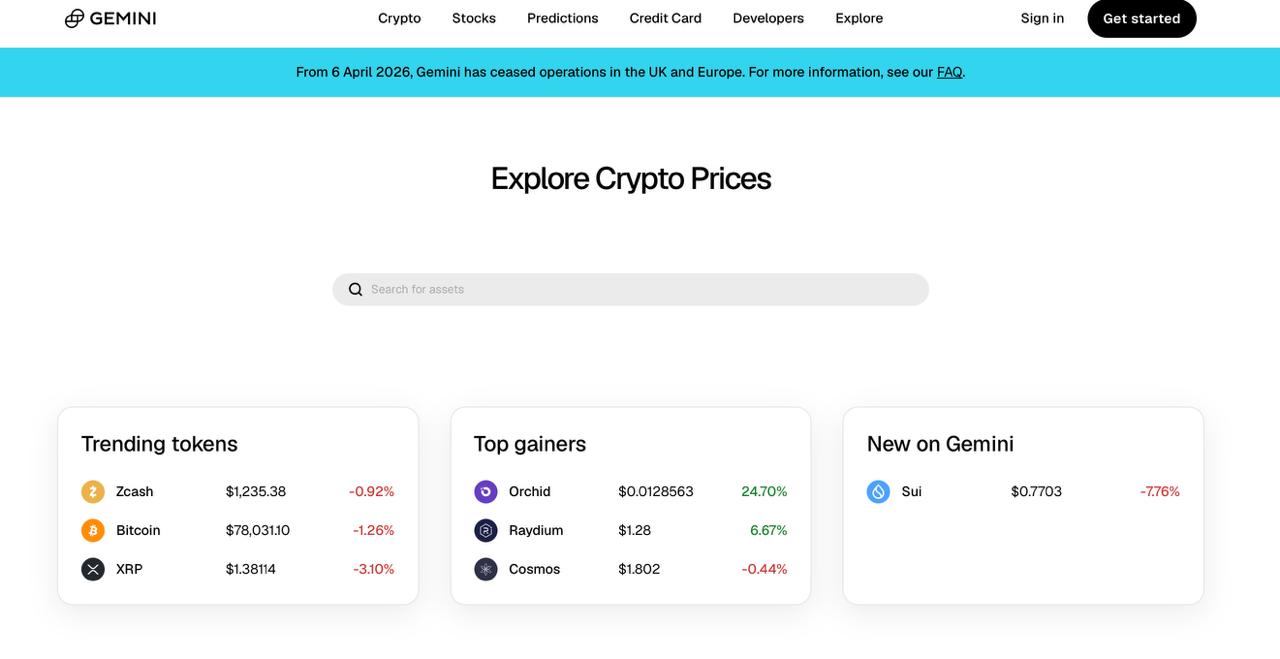
At the base spot tier, the published rate is 0.60% for maker orders and 1.20% for taker orders. A $1,000 trade at those rates would cost $6 as a maker or $12 as a taker. Actual rates depend on the account’s fee tier.
Coinbase Advanced
Coinbase Advanced also uses maker/taker pricing tied to trading activity. The applicable rate is shown inside the account and before the order is submitted.
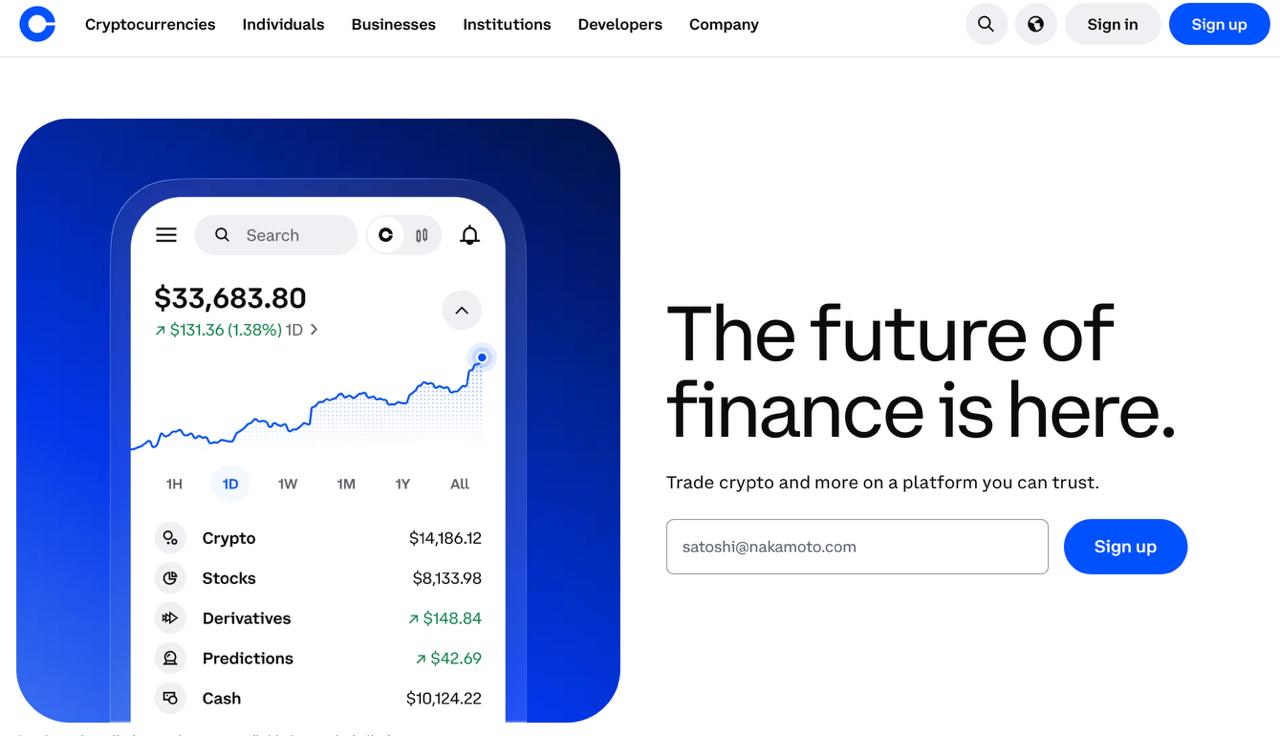
Maker orders add liquidity to the order book, while taker orders match liquidity that is already available. That distinction can affect the fee even when two users trade the same asset.
Compare the fee tier that applies to your own trading volume, not the lowest rate shown on either exchange’s schedule.
Cryptocurrencies and Trading Markets
Coinbase offers substantially more spot markets, which matters most to traders looking for smaller altcoins or a particular stablecoin pair. Gemini covers many established assets but has a narrower catalogue.
Two exchanges can list the same token while offering different pairs, deposit networks or withdrawal support. That can matter more than the headline number of cryptocurrencies.
Before opening an account for a specific asset, check:
- whether the cryptocurrency is available in your jurisdiction;
- which fiat or stablecoin pair you can trade;
- whether deposits and withdrawals are active;
- which blockchain networks the exchange supports.
Staking, Cards and Other Features
Beyond spot trading, Gemini’s retail ecosystem includes features such as:
- staking where available;
- Gemini ActiveTrader;
- Gemini Dollar (GUSD);
- the Gemini Credit Card for eligible U.S. users;
- institutional custody and trading services.
Coinbase combines its exchange with:
- staking where eligible;
- Coinbase Advanced;
- Coinbase One;
- card products;
- USDC-related products and rewards where available;
- spot and derivatives trading in supported markets.
Coinbase also offers a self-custody wallet product. That should not be confused with assets held inside the exchange: Coinbase’s exchange account and self-custody wallet place control of the assets in different hands.
Gemini vs Coinbase Security
Security depends on both the exchange’s controls and how the user protects the account.
Login protection
Both exchanges support two-factor authentication. Coinbase supports options including passkeys and physical security keys, which can reduce exposure to phishing compared with SMS-only authentication.
Gemini also uses two-factor authentication and provides additional account controls for withdrawals.
Withdrawal controls
Gemini’s Withdrawal Protection can restrict withdrawals to approved addresses and impose a seven-day waiting period before newly added destinations become available.
Coinbase also uses account-security checks and withdrawal restrictions in certain circumstances, although the exact controls applied can depend on the account and transaction.
Custody
Crypto kept in a standard Gemini or Coinbase exchange account is held under a custodial arrangement. The exchange operates the wallet infrastructure rather than giving the account holder direct control of the private keys.
Self-custody transfers that responsibility to the user, including protection of the wallet credentials needed to recover and move the assets.
FDIC insurance and crypto are not the same thing
Eligible U.S. dollar balances may qualify for pass-through FDIC protection when they are held through qualifying banking arrangements and applicable conditions are met. Cryptocurrency itself is not an FDIC-insured bank deposit.
Separate private insurance policies or custody protections offered by an exchange should therefore not be confused with federal deposit insurance on cash.
What Changed Since Earlier Comparisons?
The biggest changes since older Gemini-vs-Coinbase reviews are not cosmetic interface updates. Product names and the regulatory footprint have shifted enough to make several old comparison points obsolete.
Coinbase now serves the EEA through its Luxembourg entity after securing authorization under MiCA in Luxembourg. Gemini, by contrast, withdrew from the EEA, UK and Australia in 2026.
If you are returning to either platform after several years, two old product names can also cause confusion. Coinbase Pro has been replaced by Coinbase Advanced, while Gemini Earn is no longer part of Gemini’s current retail product lineup.
Older fee schedules, country counts and product lists should therefore be treated as historical rather than used to choose an exchange in 2026.
Gemini vs Coinbase: Which Should You Choose?
Choose Coinbase if:
- you need access from the EEA;
- you want more spot markets;
- you want a wider set of trading products in one account.
Consider Gemini if:
- Gemini accepts customers in your country;
- you prefer ActiveTrader;
- the assets and products you need are available there.
- Gemini can still suit an eligible U.S. trader who prefers ActiveTrader and finds the required markets there.
Gemini vs Coinbase FAQ
Is Gemini better than Coinbase?
Coinbase is the stronger overall option for most users in 2026. Gemini can still fit eligible users who prefer ActiveTrader or its available U.S. products.
Is Coinbase cheaper than Gemini?
Not for every trade. Both platforms use pricing that can change with trading mode, order type and volume, so compare the rate that applies to your own account.
Can I use Gemini or Coinbase in Europe in 2026?
Coinbase operates across the EEA through its Luxembourg MiCA-authorized entity. Gemini closed EEA customer accounts on April 6, 2026.
Is Coinbase Pro still available?
No. Coinbase Advanced replaced Coinbase Pro and is integrated into the main Coinbase account.
Which has more trading markets, Gemini or Coinbase?
Coinbase has the larger selection. Coinbase Advanced advertises more than 550 spot pairs, while Gemini ActiveTrader advertises more than 100 trading pairs.
Are crypto balances on Gemini or Coinbase FDIC insured?
No. Eligible fiat balances may qualify for pass-through FDIC coverage under applicable conditions, but cryptocurrency itself is not an FDIC-insured deposit.
Can I withdraw crypto from both exchanges?
Yes, for supported assets and eligible accounts. Available blockchain networks, security holds and regional restrictions can affect individual withdrawals.
This article is for educational purposes only and does not constitute financial or investment advice. Cryptocurrency trading involves risk, and exchange availability, products and fees can change by jurisdiction.



Kosta has reported on cryptocurrency markets and blockchain infrastructure since 2020, bringing over six years of hands-on experience in the crypto industry built through daily tracking of markets, trends, and emerging blockchain developments. Specializing in Bitcoin on-chain analysis, institutional ETF flows, and digital asset price action, his work at Coindoo has been cited by other news agencies and consistently covers market developments with a focus on data-driven reporting across Bitcoin, Ethereum, Solana, and XRP. Over the years, Kosta has contributed to multiple crypto media outlets in different regions, authoring over 6,000 articles across the sector. His reporting spans cryptocurrency markets and the broader fintech industry, tracking not only price action but also the technological and regulatory forces shaping the ecosystem. To support his analysis, Kosta actively leverages on-chain data and metrics from leading platforms such as Santiment, Glassnode, and CryptoQuant, enabling deeper, evidence-based market insights. He believes in the power of transparency and the data that underpins the blockchain ecosystem. His academic background in Marketing Management from Denmark further complements his analytical approach, adding a strong understanding of communication strategy and content positioning to his work.