How to Stake MATIC – Your Guide for 2026 (UPDATED)

PoS cryptocurrencies have become some of the most widely used digital assets thanks to the advantages they have and the rapid growth and evolution of proof of stake (POS) networks. Among them, Polygon is probably the crypto project that has come with some of the most significant changes in the crypto industry besides the two major cryptocurrencies that lead the way.
Polygon has since completed its move to the Polygon 2.0 vision, which unifies its chains through a shared layer of zero-knowledge technology called AggLayer. As part of that shift, MATIC has been succeeded by POL, the token that now powers staking, governance, and network fees across every Polygon chain.
About Polygon
Polygon, formerly called MATIC Networks, is a scaling solution that aims to improve speed and reduce the cost of transactions and complexities associated with blockchain networks.
Basically, Polygon acts as a layer-2 network on the Ethereum network, meaning it does not seek to substitute the existing blockchain layer. With its many sides and shapes, Polygon promises a less complicated framework for creating interconnected networks.
Polygon announced Polygon 2.0 in mid-2024 and introduced POL as the token designed to replace MATIC. The migration completed on Polygon PoS in September 2024, and native POL staking on Ethereum went live in September 2025. Any remaining MATIC on Ethereum can still be converted to POL at a 1:1 ratio through the Polygon Portal, but POL is now the token that secures the network and pays for staking and gas.
Polygon mainly aims to help Ethereum expand in size and efficiency, thus ensuring utility and, as a result, encouraging developers to bring attractive products to the platform.
What Is POL?
POL is Polygon’s utility token, used as the payment unit between participants on the network. The more developers build on Polygon, the higher the underlying demand for POL as a gas token.
Polygon runs on Proof of Stake, so users can lock up POL to help secure the network and earn staking rewards in return.
POL also functions as the network’s governance token, giving holders voting rights on protocol changes. Unlike MATIC, POL was designed from the start to be staked across multiple Polygon chains at once rather than just the original PoS chain, which is the core change behind the 2.0 upgrade.
How Does the Polygon Network Work?
Polygon’s chains process transactions independently and settle back to Ethereum, which keeps the load off Ethereum’s base layer and brings down both transaction speed and cost. Since the Rio upgrade went live in October 2025, Polygon PoS has run on a new block production model called VEBloP, which elects a single validator to produce each block and has removed chain reorgs, pushing throughput toward 5,000 transactions per second with a longer-term roadmap targeting 100,000 TPS.
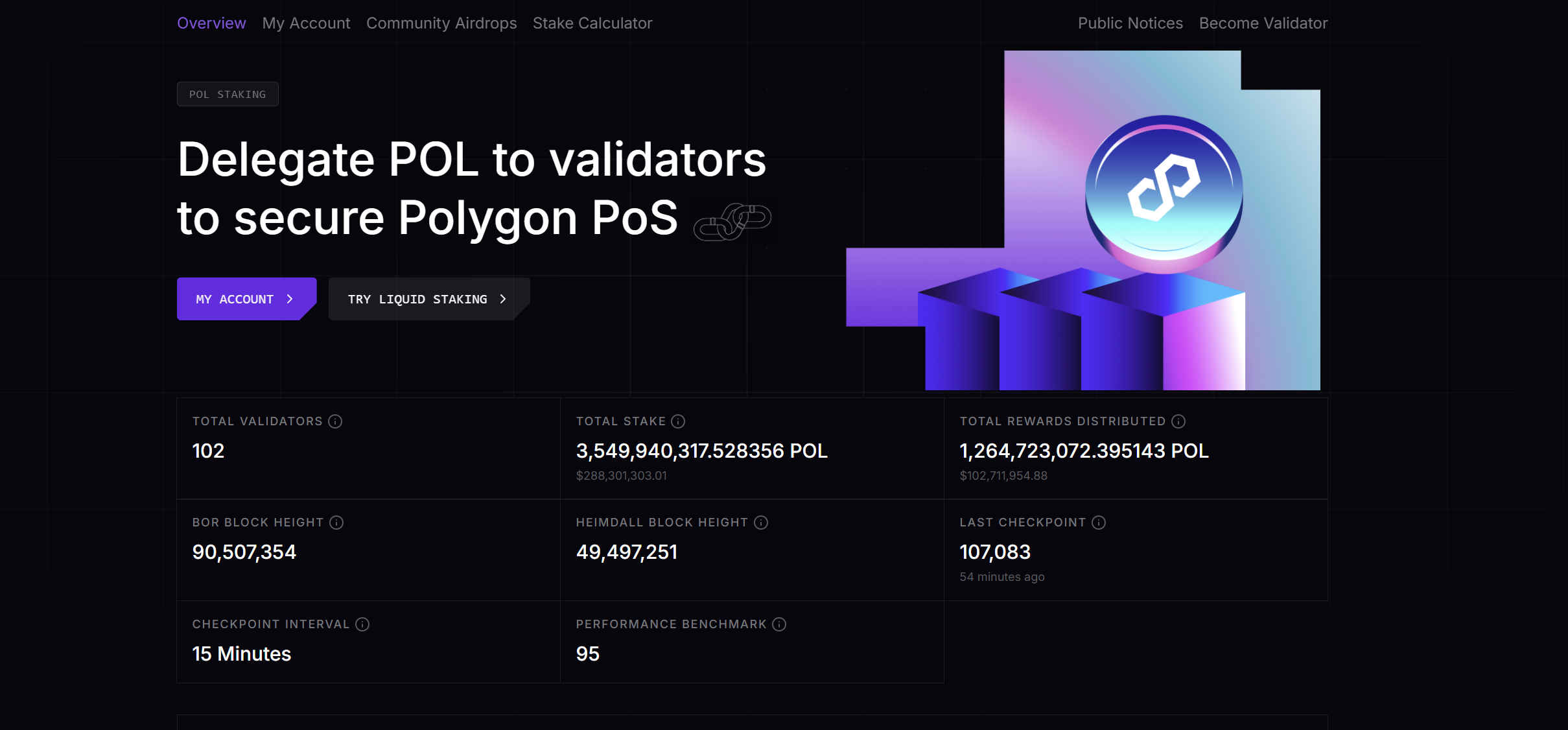
As of July 2026, the network is secured by roughly 102 active validators, with a combined total of approximately 3.55 billion POL staked across the network, worth around $288 million at current prices.
Simply put, Polygon provides an easy framework for developers to build on Ethereum without facing the scalability problem. Ethereum users can also interact with several dApps without worrying about network congestion.
However, Polygon is not in competition with Ethereum; instead, it depends on it and vice versa. But while its mission is to leverage its network to build an infrastructure that can handle the Ethereum mass adoption, Polygon depends more on Ethereum than the other way around.
The Polygon network aims to scale Ethereum to over a billion users without affecting security or decentralization. Unlike other L2 scaling solutions, Polygon offers developers a wide range of capabilities on a single network.
Is POL a Good Investment?
Cryptocurrency experts consider POL a good investment for various reasons. First, the Polygon network has the potential to become Ethereum’s primary layer-2 solution, given that it has increased the platform’s performance surprisingly.
As of July 2026, POL trades at roughly $0.07–$0.08 with a market cap of around $800–900 million, ranking outside the top 60 cryptocurrencies by market cap. Circulating supply sits at approximately 10.68 billion POL. Unlike the old hard-capped MATIC supply, POL has an ongoing annual emission of roughly 2%, so supply is not fixed.
Polygon has moved away from the consumer-brand partnerships that defined its earlier years — Starbucks shut down its Polygon-based Odyssey loyalty program in March 2024, and CEO Marc Boiron has said publicly that the company refocused away from that strategy. The current pitch centers on payments and real-world asset infrastructure: the October 2025 Rio upgrade, the AggLayer interoperability layer, and a reported $250 million investment in payments infrastructure in January 2026, including the acquisitions of fiat on/off-ramp provider Coinme and wallet infrastructure company Sequence. PayPal’s PYUSD stablecoin also expanded onto Polygon via Paxos in July 2026.
How to Stake POL
Before learning how to stake POL (formerly MATIC), it is worth knowing where to stake it for the best rewards. The following are the most popular platforms that support POL staking:
Before selecting a staking platform for POL, it’s worth comparing rates directly, since they can vary meaningfully between platforms. As of mid-2026, verified rates include Coinbase at 1.71% APY, KuCoin at 2% APR, Crypto.com at around 2.51% p.a., and Kraken at around 2.67% APY.
Polygon’s migration to POL as the staking standard is now complete, and native POL staking has run on Ethereum since September 2025. Validators can already use POL to help secure multiple Polygon chains, which is the multi-chain staking model the 2.0 upgrade was built around.
How to stake POL on the MetaMask wallet
1. Download and set up your MetaMask wallet
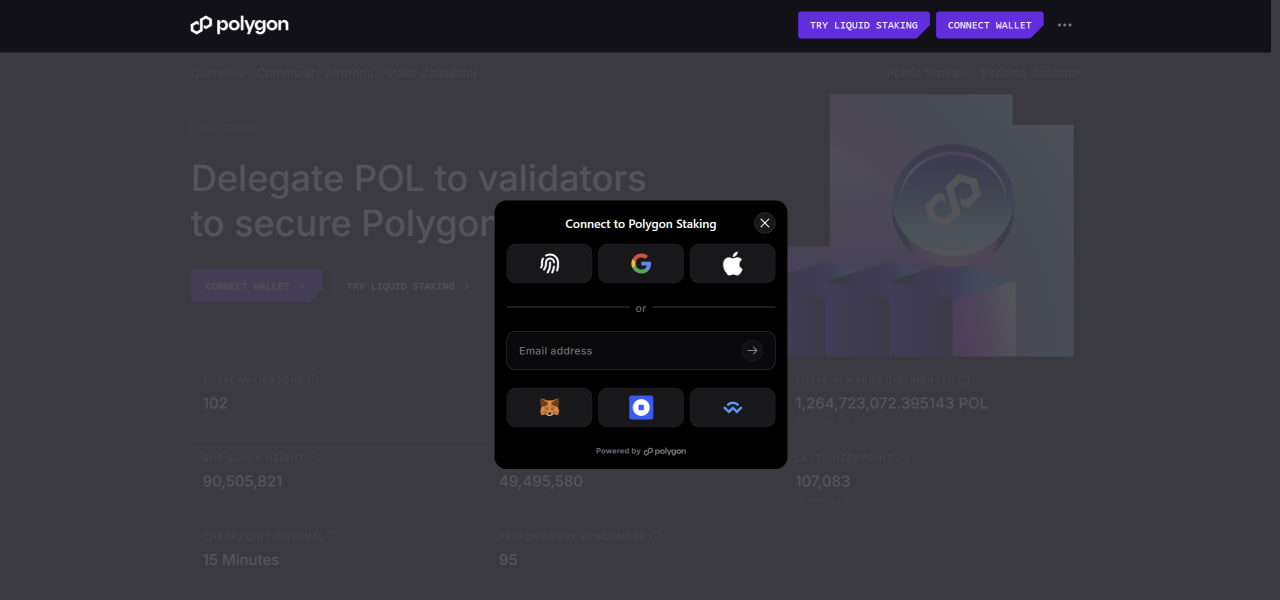
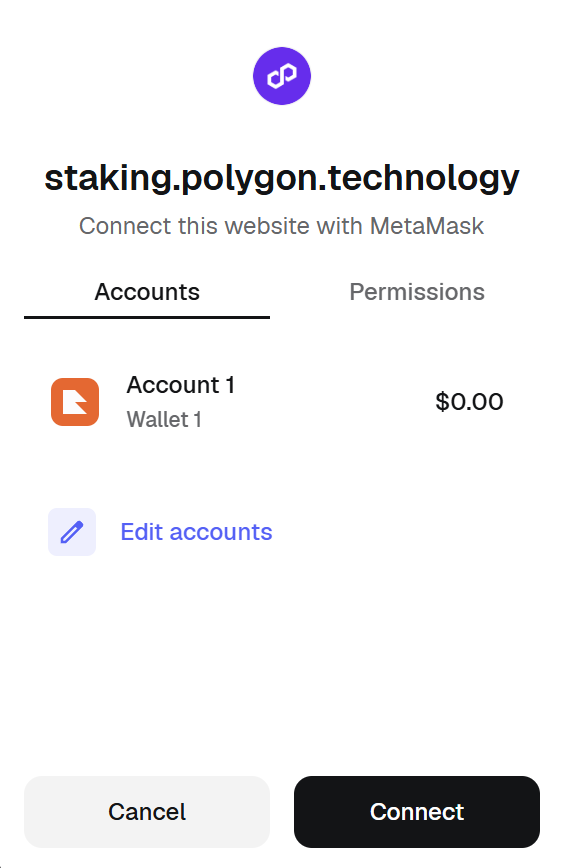
To access the MetaMask wallet, go to your Polygon dashboard and select “Polygon Staking”. Proceed to the login option and choose your preferred wallet, in this case, MetaMask. You will see a message requesting you to connect with MetaMask; click ‘next’, then ‘connect’.
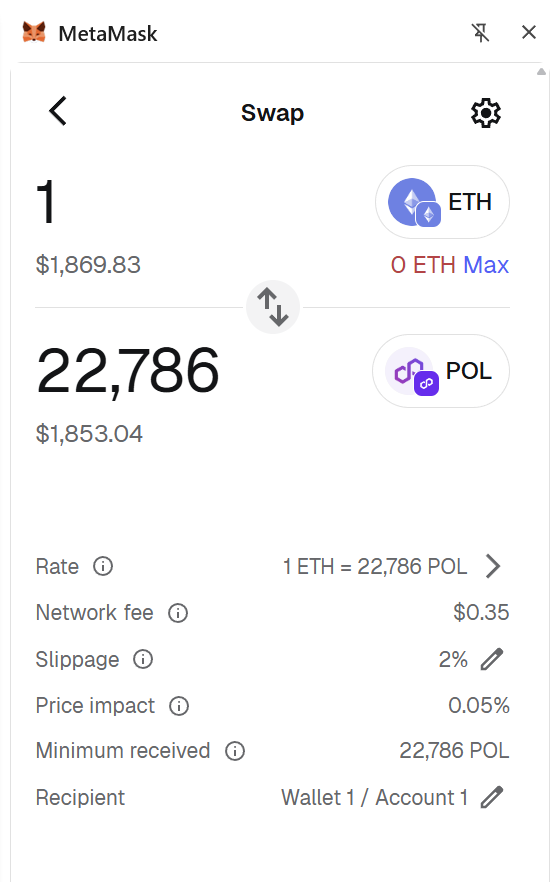
2. Swap ETH for POL
You’ll need some ETH in your Ethereum Mainnet wallet to complete this step. In current versions of MetaMask, POL already appears as a default listed token in your Tokens tab, so there’s no need to search for it or import it manually the way older guides describe. Tap on the POL entry in your token list to open its detail page, then tap “Swap.”
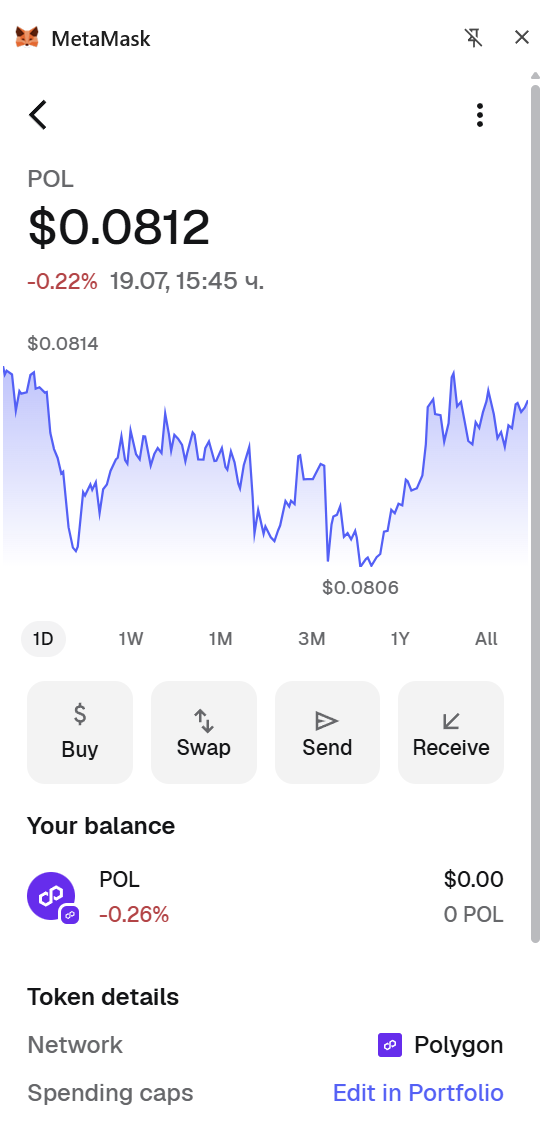
On the swap screen, select ETH as the token you’re swapping from and POL as the token you’re swapping to, then enter the amount of ETH you’d like to convert. Tap “Review” to check the transaction details, including the network gas fee, then confirm the swap. Once it completes, your POL balance will update in your Tokens list and you can head back to the Polygon staking dashboard.
3. Choose a Validator
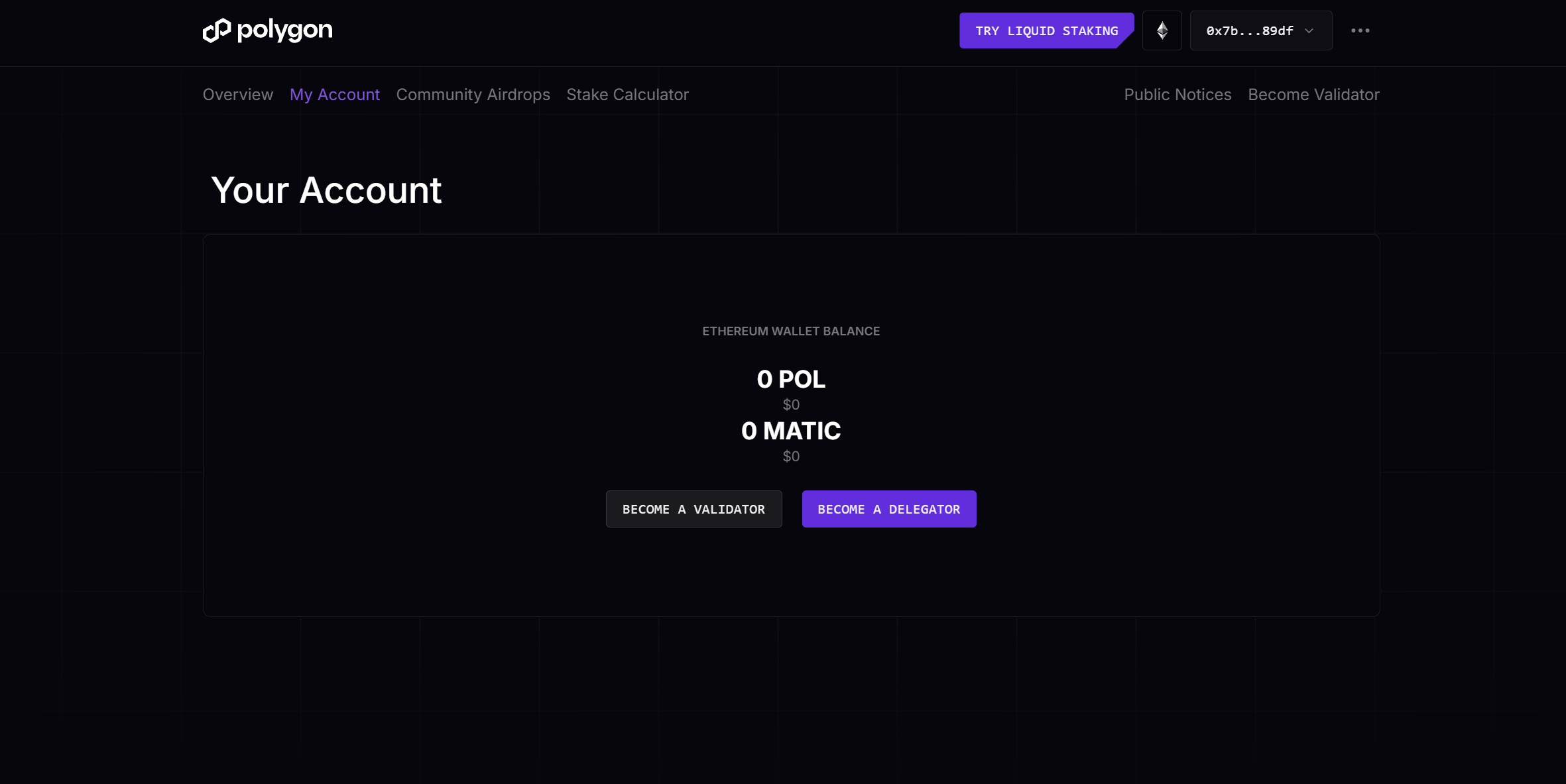
Once your wallet is connected to the Polygon staking portal, you’ll land on the “My Account” page, which shows your Ethereum wallet balance in both POL and MATIC — if you migrated your MATIC earlier, it may still show up here as a separate line from your POL balance. From this page, click “Become a Delegator” to move into the validator selection screen.
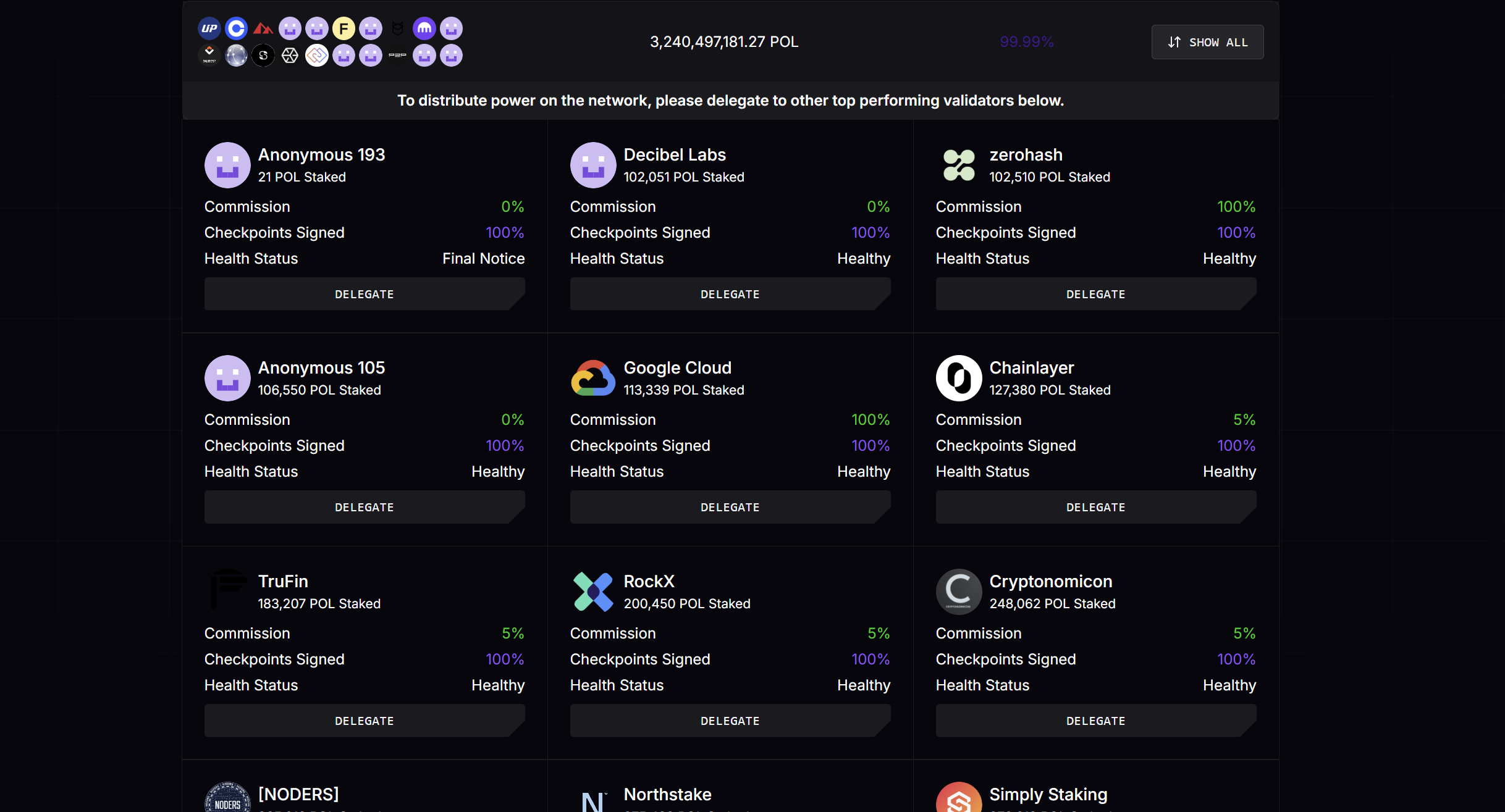
Polygon currently has around 100 active validators securing the network, each showing its total POL staked, commission rate, checkpoint-signing performance, and health status. Commission is worth paying attention to, since it’s deducted from your rewards — some validators charge 0%, others up to 100%, so a lower commission combined with a “Healthy” status and 100% checkpoints signed is generally the safer pick. A health status other than “Healthy,” such as “Final Notice,” signals a validator with performance issues worth avoiding.
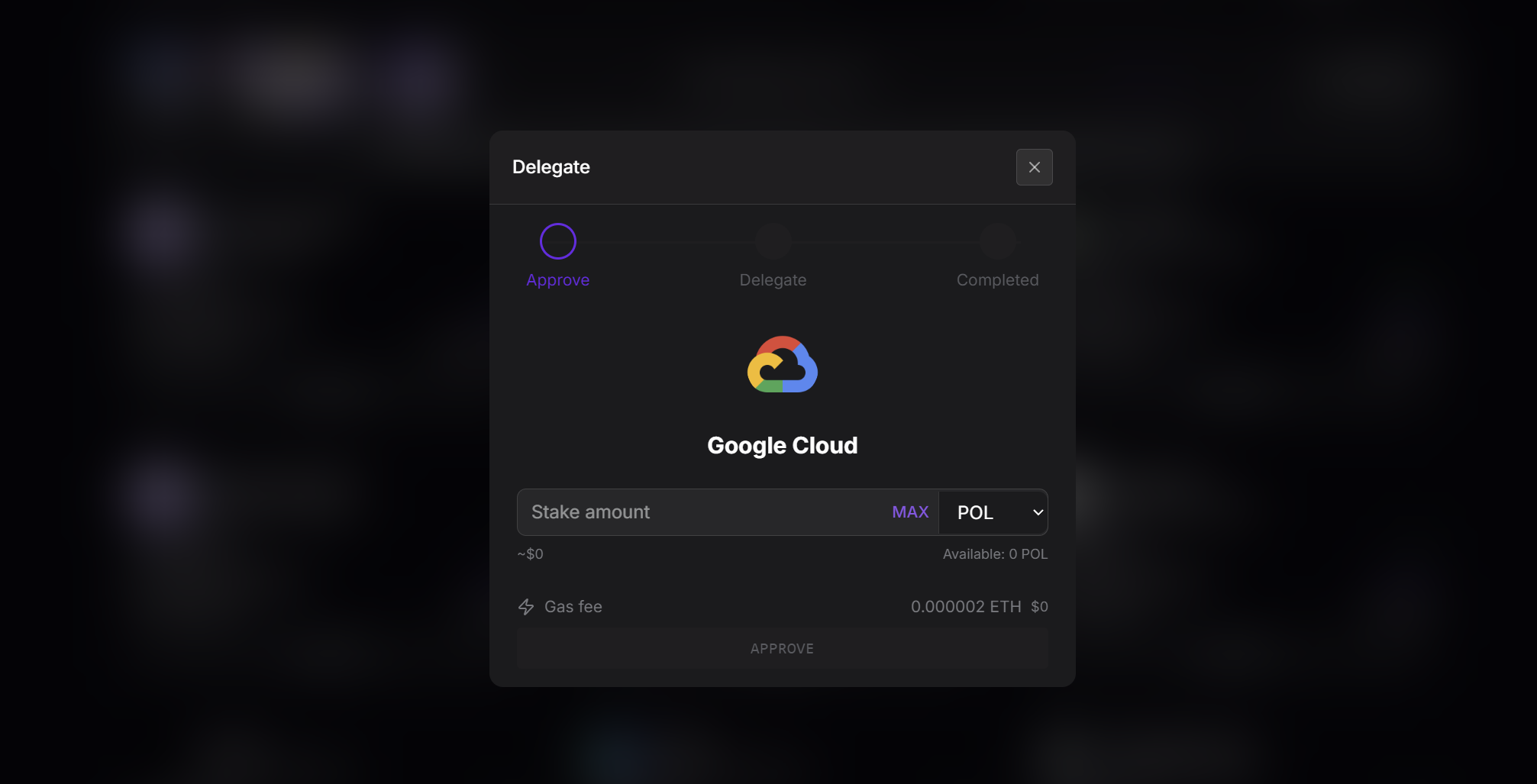
Once you’ve chosen a validator, click “Delegate” on their card. This opens a modal showing a three-step process — Approve, Delegate, and Completed. Enter the amount of POL you want to stake, then click “Approve” to begin.
4. Confirm Transaction
After clicking “Approve” in the Delegate modal, MetaMask will open a pop-up asking you to confirm the approval transaction — this gives the staking contract permission to access your POL. Confirm it, and you’ll pay a small gas fee in ETH.
Once the approval transaction confirms on-chain, the modal moves to the second step, “Delegate.” Click through this step and confirm the second transaction in MetaMask, which actually stakes your POL with the validator you chose. A moment after this transaction confirms, the modal will show “Completed,” and your stake will appear under your account on the Polygon staking portal.
5. Check Your Expected Rewards (optional)
Once you’ve delegated, you can check on your position anytime by reconnecting your wallet to the Polygon staking portal and returning to the “My Account” page. This is the same page shown earlier — once you have an active stake, it should display which validator you’ve delegated to, your staked amount, and any unclaimed rewards, alongside the wallet balance view you saw before staking.
It is also worth knowing that Polygon staking is non-custodial, meaning your POL tokens never leave your wallet.
How to Stake POL on Coinbase
Staking POL directly on Coinbase (the exchange, not Coinbase Wallet) is the simplest option available, since Coinbase handles validator selection and custody for you — there’s no need to connect an external staking dashboard, choose a validator yourself, or hold ETH for gas fees. As of mid-2026, Coinbase advertises up to 1.71% APY for POL, shown directly on the asset’s page.
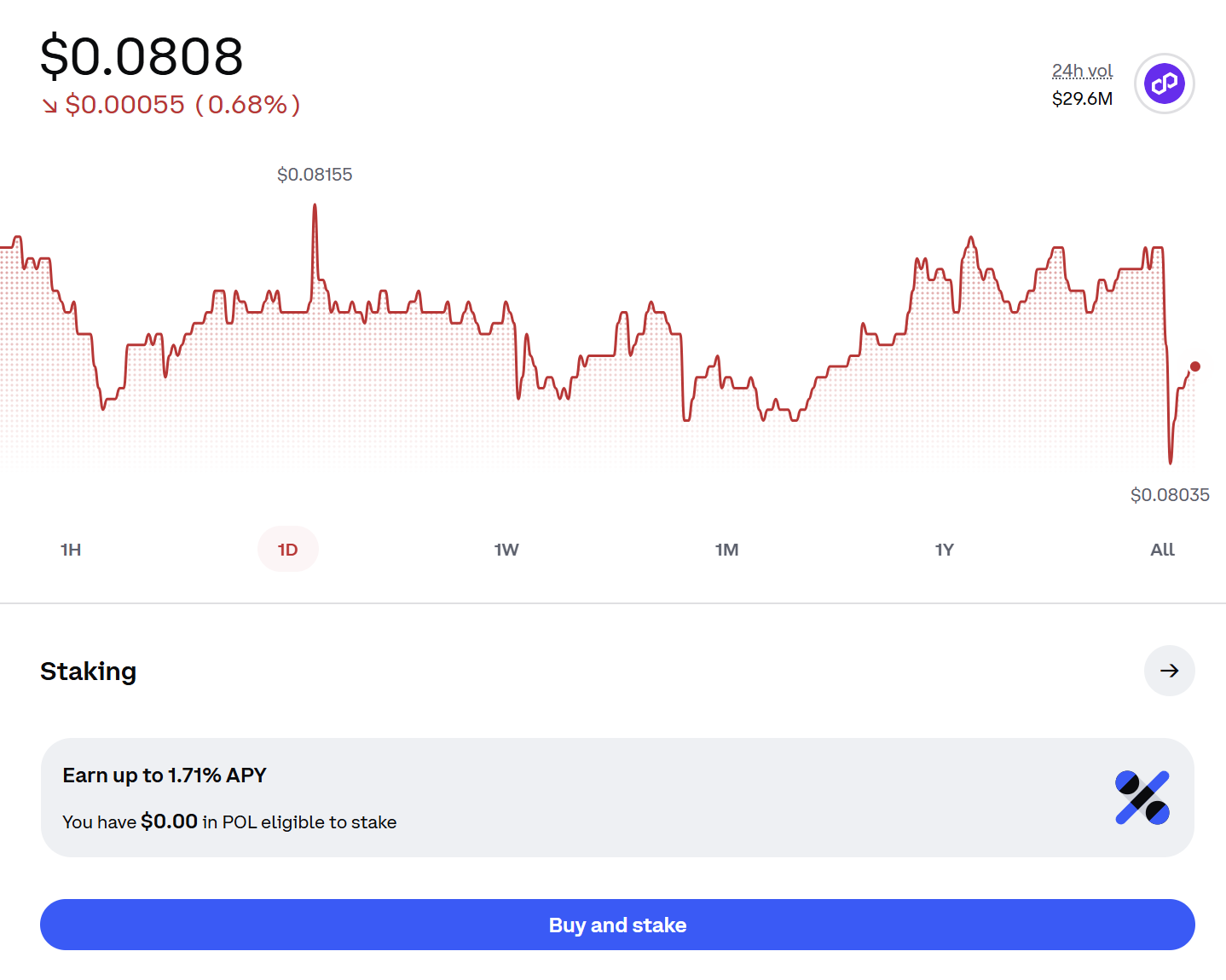
To stake POL on Coinbase, you should:
- Have an active, verified Coinbase account, with staking available in your region (availability varies by country and isn’t universal);
- Search for “Polygon Ecosystem Token” or POL and open its asset page;
- If you don’t already hold POL, you can buy and stake it in one step using the “Buy and stake” button; if you already hold POL, tap the Staking section’s arrow to stake your existing balance;
- Enter the amount and confirm the transaction.
Once staked, your POL is locked according to Coinbase’s terms, and rewards accrue automatically without any further action needed. Unlike self-custody staking through a wallet like MetaMask, Coinbase holds custody of your staked POL directly, so you’re trusting Coinbase’s security rather than managing your own private keys.
If you’d rather stake without giving up custody, note that Coinbase Wallet (a separate product from the main Coinbase exchange) can also connect to the Polygon staking portal directly, following the same self-custody delegation flow described in the MetaMask section above.
How to Stake POL on Crypto.com
Crypto.com is one of the largest cryptocurrency exchanges, with a straightforward staking flow for POL, listed under the app’s Staking tab as “Polygon Ecosystem Token.” As of mid-2026, Crypto.com advertises a flexible-term rate of around 2.51% p.a. for POL — lower than some of the other assets on the same list, and worth checking against the live rate before committing, since these figures update regularly.
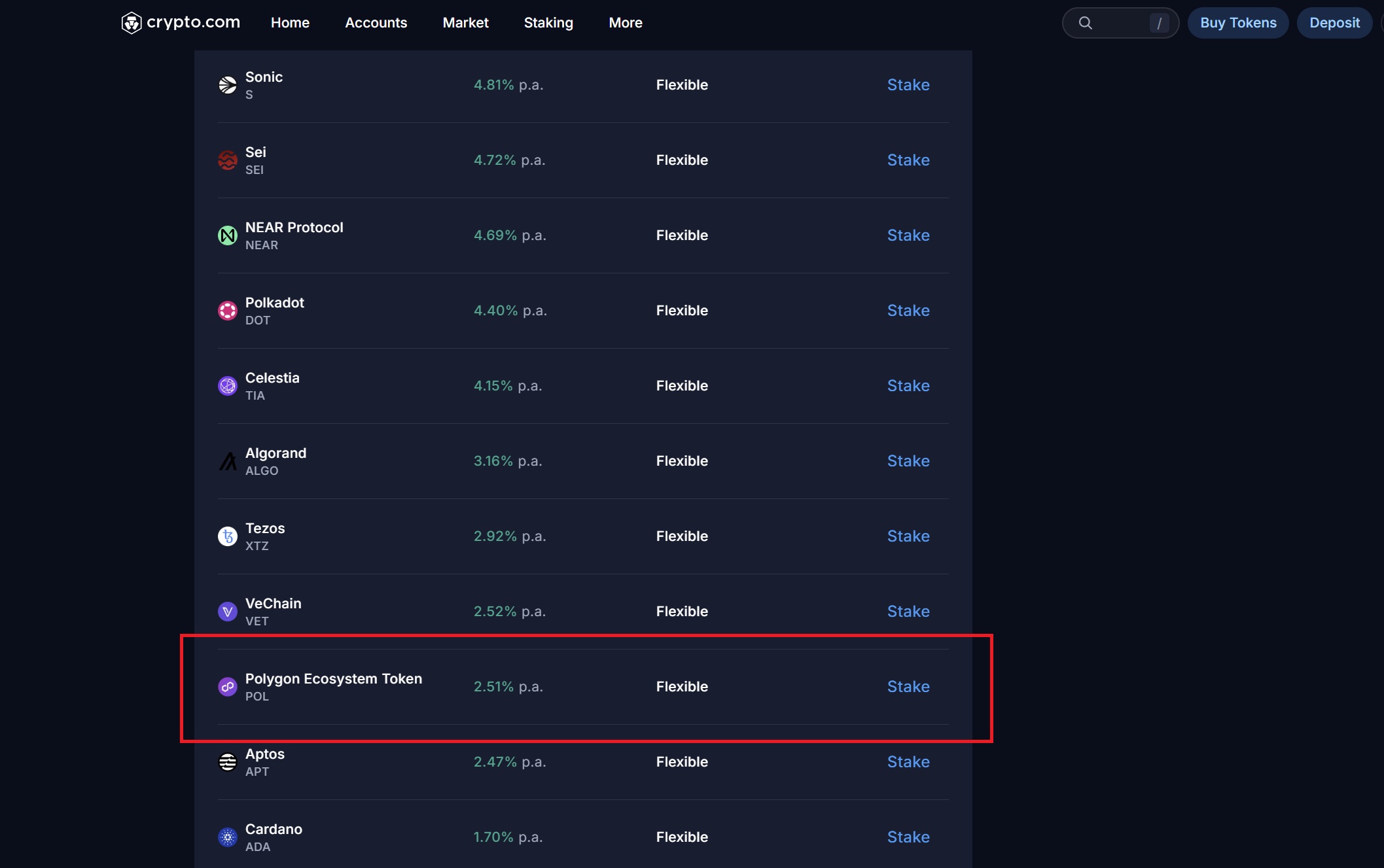
To stake POL on Crypto.com, you should:
- Download the Crypto.com app and log in or sign up;
- Tap “Staking” from the app’s main navigation;
- Find “Polygon Ecosystem Token (POL)” in the list and tap “Stake”;
- Enter the amount you want to stake, using the 25%/50%/75%/Max quick-select buttons if helpful;
- Review the estimated reward rate and estimated annual rewards shown, agree to the Staking Terms and Privacy Notice, and tap “Confirm Stake”;
- Enter your passcode to finalize.
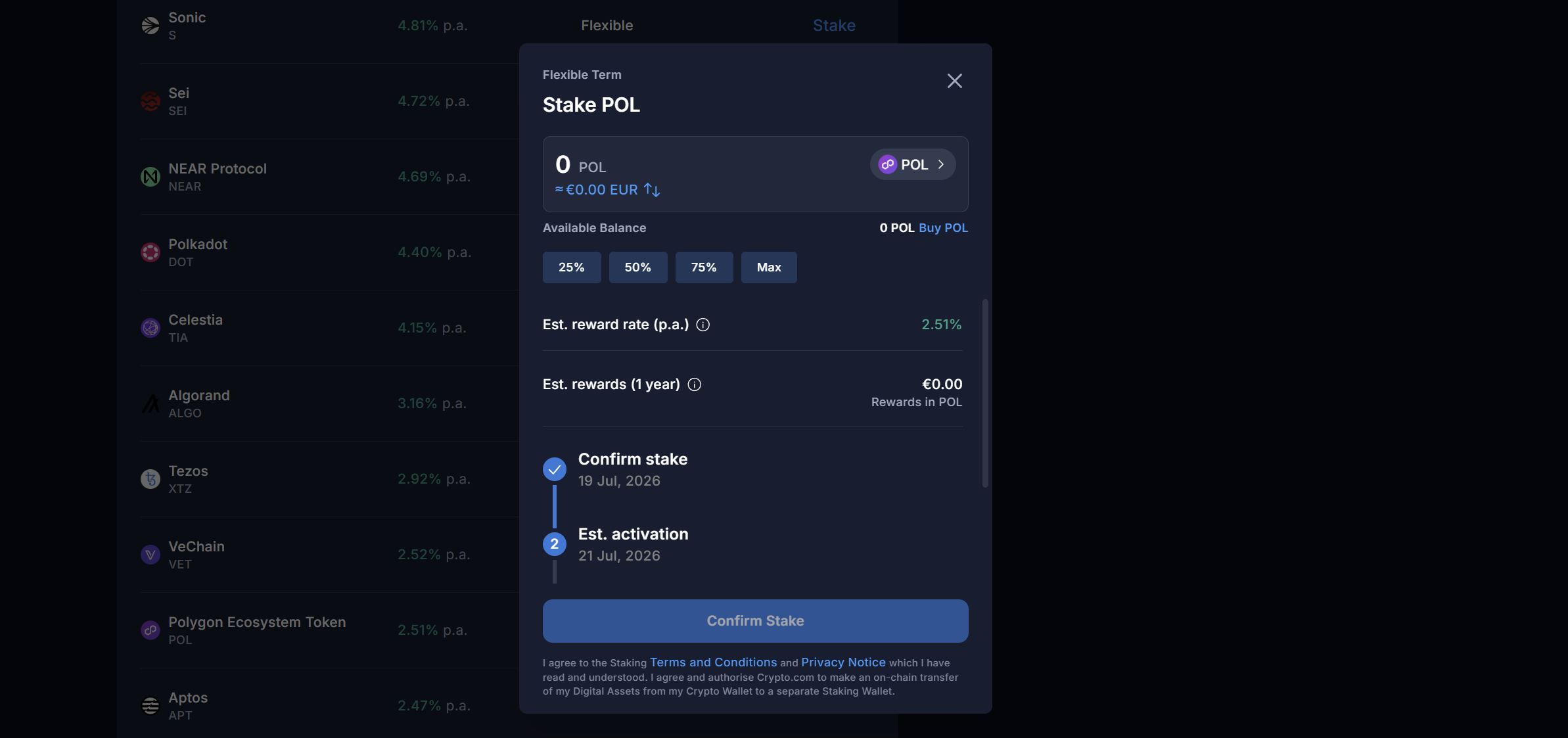
Once confirmed, your POL begins earning rewards based on the rate and term you chose. As with any custodial staking option, you’re trusting Crypto.com’s security and terms rather than holding the keys yourself, so review current terms before committing larger amounts.
Note that staking isn’t instant — Crypto.com typically shows an estimated activation date around two days after you confirm, and during that window your POL is transferred from your regular Crypto Wallet into a separate Staking Wallet rather than remaining where it was.
Staking POL on KuCoin
Staking POL on KuCoin is done through the dedicated Staking product, separate from KuCoin’s other yield options like Simple Earn or Hold to Earn. As of mid-2026, KuCoin lists POL at a 2% reference APR on a flexible term, with a 7-day redemption period once you choose to unstake.
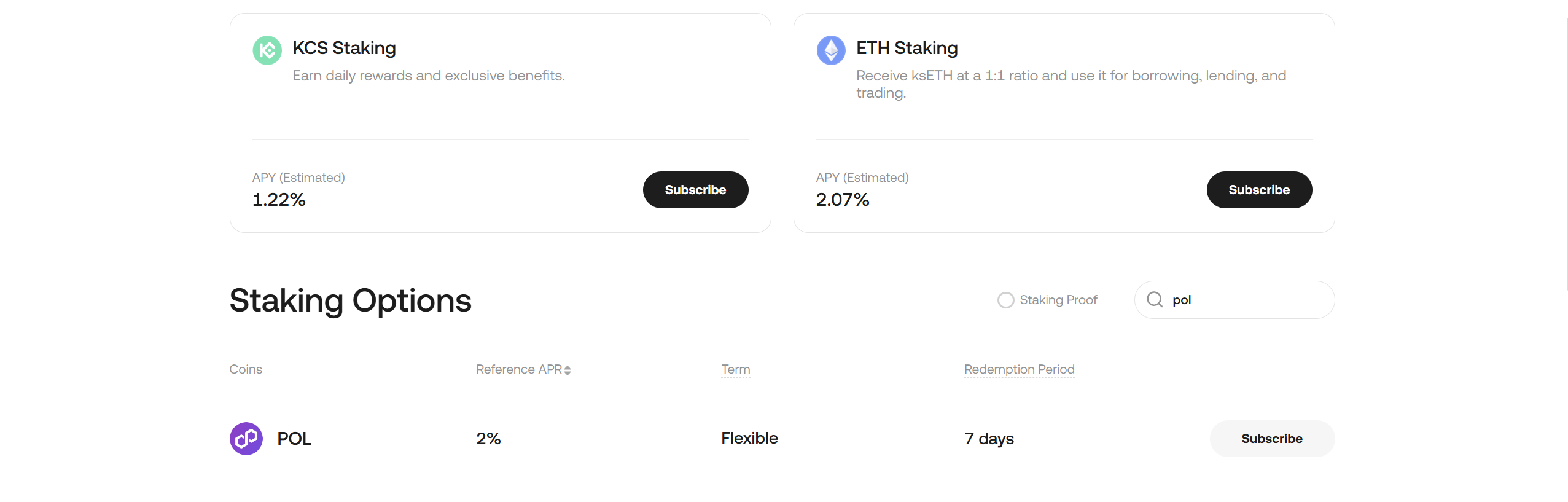
To stake POL on KuCoin, you should:
- On the website, click “Earn” in the top navigation and select “Staking” (on the app, tap the grid menu and select “Earn,” then “Staking”);
- Search for POL in the Staking Options list and click “Subscribe”;
- Enter the amount you want to stake — the minimum is 1 POL, with a cap of 500,000 POL per subscription;
- Review the “How It Works” timeline, which shows your subscription date, accrual date, and profit distribution date (typically about two days after subscribing);
- Agree to KuCoin’s staking terms and click “Subscribe” to confirm.
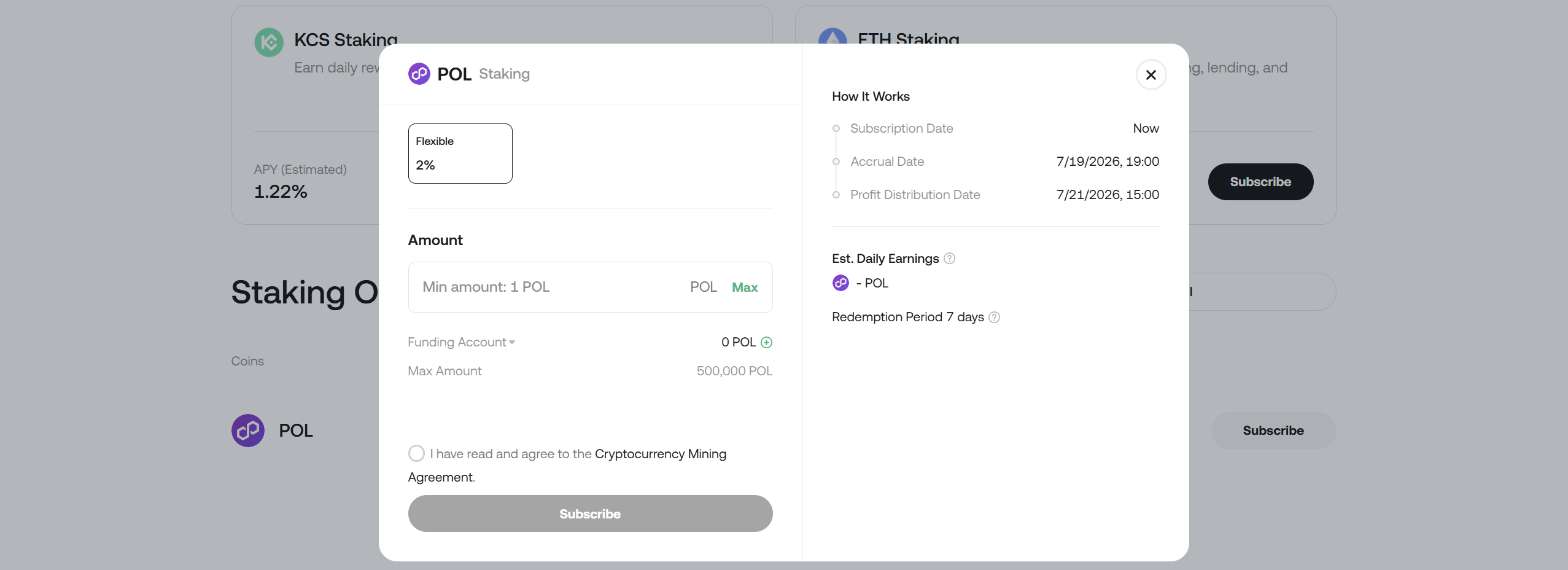
Once confirmed, your POL begins accruing rewards from the accrual date shown, and if you later choose to unstake, expect the 7-day redemption period before funds become available again.
POL Staking Rewards in 2026
Verified rates as of mid-2026 span a wide range: Coinbase advertises 1.71% APY, KuCoin lists 2% APR, Crypto.com offers around 2.51% p.a., and Kraken lists around 2.67% APY — all well below the double-digit rates sometimes seen during MATIC’s early staking period. Self-custody staking through MetaMask varies by validator commission rather than a platform-wide rate. Lido’s Polygon liquid staking product is no longer an option, as Lido fully wound it down by June 2025.
FAQ
Does POL allow staking?
Yes. Polygon runs on a Proof-of-Stake consensus mechanism, and POL is the token used to stake and earn rewards on it.
Where is the best place to stake POL?
Several platforms support Polygon staking, including Coinbase, Kraken, KuCoin, OKX, and MetaMask. Lido Finance is no longer an option, having discontinued its Polygon staking service in 2025.
Rates vary meaningfully between platforms, so it’s worth comparing the actual advertised APY before choosing one rather than assuming they’re roughly equal.
How much do you make staking POL?
Rewards depend entirely on which platform you use, and the gap between them can be significant — as of mid-2026, Coinbase advertises up to 1.71% APY for POL, while Crypto.com lists a flexible-term rate of around 2.51% p.a., both well below the 15% figures sometimes advertised during MATIC’s early staking period. Self-custody staking through a wallet like MetaMask depends on which validator you choose, since each sets its own commission rate.
Can I stake POL on MetaMask?
Yes. MetaMask supports staking for multiple cryptocurrencies, including POL. You’ll need to hold POL and a small amount of ETH to cover gas fees.
In Conclusion
Polygon has built a name for itself as a scaling solution for Ethereum through its steady stream of upgrades, though its market cap has fallen well outside the top tier of cryptocurrencies since MATIC’s peak, currently ranking outside the top 60.
Having understood how the Polygon network works and its potential in promoting the Ethereum blockchain, it is no doubt that it makes a good investment. While it is as volatile as many other cryptocurrencies, staking POL tokens is one of the safest ways to earn some extra rewards.
If you decide to stake POL, don’t forget to secure your accounts as well as possible and keep the tokens you earn in your Polygon wallet app. You can also try to add them to your Ledger Ethereum account, if you have one, as Ledger is one of the safest ways to store crypto in general.
Polygon’s completed transition to POL and its cross-chain validator system have already reshaped how staking works on the network. With POL now the standard across the ecosystem, Polygon continues building out payments and real-world asset infrastructure through the Rio upgrade and AggLayer.
Last update: 19.07.2026



Kosta has reported on cryptocurrency markets and blockchain infrastructure since 2020, bringing over six years of hands-on experience in the crypto industry built through daily tracking of markets, trends, and emerging blockchain developments. Specializing in Bitcoin on-chain analysis, institutional ETF flows, and digital asset price action, his work at Coindoo has been cited by other news agencies and consistently covers market developments with a focus on data-driven reporting across Bitcoin, Ethereum, Solana, and XRP. Over the years, Kosta has contributed to multiple crypto media outlets in different regions, authoring over 6,000 articles across the sector. His reporting spans cryptocurrency markets and the broader fintech industry, tracking not only price action but also the technological and regulatory forces shaping the ecosystem. To support his analysis, Kosta actively leverages on-chain data and metrics from leading platforms such as Santiment, Glassnode, and CryptoQuant, enabling deeper, evidence-based market insights. He believes in the power of transparency and the data that underpins the blockchain ecosystem. His academic background in Marketing Management from Denmark further complements his analytical approach, adding a strong understanding of communication strategy and content positioning to his work.