What Is FUD in Crypto?

A crypto price is falling fast. Your feed fills with warnings, screenshots and posts claiming something much worse is coming. Suddenly, selling feels safer than waiting.
That reaction has a name in crypto: FUD, short for fear, uncertainty and doubt.
FUD describes negative information or narratives that shake confidence in an asset, project, exchange or the wider market. The underlying story may be true, exaggerated or completely false. What matters for traders is knowing what actually happened before emotion takes over.
- Updated August, 7, 2026
Table of Contents
What Does FUD Mean in Crypto?
FUD can start with a regulatory announcement, exchange hack, project rumor, sudden price drop or a single post from an influential account.
Sometimes the concern is justified. Other times, a real event gets stripped of context as it spreads. An exchange suffering a security breach, for example, can quickly turn into claims that centralized exchanges as a whole are unsafe.
Fear can then change how people trade:
Calling every bearish story “FUD” creates another problem. Hacks, insolvencies and regulatory actions can pose genuine risks. Dismissing uncomfortable information simply because it is negative can be just as costly as panicking over a rumor.
What Does FUD Mean in Investing?
FUD existed long before cryptocurrency. Fear and uncertainty influence stocks, commodities, bonds and other markets as well.
Crypto gives those emotions unusually fertile ground. Trading never closes, prices can move sharply within minutes, and information travels through X, Telegram, Discord, news outlets and trading communities at the same time.
Ten accounts discussing the same rumor can easily look like ten separate confirmations, even when they all trace back to one original post.
Deliberately spreading false or misleading information to deceive investors can cross into market manipulation. Ordinary concern over genuine bad news is different.
Impact of FUD on Crypto Users
FUD reaches beyond traders watching price charts. It can affect people using digital assets for payments, savings, staking or long-term investment.
Security incidents show how quickly justified concern can grow into broader fear. In 2024, crypto platforms lost approximately $2.2 billion to hacks. In 2026, a single incident resulted in another $293 million in losses.
Events of that scale can make users reconsider where they hold their assets or which services they trust. Fear can also spread far beyond the platform or protocol that was actually compromised.
Regulation creates similar uncertainty. Policy changes involving major crypto companies often produce strong reactions before their practical effects are clear. In 2025, for example, the SEC and Binance asked to pause their legal battle as US crypto policy began changing direction.
These situations can affect trading activity, withdrawals, staking decisions and confidence in particular platforms before users know how much the event will affect them personally.
When Does FUD Happen in the Crypto Market?
FUD tends to spread fastest when an important event is still developing and reliable information is limited.
Government Regulations
Regulatory announcements can affect exchanges, token issuers, investors and access to crypto services. They are also easy to oversimplify.
A restriction covering one product or type of activity can become “crypto banned” by the time it reaches social media. Jurisdiction matters too. A decision made by one regulator may have little direct effect on users elsewhere.
Sharp Crypto Price Drops
Price itself can become a source of FUD.
When Bitcoin falls sharply, feeds often fill with liquidation screenshots, bearish forecasts and predictions of a much larger crash. The falling price gives those claims more credibility, creating a feedback loop between market weakness and fear.
A large sell-off can have many causes, including liquidations, macroeconomic news, thin liquidity or profit-taking. The chart alone does not reveal which one is responsible.
Crypto Scams and Vulnerabilities
Scams, rug pulls, hacks and security vulnerabilities create a different kind of fear because users may face a direct threat to their funds.
Rumors tend to multiply immediately after an exploit. A vulnerability in one smart contract may be described online as a problem with the entire blockchain, while an exchange breach can generate claims about platforms that have no connection to the incident.
ICO (Initial Coin Offering) scams are another example. Heavily promoted projects have raised money without delivering the tokens or products investors expected, making skepticism around new offerings understandable.
Viral Posts and Influencer Claims
A frightening claim does not need a newspaper headline to reach the market. One viral post can be enough.
Social media algorithms tend to reward content that generates reactions, arguments and reposts, giving dramatic interpretations a good chance of travelling further than cautious ones.
An original statement can quickly be shortened, reposted without context and mixed with other people’s interpretations before reaching the wider market.
How to Spot FUD Before You React
Most breaking crypto stories can be tested with a few basic checks:
| Check | Description |
|---|---|
| Find the original source | Look for the announcement, filing, security report, court document or statement behind the story instead of relying on screenshots. |
| Check for independent confirmation | Several accounts repeating one report still represent one source. |
| Watch the wording | Headlines built around words such as collapse, doomed, dead, ban or scam may be describing something far narrower. |
| Separate facts from forecasts | A confirmed event and someone’s prediction about what happens next are two different pieces of information. |
| Check the date | Old hacks, regulatory announcements and quotes regularly return to social media as if they were new. |
| Identify who is affected | Find out whether the story concerns one token, one protocol, one exchange, one jurisdiction or the market more broadly. |
| Check the numbers | Claims involving huge withdrawals, losses or liquidations should have data behind them. |
What to Do When FUD Hits the Market
Once you know what actually happened, the next question is whether it should change what you do.
| No. | Action & Description |
|---|---|
| 1. | Check your exposure. Determine whether the event affects an asset you own, a service you use or funds you currently have at risk. |
| 2. | Measure the scale. Establish whether the problem affects one token, one platform or the wider market. |
| 3. | Revisit why you hold the asset. Decide whether the new information changes the reasons behind your original decision. |
| 4. | Give the situation time when possible. If your funds are not in immediate danger, waiting for more information can reduce the chance of an emotional trade. |
| 5. | Act quickly when funds are at risk. A live wallet, exchange or protocol compromise requires a different response from bearish news or a falling price. |
Some traders use a “24-hour rule” before making large decisions based on alarming news. It can be useful when the pressure is emotional, but not during an active security incident. Waiting makes little sense if a compromised wallet, protocol or exchange puts funds in immediate danger.
Famous Examples of FUD in the Crypto Market
China Banning Bitcoin
China has generated some of the crypto market’s best-known regulatory scares. Restrictions were introduced over several years before authorities intensified their crackdown on cryptocurrency trading and mining in 2021.
Old China-ban headlines have also resurfaced long after the original restrictions were announced, sometimes making an existing policy look like a new development.
Bitcoin Will Disappear
Predictions of Bitcoin’s death are almost as old as Bitcoin itself. Economists, investors, journalists and other critics have repeatedly argued that the cryptocurrency would eventually collapse or lose its relevance.
The frequency of those predictions is tracked by BitcoinDeaths.com, which has recorded 475 occasions when Bitcoin was declared dead since 2010 as of its July 2026 update.
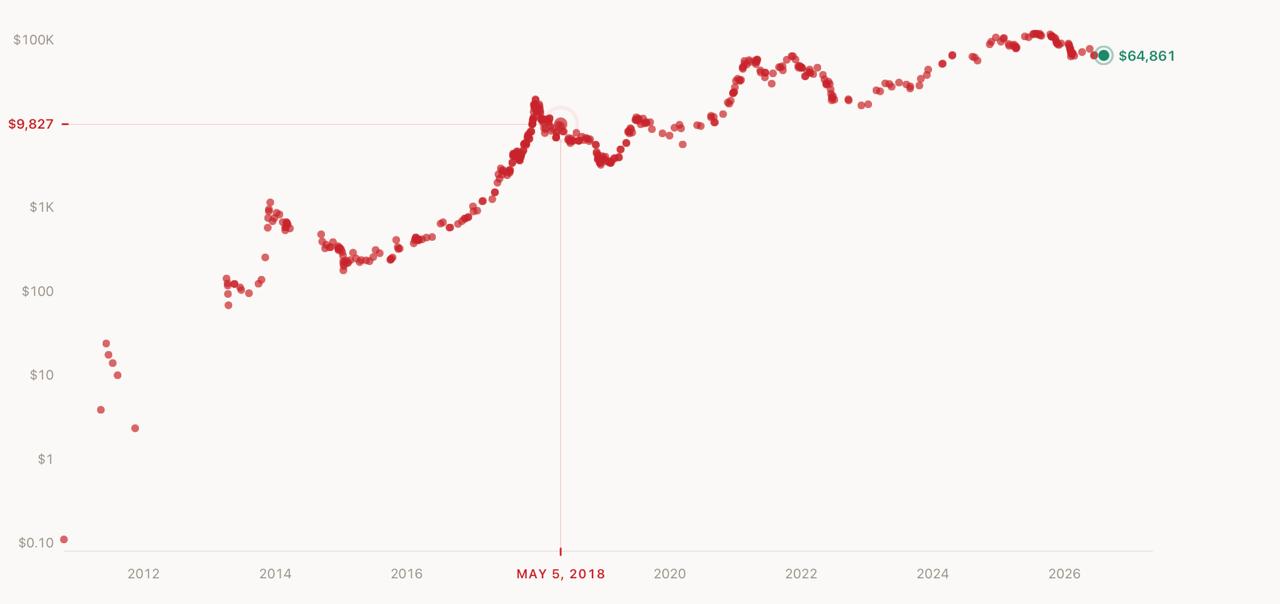
The record shows how often extreme Bitcoin predictions have appeared during periods of market fear, only to fade as conditions changed.
(Mis)Leading Crypto Tweets
Crypto has repeatedly shown how quickly a single post can move sentiment, particularly when it comes from a founder, investor or public figure with a large following.
The market reaction can begin before traders have established whether the post actually changes anything fundamental about the asset or project involved.
High-Profile Hacks
Major hacks generate fear for an obvious reason: users can lose real money.
The 2024 WazirX hack, for example, resulted in losses of roughly $235 million and renewed concerns about assets held on centralized platforms. Incidents like this can also increase interest in self-custody.
What’s the Difference Between FOMO and FUD?
FUD and FOMO describe different emotional pressures on traders.
- FUD stands for fear, uncertainty and doubt. It can make people sell, avoid a trade or withdraw from the market because they expect something bad to happen.
- FOMO, or fear of missing out, appears when traders worry that an opportunity is getting away from them. Rapidly rising prices and stories of other investors making large profits can make buying feel urgent.
A trader might chase a token after a 40% rally because of FOMO, then sell during the first sharp correction after reading predictions of a collapse. In both cases, emotion has taken over the decision.
Methodology
This article was prepared using publicly available information from regulatory documents, established news organizations, security reports and crypto industry sources. Historical examples were checked against the original events where possible, while figures related to hacks and market incidents were taken from the sources linked throughout the article.
Bitcoin “death” declarations were referenced from BitcoinDeaths.com, which tracks public predictions that Bitcoin would collapse or become worthless. The examples are used to explain how FUD develops and spreads rather than to judge whether a particular market opinion is bullish or bearish.
Because crypto news can change quickly, readers should verify breaking developments through primary sources before making financial or security-related decisions.
FAQ
If blockchain is secure, why does FUD still impact the crypto market?
Blockchain security only covers part of the crypto ecosystem. Investors still face exchange failures, scams, regulation, market volatility and human error. Confidence can fall even when the underlying blockchain continues operating normally.
Is all negative crypto news FUD?
No. A hack, financial problem or regulatory action can be both negative and legitimate. FUD is more useful as a description when fear and uncertainty are being amplified by unsupported, misleading or exaggerated claims.
What does FOMO mean in crypto?
FOMO, or fear of missing out, is the pressure to buy because an asset is rising and you fear being left behind.
How do crypto traders monitor FUD?
Traders use reputable news sources, official announcements, regulatory filings and on-chain or market data to check claims circulating online. Sentiment tools such as the Fear & Greed Index can show the mood of the broader market, although they cannot confirm whether an individual story is accurate.
How can I avoid panic-selling because of FUD?
Establish whether the event changes your exposure or the reason you hold the asset. When no immediate security threat exists, waiting for more information can prevent a decision based on an incomplete breaking story.
Conclusions
FUD cannot be removed from crypto, and not every market scare will turn out to be meaningless. Some begin with real problems that require action.
The important part is finding out what happened, whether it affects you and whether it changes the reason behind your investment before making a decision.
Disclaimer
This article is for informational and educational purposes only and does not constitute financial, investment or trading advice. References to FUD, market sentiment, cryptocurrencies, exchanges or past market events should not be interpreted as recommendations to buy, sell or hold any asset.
Negative information is not automatically FUD, and legitimate security, regulatory or financial concerns should be evaluated on their own merits. Cryptocurrency markets are highly volatile, and users should conduct their own research and consider their financial situation and risk tolerance before making investment decisions.



With over 6 years of experience in the world of financial markets and cryptocurrencies, Teodor Volkov provides in-depth analyses, up-to-date news, and strategic forecasts for investors and enthusiasts. His professionalism and sense of market trends make the information he shares reliable and valuable for everyone who wants to make informed decisions.