CFTC Chair Explains Approval of First US-Regulated Bitcoin Perp
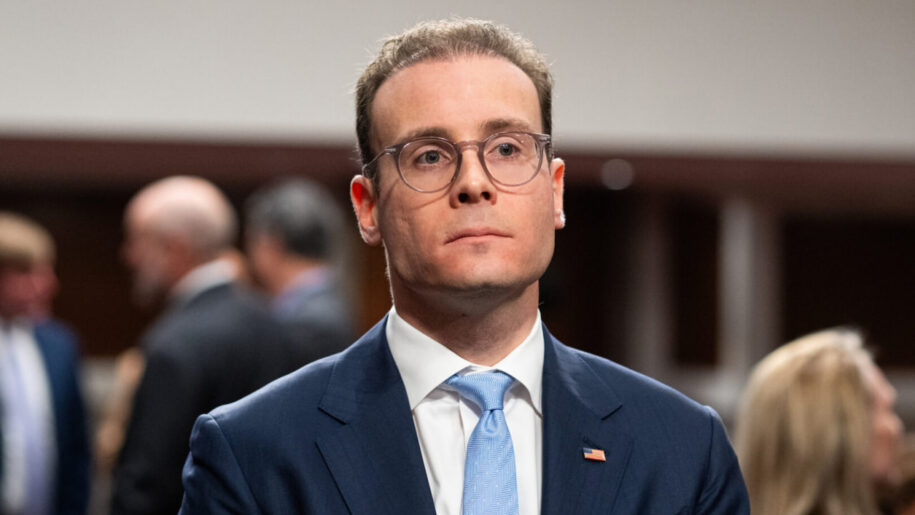
CFTC Chairman Michael Selig defended the approval of BTCPERP, the first US-regulated perpetual futures contract, arguing that US law defines only "contracts for future delivery," which need no fixed expiry.
Key Takeaways
- CFTC Chair Michael Selig defended the approval of BTCPERP, the first US-regulated perpetual futures contract.
- His argument: US law never defines “futures,” only “contracts for future delivery,” which courts interpret.
- The approval brings a market traded mostly offshore onto a regulated US exchange.
- CME’s Terry Duffy has criticized the fast-tracked review of a novel product.
CFTC Chairman Michael Selig has laid out the legal reasoning behind one of the agency’s most consequential crypto decisions: the approval of BTCPERP, the first perpetual futures contract cleared by a US regulator. Speaking on CNBC, Selig defended the move against critics who argue perpetual contracts do not fit the legal definition of a futures contract, and his answer rests on a technical point about what US law actually says.
The Word That Isn’t in the Statute
Selig’s central claim is that the objection rests on a word that does not appear in the law. The Commodity Exchange Act, he noted, never defines or even uses the term “futures contract.” The phrase the Act actually uses is “contract for future delivery,” and the meaning of that phrase has been shaped over decades by the courts and the Commission rather than fixed by any single statutory definition.
Futurity doesn’t necessarily mean a fixed final delivery date or expiry.
The courts and the Commission, not any one definition in statute, have determined which contracts qualify as “contracts for future delivery” over the years.
After considering this precedent, the @CFTC… pic.twitter.com/YrIrhKU2dw
— Mike Selig (@ChairmanSelig) June 16, 2026
That distinction is the whole argument. Critics contend a futures contract requires a delivery or expiration date, and that a perpetual, which never expires, therefore cannot qualify. Selig’s rebuttal is that the courts have interpreted “future delivery” through the lens of futurity, and that futurity “doesn’t necessarily mean a fixed final delivery date or expiry.” In his framing, what matters is the existence of a future price or future value, not a hard expiration. He pointed out that cash-settled derivatives, which also involve no physical delivery, have traded legally in the US for a very long time, and that a perpetual’s daily funding-rate payment between longs and shorts is simply another form of the future exchange of payments the market has always permitted.
Anatomy of the Contract
The product at the center of the debate is BTCPERP, listed by KalshiEX, the CFTC-registered exchange operated by prediction-market company Kalshi. The CFTC approved it on May 29, 2026, issuing a formal Order for Approval rather than the lighter non-objection that earlier crypto products received, which is why it is described as the first perpetual to win outright regulatory approval. The contract references Bitcoin’s spot price and uses a funding-rate mechanism to stay aligned with that price, the same design that dominates offshore crypto derivatives.
The significance is about location as much as product. Perpetual futures are the single most heavily traded instrument in crypto, but that activity has happened almost entirely offshore, on venues like Binance, Bybit, and OKX, outside US oversight. Bringing perpetuals onto a CFTC-registered exchange means margin requirements, customer protections, and market-integrity standards now apply to a category US traders previously had to reach through unregulated channels. Kalshi reportedly crossed $1 billion in perpetual futures volume within a week of launch.
An Onshoring Play With a Political Frame
Selig tied the decision squarely to the current administration’s agenda, casting it as evidence of a regulator working to keep novel products in the US rather than push them abroad. He framed the approval as part of a deliberate effort to bring derivatives innovation onshore and described it as the CFTC delivering results, language that mirrors the broader push to position the US as a hub for digital-asset activity. The approval also arrived paired with no-action relief allowing Coinbase to connect its US operations with offshore derivatives infrastructure, part of a wider coordination between the CFTC and the SEC.

Where the Pushback Comes From
The decision is not without serious objection, and it comes from a heavyweight. Terry Duffy, chairman and CEO of CME Group, has publicly criticized the approval, arguing that a novel and complex product deserved a full industry review rather than the rapid process the CFTC used. He has contended that the Commodity Exchange Act’s notion of futures does carry a delivery or expiration requirement, the exact reading Selig disputes, and questioned how the agency could clear such a product in a compressed timeframe. There is also a durability question that even supporters acknowledge: the approval rests on an order and a policy statement, not a formal rule or statute.
Because it was issued through that lighter process rather than full notice-and-comment rulemaking, the interpretation is potentially exposed to challenge under the Administrative Procedure Act, the same avenue that has unwound other agency actions deemed to have skipped required procedure, and it could be revisited or reversed outright by a future CFTC leadership. The legal theory Selig describes is, for now, the Commission’s working interpretation rather than settled law.
The Door This Opens
However the legal debate resolves, the practical effect is that the most popular instrument in crypto trading now has a regulated US venue for the first time. For institutions and funds barred from offshore platforms on compliance grounds, that opens access to a market they previously could not touch, much as spot Bitcoin ETFs did for direct exposure in 2024. Whether the framework lasts depends on whether it is eventually codified into a formal rule, and on whether the interpretation Selig laid out survives the kind of challenge that figures like Duffy are signaling.



Alexander Zdravkov is a market analyst and crypto journalist with interests in economics, broader financial markets and digital assets. His journey into crypto began more than four years ago, driven by a fascination with the rapid evolution of blockchain technology and the transformative potential of decentralized finance. He began analyzing market cycles and identifying emerging trends before they reach the mainstream. He holds a degree in International Relations - a background that helped shape his broader perspective on global economics, geopolitics, and the interconnected nature of modern financial markets. Whether covering the latest developments in the crypto sector or exploring broader macroeconomic themes, Alexander focuses on giving readers context rather than simply repeating headlines. During his career, he has authored more than 5,000 articles covering cryptocurrencies, traditional finance, and global market developments. His work spans everything from Bitcoin and altcoins to macroeconomic trends influencing risk assets worldwide.