Bitcoin Under $74,000 as Senate Bill Advances to Reopen U.S. Government
U.S. lawmakers moved a step closer to reopening the federal government after the House narrowly passed a key procedural vote tied to a Senate-backed funding bill.
Key Takeaways
- Senate-backed funding bill advances after narrow House procedural vote
- Government reopening increasingly likely, but margin highlights fragile consensus
- Crypto markets remain risk-off despite reduced shutdown risk
- Bitcoin trades under $74,000 as macro uncertainty continues to weigh on sentiment
The razor-thin 217–215 vote clears the way for final passage, easing immediate shutdown risks but leaving markets cautious amid lingering political uncertainty.
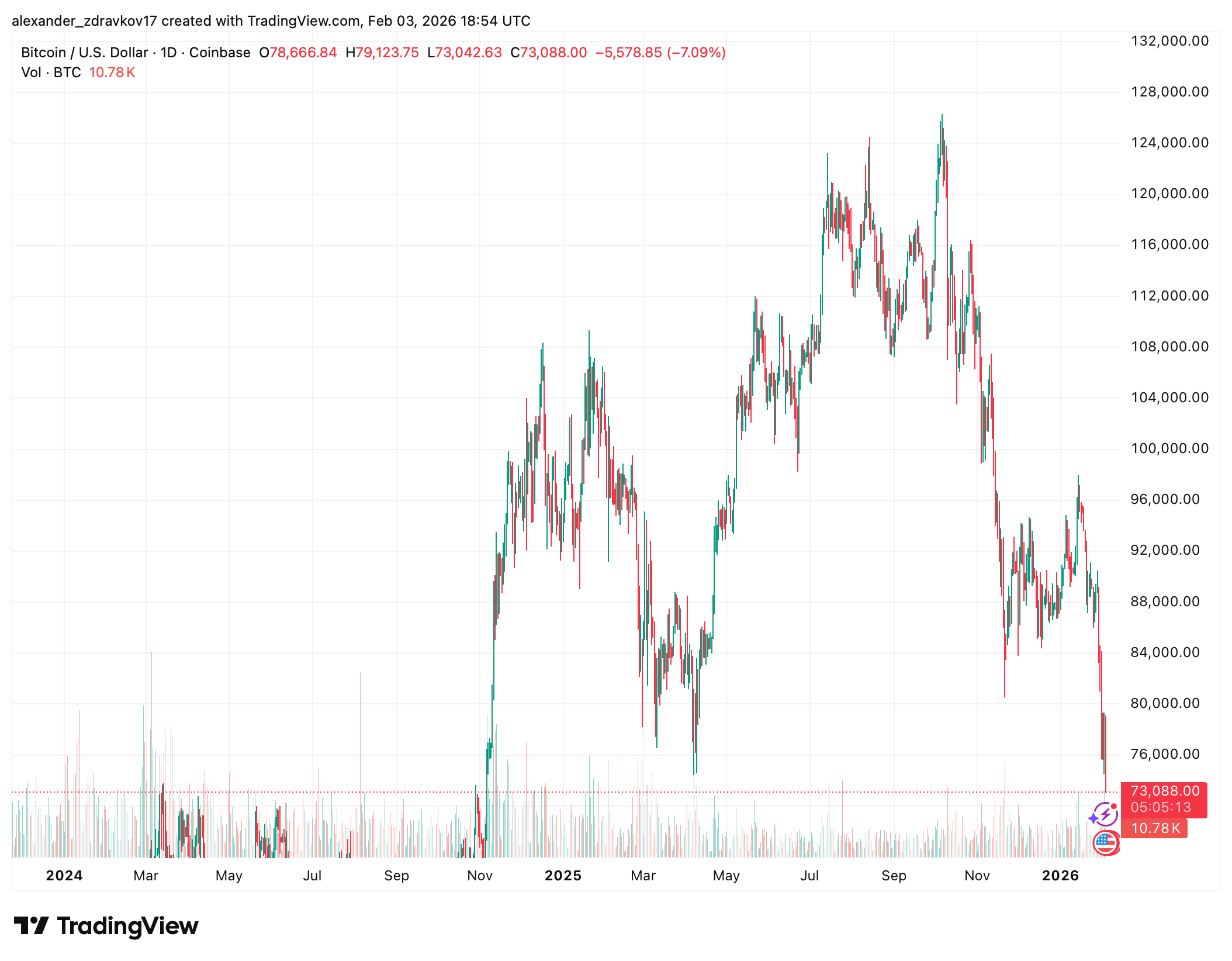
The vote came as digital assets were already under pressure. Total crypto market capitalization slid to around $2.5 trillion, down more than 5% on the day. Bitcoin fell below $74,000, posting roughly a 6% decline over the past 24 hours and nearly 15% on a weekly basis. Ethereum underperformed, dropping close to 9% to trade near $2,115, while major altcoins such as XRP, BNB, and Solana recorded mid-to-high single-digit losses.
Political Progress Brings Relief – but Not a Full Reset
While the procedural vote reduces the probability of a prolonged shutdown, markets are signaling that confidence remains fragile. Investors are still grappling with delayed economic data, tighter financial conditions, and uncertainty over how quickly lawmakers can finalize funding without further disruption.
🚨 BREAKING: The US House has just passed a key procedural vote to RE-OPEN the federal government
It’s a razor thin margin, but most likely, the government will be reopened today.
217-215 pic.twitter.com/1KXRn3za9h
— Nick Sortor (@nicksortor) February 3, 2026
Even with a reopening likely, the temporary nature of the solution keeps macro risk elevated. Any delay in restoring full government operations could still affect the timing of key U.S. economic releases, including labor market data—inputs that remain critical for both equity and crypto traders.
From a technical perspective, Bitcoin continues to trade below key short-term moving averages, with momentum indicators still pointing lower. Ethereum has broken beneath recent support zones, while altcoins lag, reflecting defensive positioning and reduced risk appetite. The Altcoin Season Index remains subdued, reinforcing Bitcoin dominance despite its own weakness.

Sentiment indicators echo the caution. The Crypto Fear & Greed Index remains deep in “extreme fear,” while the average crypto RSI has dipped into oversold territory—a condition that often precedes short-term bounces but does not guarantee a sustained reversal.
What to Expect Next
In the near term, crypto markets are likely to remain highly sensitive to developments in Washington. Confirmation of the government’s full reopening could trigger a short-term relief bounce, especially given oversold technical conditions across major digital assets.
However, unless political stability is reinforced with clearer fiscal direction and improving macro data, rallies may struggle to gain traction. A drawn-out or temporary funding solution would keep volatility elevated, delay economic visibility, and reinforce a risk-off environment.
Until broader macro conditions stabilize, traders should expect choppy price action, headline-driven moves, and limited follow-through on upside attempts.
The information provided in this article is for educational purposes only and does not constitute financial, investment, or trading advice. Coindoo.com does not endorse or recommend any specific investment strategy or cryptocurrency. Always conduct your own research and consult with a licensed financial advisor before making any investment decisions.



Alexander Zdravkov is a market analyst and crypto journalist with interests in economics, broader financial markets and digital assets. His journey into crypto began more than four years ago, driven by a fascination with the rapid evolution of blockchain technology and the transformative potential of decentralized finance. He began analyzing market cycles and identifying emerging trends before they reach the mainstream. He holds a degree in International Relations - a background that helped shape his broader perspective on global economics, geopolitics, and the interconnected nature of modern financial markets. Whether covering the latest developments in the crypto sector or exploring broader macroeconomic themes, Alexander focuses on giving readers context rather than simply repeating headlines. During his career, he has authored more than 10,000 articles covering cryptocurrencies, traditional finance, and global market developments. His work spans everything from Bitcoin and altcoins to macroeconomic trends influencing risk assets worldwide.