Bitcoin Gains on US Jobs Data That Could Undercut the Hawkish Fed

Bitcoin jumped on a soft US jobs report, climbing to $61,500, up roughly 5% over 24 hours and holding firmly above $61,000.
Key Takeaways
- Bitcoin rose to $61,466 after a weak June jobs report, up about 5% on the day.
- The US added just 57,000 jobs versus a 110,000 forecast.
- The 4.2% unemployment rate reflects people leaving the workforce, not strength.
- The miss undercuts the Fed’s recent hawkish shift under Kevin Warsh.
Already Bid Before the Print
The move started before the data landed. Through the overnight and early hours, Bitcoin chopped in a $59,800 to $60,800 range, dipping to test $59,800 near midnight before finding support, with all three moving averages clustered tightly beneath price on the 30 minute chart (the 50 near $60,236, the 100 at $59,441, the 200 at $59,607). Price held above all of them, a constructive setup.
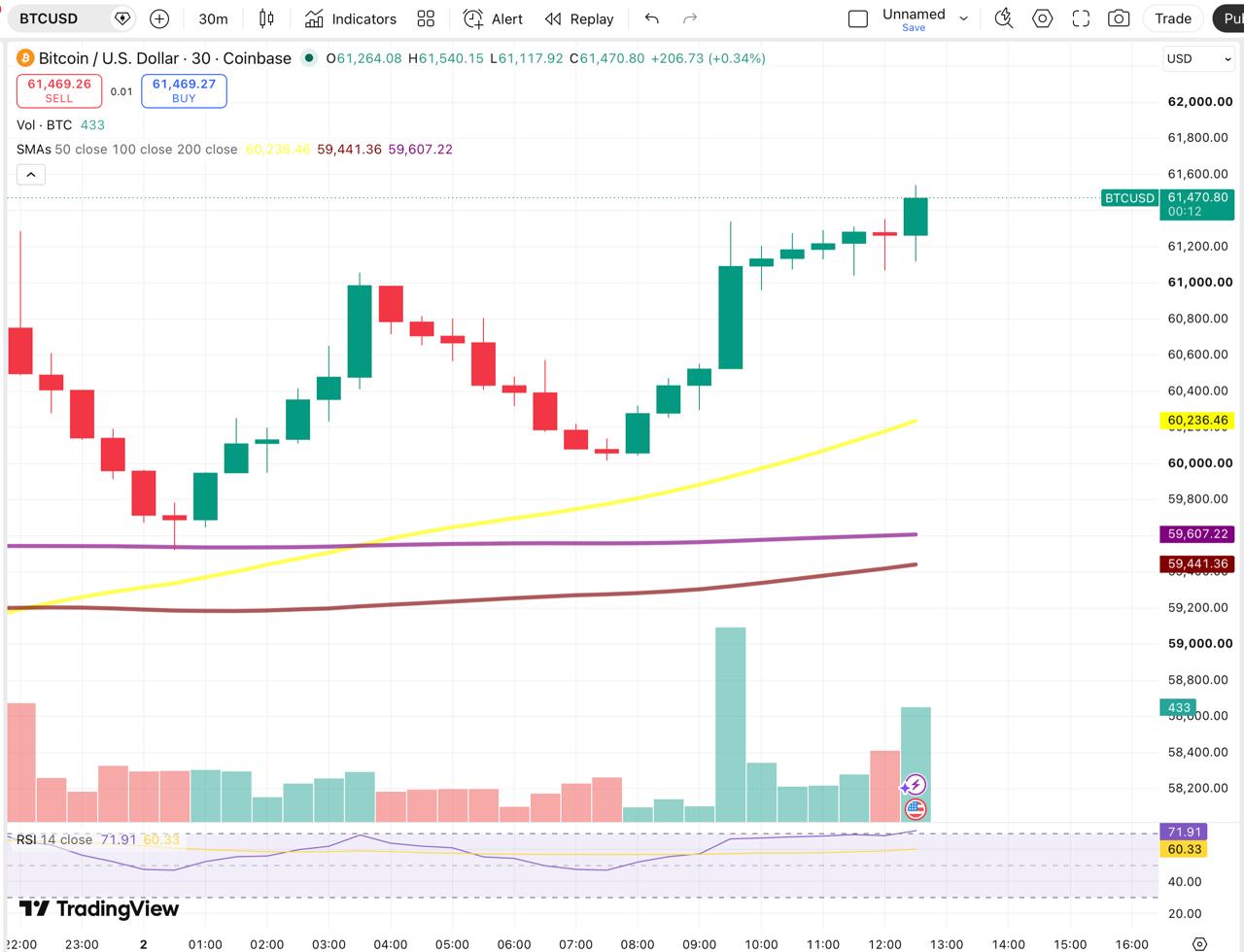
Around 09:00-09:30 UTC, a large green candle pushed price from about $60,200 up through $60,600. It then ground higher from 10:00 to 12:00, printing higher lows into the $61,200 area.
The Miss and the Reaction
The Nonfarm Payrolls report at 12:30 UTC revealed that the US added just 57,000 jobs in June against a 110,000 forecast, well below May’s 129,000 (itself revised sharply down from an originally reported 172,000). The unemployment rate ticked down to 4.2% versus 4.3% expected, but that drop was mechanical, driven by the labor force participation rate falling, not real strength. The headline read as unambiguously weak: hiring slowing hard, with the lower jobless rate a statistical artifact of people leaving the workforce.
Bitcoin popped on the print, spiking to the session high near $61,600 on a fresh volume surge. The logic is straightforward: a weak jobs report might revive Fed-easing expectations and could remove the near-term rate-hike threat, which is risk-on and dollar-negative, supportive for Bitcoin. CoinMarketCap’s data shows that Ethereum and XRP were also up around 1% in the past hour.

The context explains the intensity. Months ago, the only question was how often the Fed would cut in 2026. But inflation turned upward in the first half of the year, partly on surging energy prices and Iran-US uncertainty, and new Fed Chair Kevin Warsh led the Fed to a notably hawkish conclusion, with markets even pricing a possible hike as soon as this summer or early fall, according to Reuters.
Against that repricing, a miss this large lands hard, it might undercut the hike case and could push expectations back toward easing.
Anyways the move has limits. RSI at 71.86 on the 30 minute chart shows it’s overbought intraday, and a single data-driven spike doesn’t reverse the broader structure, Bitcoin is still in the low $60Ks, far below its former highs. The significance is macro-narrative: this is the first data point in a while to push back against the hawkish repricing, and Bitcoin’s sharp reaction could be a sign of just how closely investors now track Fed rate expectations.



Alex is Editor-in-Chief of Coindoo and co-founder of Millennial Media Group, with nearly a decade of experience covering financial markets - crypto first, then everything else. It started in 2016 with Bitcoin. Like most people at the time, he didn't fully understand it - so he kept digging. Blockchain, tokenomics, the projects, the cycles. That curiosity never stopped, and eventually pulled him into traditional markets too: equities, commodities, macro. Not because he left crypto behind, but because you can't properly understand one without the other. What drives him is straightforward: he wants to know why something is happening, not just that it's happening. Most market coverage stops at the headline - price up, price down, here's a chart. Alex finds that kind of reporting actively unhelpful. If you walk away from an article without understanding the mechanism behind the move, what did you actually learn? He holds a degree in Tourism from New Bulgarian University - not the most obvious path into financial markets, but markets have a way of pulling in people who are simply too curious to stay out. He has authored over 200 in-depth analyses and more than 10,000 articles across crypto and traditional finance. He still thinks every day in markets teaches him something new. That's probably why he hasn't stopped.