

PYTH and STRK Jump 12% in an Hour, Bitcoin Retakes $82K

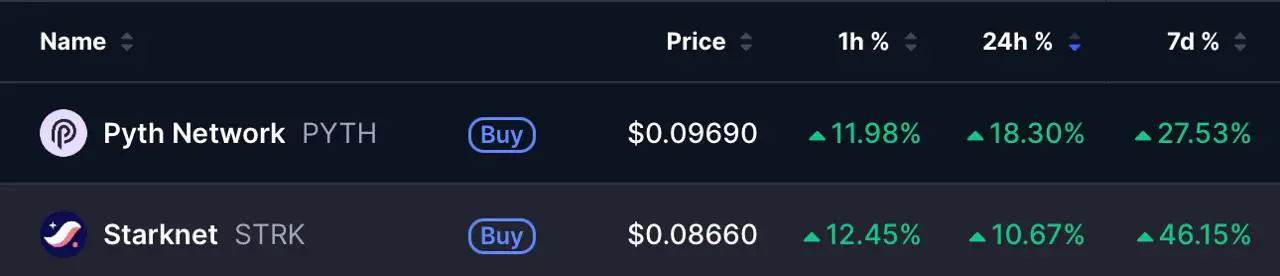
PYTH and STRK gained roughly 12% in an hour on October 15 as Bitcoin recovered $82,000, reversing some of the weakness surrounding a stronger-than-expected US inflation report.
Key Takeaways
- PYTH gained 11.98% in an hour; STRK rose 12.45%.
- Bitcoin recovered $82,000, while XRP and Solana also rebounded.
- Shorts accounted for about 93% of one-hour liquidations.
- US producer prices rose 1.3% in September, exceeding the 0.6% forecast.
Bitcoin’s recovery spreads to PYTH, STRK and larger altcoins
CoinMarketCap data showed Bitcoin near $82,200 during Thursday’s rebound. XRP returned to approximately $1.33 after briefly falling below $1.30, while Solana recovered to around $105 from roughly $101.
PYTH and STRK recorded particularly sharp one-hour gains. PYTH reached approximately $0.0969, up 11.98%, while STRK climbed 12.45% to around $0.0866. These are rolling one-hour changes, rather than gains measured from the start of the day.
Short sellers take losses during the bounce
CoinGlass liquidation data recorded alongside the rebound showed approximately $51.9 million in leveraged positions forcibly closed over one hour. Shorts accounted for $48.28 million, or about 93% of that total.
Short positions profit when prices fall. When a rising market leaves a leveraged short with insufficient collateral, the exchange can close the position by buying back the asset or contract. Those forced purchases can add upward pressure to an existing rally.
The preceding 24-hour totals showed a different balance: approximately $932.4 million in liquidations, including $795.6 million in longs and $136.7 million in shorts. Positions betting on higher prices therefore accounted for most of the daily liquidations, even as short sellers bore the brunt of the latest hour.
The figures show leveraged traders taking losses on both sides of the reversal. They do not establish what started the rebound or how much buying came from investors opening new positions.
Producer prices rise more than twice as much as forecast
The recovery followed the September Producer Price Index release at 8:30 a.m. Eastern time on October 15. The Bureau of Labor Statistics reported a 1.3% monthly increase in final-demand prices, compared with the 0.6% forecast cited in MarketWatch’s coverage. August’s increase was 0.5%.
Annual producer-price inflation reached 6.3%, its highest rate since December 2022. Energy drove much of the increase in goods prices, but the measure excluding food, energy and trade services also rose 0.5% during September, indicating pressure beyond those categories.
PPI measures the prices domestic producers receive for their output. Investors monitor it for evidence of inflation pressures and for components that feed into other inflation measures. A stronger reading can complicate the case for lower interest rates, particularly when it follows elevated consumer-price inflation.
For crypto, expectations of restrictive policy can discourage borrowing and speculative positions. Higher inflation-adjusted bond yields can also make interest-bearing assets more attractive relative to tokens that provide no contractual income. These channels help explain why strong inflation can pressure crypto, although they do not determine every immediate price reaction.
Prices can nevertheless rise when traders are positioned for further losses. Once a rebound begins, short closures can reinforce it even without an improvement in the economic outlook. Thursday’s reversal echoes earlier episodes when crypto rallied through negative headlines, leaving prices and the economic news moving in opposite directions.
Sentiment remains neutral despite the sharp reversal
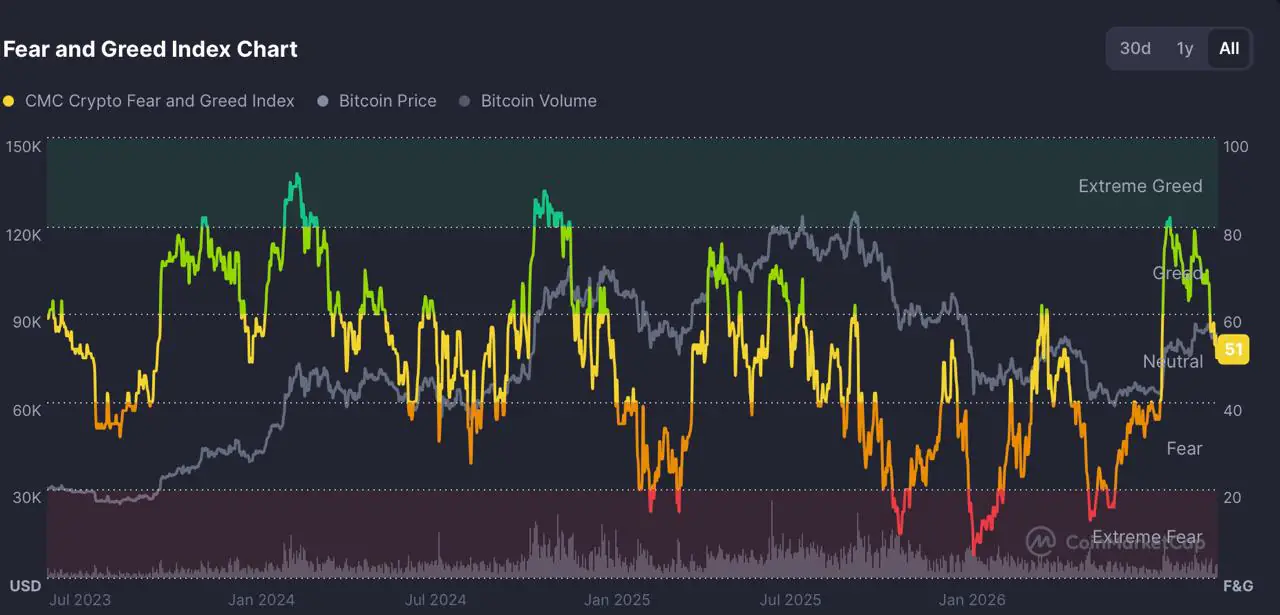
CoinMarketCap’s Crypto Fear and Greed Index showed 51 out of 100, within its neutral range. The broader sentiment gauge therefore showed neither fear nor greed, even as leveraged positions underwent substantial liquidations.
STRK also has a governance decision underway
Separately, Starknet’s community opened a seven-day, non-binding vote on whether to explore becoming an independent Layer 1 blockchain with post-quantum security. The official governance proposal follows StarkWare’s October 8 announcement that it was exploring that direction.
The proposal asks whether to pursue further research; it does not approve a migration away from Ethereum. An independent Layer 1 would need its own arrangements for securing and settling transactions, changing Starknet’s current reliance on Ethereum as a Layer 2. Post-quantum security concerns protection against attacks that sufficiently powerful quantum computers could pose to existing cryptography.
The vote gives STRK holders a separate development to assess, but the available trading figures do not establish that it contributed to the one-hour gain. PYTH’s simultaneous rise, alongside recoveries in Bitcoin, XRP and Solana, shows that the rebound extended beyond Starknet.
Thursday’s recovery coincided with substantial forced short closures despite accelerating producer-price inflation. Whether it also attracted sustained investment remains unanswered: the liquidation totals do not measure fresh spot demand, and the first rebound does not resolve the pressure that higher inflation could place on monetary policy.
This article is provided for informational purposes only and does not constitute financial or investment advice. Cryptocurrency prices and liquidation totals can change rapidly.



Kosta has reported on cryptocurrency markets and blockchain infrastructure since 2020, bringing over six years of hands-on experience in the crypto industry built through daily tracking of markets, trends, and emerging blockchain developments. Specializing in Bitcoin on-chain analysis, institutional ETF flows, and digital asset price action, his work at Coindoo has been cited by other news agencies and consistently covers market developments with a focus on data-driven reporting across Bitcoin, Ethereum, Solana, and XRP. Over the years, Kosta has contributed to multiple crypto media outlets in different regions, authoring over 6,000 articles across the sector. His reporting spans cryptocurrency markets and the broader fintech industry, tracking not only price action but also the technological and regulatory forces shaping the ecosystem. To support his analysis, Kosta actively leverages on-chain data and metrics from leading platforms such as Santiment, Glassnode, and CryptoQuant, enabling deeper, evidence-based market insights. He believes in the power of transparency and the data that underpins the blockchain ecosystem. His academic background in Marketing Management from Denmark further complements his analytical approach, adding a strong understanding of communication strategy and content positioning to his work.