The SEC alleges BG Wealth Sharing and DSJ Exchange used false filings and fabricated credentials to sell a crypto investment program that raised more than $130 million.

The SEC alleges BG Wealth Sharing and DSJ Exchange used false filings and fabricated credentials to sell a crypto investment program that raised more than $130 million.
A bank can legally own a tokenized bond and still need a central bank’s, a settlement operator’s and a lender’s approval before it can turn that bond into cash.

Corporate blockchain adoption spans experiments, restricted deployments and routine operations, making headline percentages a poor guide to how much business activity has actually moved onto these systems.

Banks are expanding stablecoin services before demand reaches most customers, leaving a practical test for each launch: whether businesses can move money more easily and at a lower cost.
Zcash could redirect future grants funding into a locked reserve while keeping its grants program running, leaving a crucial question unresolved: who could eventually authorize spending that money?

President Donald Trump is looking at whether North Korea was behind Binance’s $6.3 billion hack, as US agencies investigate and private trackers point to a known Pyongyang unit.
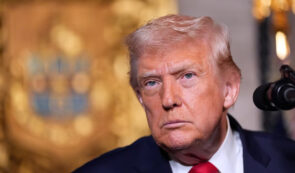
Tether’s reserve buffer nearly doubled to $8 billion in the third quarter, but the increase outpaced operating profit and came alongside a shift in the assets backing USDT.

The Binance attacker deposited stolen USDT on Aave and borrowed ether before markets were frozen, leaving a collateralized loan behind while moving the proceeds beyond a stablecoin issuer’s blacklist.

Tokenized assets could reach a clearinghouse faster, but a margin call tests more than transfer speed: whether the asset counts, who controls it and when cash becomes available.

XRP is bouncing from a sweep to $1.20 after yesterday’s breakdown, but the zone that held as support earlier this month now sits overhead between $1.26 and $1.30.

Binance says Thursday’s breach began with a compromised engineer’s laptop and cost an estimated $6.3 billion, the largest crypto theft on record, as investigators link it to North Korea.

Binance co-founder Changpeng Zhao said the large outflows from Binance wallets look like a hack, as Tether and Circle froze about $1.8 billion in stablecoins tied to the transfers.


That role has become more useful as bridging and onchain lending have become routine.…
Solana is a public blockchain built to process transactions at a pace and cost…

Key takeaways Bluesky leads decentralized social on scale, without using a blockchain. Farcaster changed…

Crypto trading can look simple until a fast market, thin order book or leveraged…