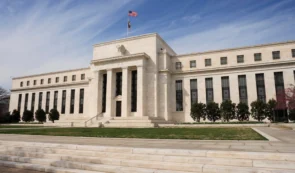
Fed and SEC Reset Crypto Policy as Institutions Reposition

Regulatory pressure has been one of crypto’s biggest headwinds over the past two years. That pressure is now easing, not through loud announcements, but through a series of coordinated policy reversals that quietly reshape how US banks and financial institutions can interact with digital assets.
Recent moves by the Federal Reserve and the Securities and Exchange Commission point to a clear message: crypto is no longer being treated as an outlier to be fenced off, but as financial infrastructure that needs rules, supervision, and integration.
- US regulators are reversing earlier crypto-restrictive policies rather than adding new ones
- The Fed now allows banks to engage in crypto activities under standard supervision
- FDIC and OCC actions confirm a broader regulatory easing trend
This doesn’t guarantee an immediate price rebound, but it significantly changes the long-term setup for Bitcoin and the broader market.
A Policy Rollback That Changes Bank Behavior
Instead of introducing new crypto rules, the Federal Reserve has done something more impactful – it removed old ones.
The central bank has withdrawn a 2023 policy framework that discouraged banks from crypto involvement and replaced it with guidance that allows supervised institutions to participate in crypto-related activities under standard risk controls. Both insured and uninsured banks are now free to explore crypto services without seeking special approval.
Crucially, the Fed no longer frames crypto primarily as a risk. In its latest communication, it acknowledges blockchain technology as a potential efficiency upgrade for banking products and services. That shift in language matters, especially for compliance teams that previously viewed crypto exposure as regulatory liability.
With this change, banks can realistically expand into areas such as custody, tokenized deposits, settlement infrastructure, and crypto access for clients. Similar reversals by the FDIC and OCC reinforce the direction of travel, effectively removing the informal barriers that froze bank-crypto engagement after 2022.
Custody Clarity Lowers Institutional Friction
While the Fed focused on banks, the SEC addressed one of the industry’s most sensitive issues: custody.
Rather than tightening enforcement, the SEC’s Trading and Markets division issued practical guidance explaining how broker-dealers can legally safeguard crypto assets. The focus is on control, security, and operational readiness, not on restricting participation.
Institutions are expected to maintain direct access to assets, implement strong private-key controls, and prepare for blockchain-specific risks such as network outages or cyber incidents. None of this is new to crypto-native firms, but having it formally spelled out gives traditional players a workable compliance checklist.

That clarity removes a major psychological hurdle. Firms that previously stayed away due to regulatory uncertainty now have defined expectations, which is essential for scaling liquidity and tokenized financial products.
Why the Market Isn’t Reacting Yet
Despite the regulatory progress, price action remains weak. Bitcoin is still trading well below recent highs, volumes are shrinking, and short-term sentiment remains cautious.
That disconnect isn’t surprising. Policy changes affect structure first, not momentum. Liquidity improvements, custody expansion, and institutional onboarding take time to materialize and rarely show up immediately in price charts.
Instead of acting as a trigger, these developments function more like groundwork. They reduce downside risk from regulation and improve the probability of sustained growth once demand returns.
In other words, the rules of the game are improving, even if the score hasn’t changed yet.
The information provided in this article is for educational purposes only and does not constitute financial, investment, or trading advice. Coindoo.com does not endorse or recommend any specific investment strategy or cryptocurrency. Always conduct your own research and consult with a licensed financial advisor before making any investment decisions.



Alex is Editor-in-Chief of Coindoo and co-founder of Millennial Media Group, with nearly a decade of experience covering financial markets - crypto first, then everything else. It started in 2016 with Bitcoin. Like most people at the time, he didn't fully understand it - so he kept digging. Blockchain, tokenomics, the projects, the cycles. That curiosity never stopped, and eventually pulled him into traditional markets too: equities, commodities, macro. Not because he left crypto behind, but because you can't properly understand one without the other. What drives him is straightforward: he wants to know why something is happening, not just that it's happening. Most market coverage stops at the headline - price up, price down, here's a chart. Alex finds that kind of reporting actively unhelpful. If you walk away from an article without understanding the mechanism behind the move, what did you actually learn? He holds a degree in Tourism from New Bulgarian University - not the most obvious path into financial markets, but markets have a way of pulling in people who are simply too curious to stay out. He has authored over 200 in-depth analyses and more than 10,000 articles across crypto and traditional finance. He still thinks every day in markets teaches him something new. That's probably why he hasn't stopped.