Crypto Faces a Two-Central-Bank Squeeze as Rate Bets Rise

Crypto prices fell as an ECB rate increase and growing expectations of a US hike lifted bond yields, tightening conditions for leveraged and speculative assets.
Key Takeaways
- Fed hike probability reached nearly 70%.
- Crypto market capitalization fell about 2%.
- Altcoins recorded the larger declines.
- Core CPI is the next test.
Energy prices link two different rate paths
The European Central Bank raised its deposit rate by 25 basis points to 2.5% on Thursday, completing its second increase of the year.
The move was widely expected. The more important development for markets was the continued rise in energy prices and bond yields. Oil climbed above $105 a barrel, while Germany’s rate-sensitive two-year government bond yield reached approximately 3.07%, near its highest level in more than two years.
In the US, producer prices increased 5.4% from a year earlier, slightly above the 5.3% consensus. The report pushed traders to assign a greater probability to a Federal Reserve increase at its September meeting. Our separate analysis examines what the 5.4% US PPI reading means for crypto.
Energy costs connect the European and US developments, but the two rate paths are not identical. The ECB has already acted. The Federal Reserve’s decision remains open and will depend heavily on the next consumer inflation report.
Crypto losses spread beyond Bitcoin
At the time of writing, CoinMarketCap data showed the total cryptocurrency market capitalization falling about 2% over 24 hours.
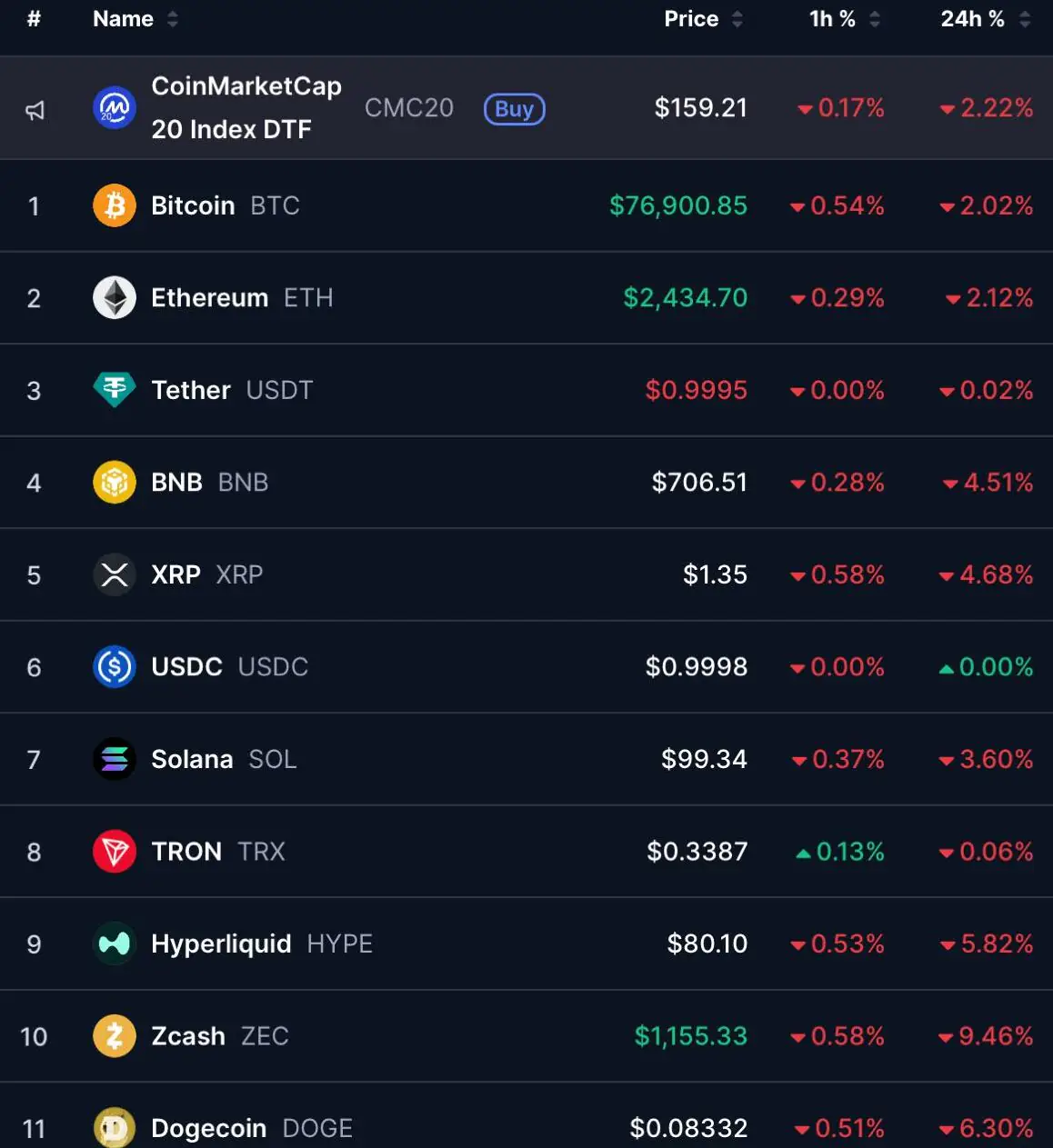
Bitcoin traded near $77,000 after losing roughly 2%, while Ether was also down about 2%. The declines were larger in several major altcoins: BNB and XRP lost about 4%, Solana fell approximately 3%, and Dogecoin dropped around 6%.
The wider altcoin losses are consistent with investors reducing risk. Smaller cryptoassets generally have thinner liquidity and more speculative positioning than Bitcoin, leaving their prices more exposed when traders cut leveraged positions.
CoinMarketCap recorded approximately $460 million in crypto liquidations during the same period, including about $390 million in long positions. The figures show that leveraged bullish positions were being forcibly closed and probably added to short-term selling pressure.
The timing is consistent with a broader reaction to rising rates and bond yields, but the macroeconomic news does not explain the entire decline. Higher oil prices, weaker equity markets and leverage already present in crypto derivatives also affected trading.
FedWatch measures trading expectations, not certainty
The implied probability of a quarter-point Federal Reserve increase reached 69.8% after the producer-price report, up from approximately 64% before the data, according to the CME FedWatch Tool.
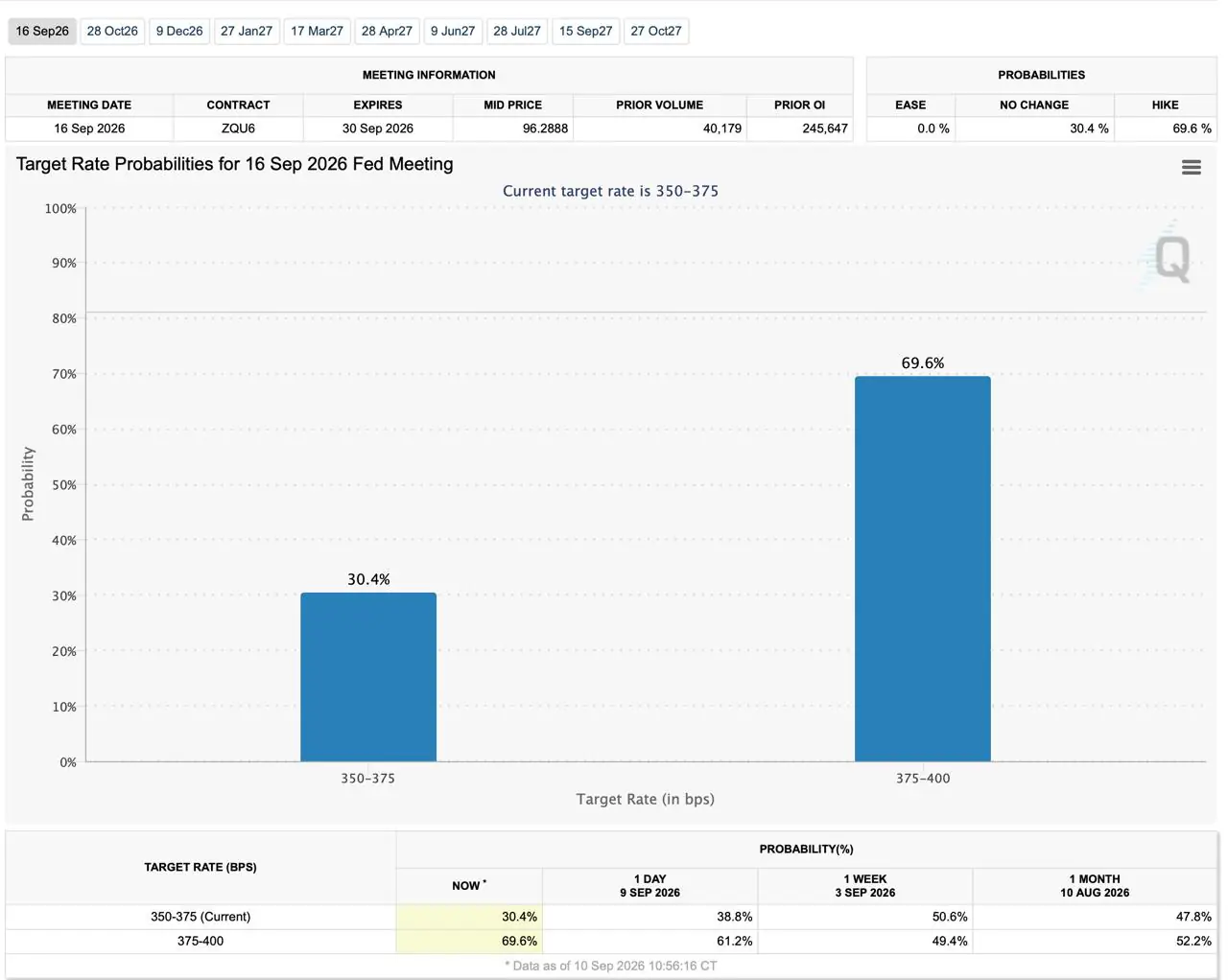
FedWatch derives its probabilities from the prices of 30-day federal-funds futures. Those prices change as traders revise their expectations for where the effective federal funds rate will stand after each policy meeting. The reading is therefore a snapshot of market positioning, not a poll of Fed officials or a promise that the central bank will act.
The contracts implied a 69.8% probability of a 25-basis-point increase at the September 15–16 meeting. Such a move would lift the Fed’s target range from 3.50%-3.75% to 3.75%-4.00%.
The monthly PPI increase of 0.4% matched forecasts, but the annual rate was marginally higher than expected. Final-demand goods prices rose 1.1%, including a 4.2% increase in energy, while services prices edged up 0.1%. Transportation and warehousing costs also increased.
The figures did not show equally strong inflation across every category. They did, however, give traders less reason to expect the Fed to overlook the recent rise in energy and business costs.
European Central Bank
Status: Increase completed
Deposit rate: 2.5%
Next test: Energy and wage inflation
Federal Reserve
Status: Decision pending
Current range: 3.50%-3.75%
Next test: August core CPI
Two rate channels matter most for crypto
Higher rates first affect the competition for investment capital. Bitcoin itself does not provide a native yield. Ethereum staking and crypto lending can generate returns, but they introduce token-price, custody, validator or smart-contract risks that short-dated US and core eurozone government debt generally avoids.
As government yields rise, investors can receive a larger return without accepting crypto’s volatility. That can reduce demand for digital assets, particularly among funds that move capital between bonds, equities and crypto.
The second channel is financing. Central-bank rates do not directly set funding rates on perpetual crypto futures, which are determined by positioning within derivatives markets. They do influence borrowing costs, collateral conditions and the amount institutions are willing to lend or invest.
This is why a widely expected ECB increase can still affect crypto. The decision itself may have been reflected in prices, but the prospect of further European tightening leaves less room for investors to assume that global financing conditions will ease soon. A possible Fed increase adds pressure in the dollar market, where most crypto trading and borrowing remains concentrated.

US CPI will determine whether Fed risk persists
Friday’s Consumer Price Index is expected to show headline inflation increasing 0.4% in August and 3.4% from a year earlier. Economists forecast a 0.2% monthly increase in core prices, with the annual core rate at 2.4%.
The Fed formally targets inflation through the Personal Consumption Expenditures Price Index rather than CPI. However, CPI will provide important information about housing, services and other consumer costs while helping economists refine their estimates for the next PCE report.
A core reading below the 0.2% monthly forecast would weaken evidence that inflation pressure is spreading beyond energy. An upside surprise would strengthen the case for an increase and could push short-term Treasury yields higher.
Crypto traders can assess the reaction through four indicators:
- FedWatch: Whether a September increase remains the market’s base case after CPI.
- US two-year yield: Whether short-term rate expectations continue lifting borrowing costs.
- Oil and European yields: Whether the pressure behind the ECB increase continues.
- Crypto market breadth: Whether altcoins keep underperforming Bitcoin as liquidations slow.
Bitcoin stabilizing while altcoins remain weak would suggest that speculative positions are still being reduced. A broader recovery accompanied by lower short-term bond yields would offer stronger evidence that macroeconomic pressure is easing.
Friday’s CPI will determine whether the US side of the pressure strengthens or begins to unwind. The ECB side is already in place.
This article is for informational purposes only and does not constitute financial advice.



Alexander Zdravkov is a market analyst and crypto journalist with interests in economics, broader financial markets and digital assets. His journey into crypto began more than four years ago, driven by a fascination with the rapid evolution of blockchain technology and the transformative potential of decentralized finance. He began analyzing market cycles and identifying emerging trends before they reach the mainstream. He holds a degree in International Relations - a background that helped shape his broader perspective on global economics, geopolitics, and the interconnected nature of modern financial markets. Whether covering the latest developments in the crypto sector or exploring broader macroeconomic themes, Alexander focuses on giving readers context rather than simply repeating headlines. During his career, he has authored more than 5,000 articles covering cryptocurrencies, traditional finance, and global market developments. His work spans everything from Bitcoin and altcoins to macroeconomic trends influencing risk assets worldwide.