Newly released 2025 trade data from the U.S. Bureau of Economic Analysis confirms a dramatic reshuffling of America’s global trade relationships under President Donald Trump.

Newly released 2025 trade data from the U.S. Bureau of Economic Analysis confirms a dramatic reshuffling of America’s global trade relationships under President Donald Trump.
U.S. government bonds extended their sell-off on February 19, 2026, marking the longest losing streak in a month as investors reacted to mounting geopolitical risks and renewed inflation concerns.

New filings for unemployment benefits dropped sharply last week, pointing to continued resilience in the U.S. labor market even as trade and inventory data paint a more complicated picture for the broader economy.

The Federal Open Market Committee is expected to keep its benchmark interest rate unchanged in the 3.50%–3.75% range, stating that economic activity continues to expand at a “solid pace.”
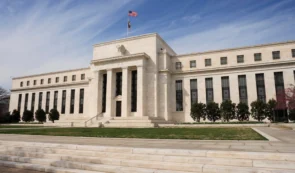
Kevin Hassett, Director of the National Economic Council, launched a sharp attack on a recent study published by the Federal Reserve Bank of New York, escalating tensions between the White House and parts of the Federal Reserve system.

The European Central Bank is stepping up its scrutiny of foreign-exchange markets as policymakers grow increasingly alert to the inflationary impact of a strengthening euro.

Chicago Fed President Austan Goolsbee signaled that the Federal Reserve could deliver several more interest rate cuts in 2026 - but only if inflation convincingly moves back toward the central bank’s 2% goal.

President Donald Trump has officially launched a sweeping $550 billion trade and investment framework with Japan, marking one of the largest bilateral economic agreements in recent years.

Financial markets have sharply increased expectations for a March rate cut from the Bank of England after fresh labor data signaled a clear slowdown in the UK economy.

Markets are heading into a pivotal week as investors brace for a series of economic releases and legal decisions that could shape expectations for inflation, interest rates, and consumer resilience.

France is signaling reservations about accelerating efforts to strengthen the euro’s international role, introducing a note of caution into a broader European push to reduce reliance on the U.S. dollar.

The U.S. housing market has entered 2026 with affordability metrics exceeding prior extremes, including levels seen during the 2006 housing bubble. Elevated home prices, mortgage rates above 6%, and slower income growth have combined to push ownership costs beyond the reach of most households, according to multiple industry and financial analyses.


It offers developers, crypto enthusiasts, enterprise users, and analysts a unified way to query…

This trend has gained momentum in recent years as companies and even governments explore…

Crypto scams can come in many forms, from fraudulent investment schemes to phishing attacks…

The role of blockchain-based infrastructure in cross-border payments has undergone a dramatic shift in…