Fed Pauses After Cuts, Minutes Reveal Split Over Timing
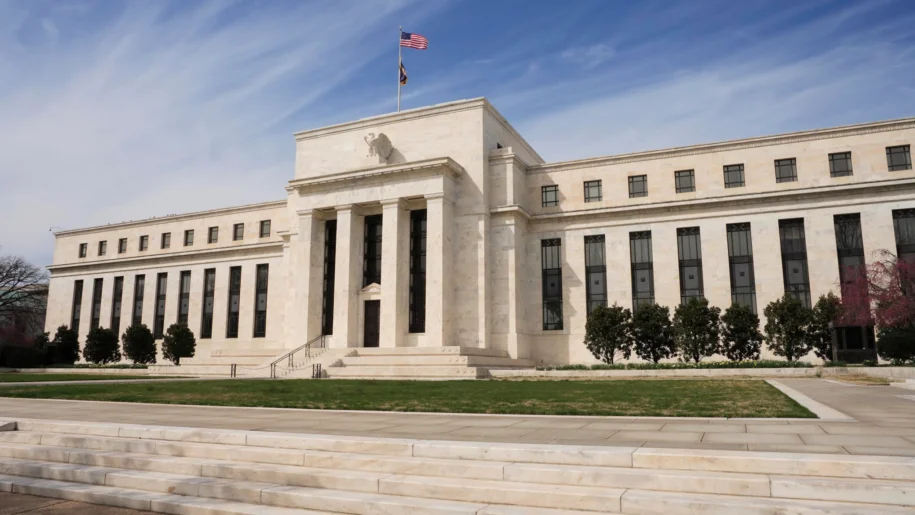
The Federal Open Market Committee is expected to keep its benchmark interest rate unchanged in the 3.50%–3.75% range, stating that economic activity continues to expand at a “solid pace.”
Key Takeaways:
- The policy rate will probably remain at 3.50%–3.75% following prior easing.
- Inflation is still described as “somewhat elevated,” despite moderation.
- The labor market is stabilizing with a slower pace of job gains.
- Two officials voted for an immediate 25 basis point rate cut.
At the same time, inflation remains “somewhat elevated,” and uncertainty around the economic outlook remains high, according to details from the latest meeting.
The committee reiterated that its dual mandate remains maximum employment and 2% inflation over the longer run. Available indicators point to steady economic growth, while the labor market shows signs of stabilization after a period of strong expansion.
Industrial Activity Accelerates
Additional data released on Feb. 18, 2026, showed improving momentum in the industrial sector. Industrial production rose 0.7% in January after a 0.2% gain in December. Manufacturing output increased 0.6%, while mining declined 0.2%. Utilities production jumped 2.1%.
Capacity utilization climbed to 76.2%, though it remains 3.2 percentage points below its long-term average for the 1972–2025 period. The figures suggest improving industrial dynamics without signs of excessive strain on capacity — a factor that could otherwise contribute to renewed inflationary pressures.
Division in the Vote
The decision to leave rates unchanged was supported by Chair Jerome Powell and the majority of committee members. However, two officials – Stephen Miran and Christopher Waller – dissented, favoring a 25 basis point cut at this meeting.
The split suggests that the debate within the committee centers more on timing than direction. While some policymakers appear ready to resume easing, others prefer to assess additional incoming data before taking further action.
The Fed said it will continue to carefully evaluate economic data, inflation expectations and financial conditions when determining the scope and timing of future adjustments. Despite the internal differences, the central bank remains committed to a gradual and balanced approach as economic signals remain mixed.
The information provided in this article is for educational purposes only and does not constitute financial, investment, or trading advice. Coindoo.com does not endorse or recommend any specific investment strategy or cryptocurrency. Always conduct your own research and consult with a licensed financial advisor before making any investment decisions.



Alexander Zdravkov is a market analyst and crypto journalist with interests in economics, broader financial markets and digital assets. His journey into crypto began more than four years ago, driven by a fascination with the rapid evolution of blockchain technology and the transformative potential of decentralized finance. He began analyzing market cycles and identifying emerging trends before they reach the mainstream. He holds a degree in International Relations - a background that helped shape his broader perspective on global economics, geopolitics, and the interconnected nature of modern financial markets. Whether covering the latest developments in the crypto sector or exploring broader macroeconomic themes, Alexander focuses on giving readers context rather than simply repeating headlines. During his career, he has authored more than 10,000 articles covering cryptocurrencies, traditional finance, and global market developments. His work spans everything from Bitcoin and altcoins to macroeconomic trends influencing risk assets worldwide.