U.S. Inflation at 2.4% – Are Multiple Fed Rate Cuts Coming?
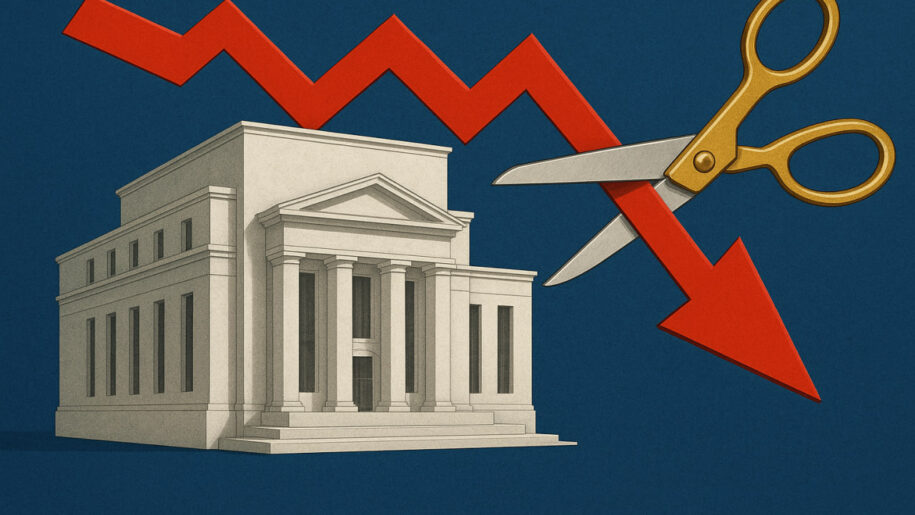
Chicago Fed President Austan Goolsbee signaled that the Federal Reserve could deliver several more interest rate cuts in 2026 - but only if inflation convincingly moves back toward the central bank’s 2% goal.
Key Takeaways
- The Fed could cut rates several times in 2026 if inflation keeps moving toward 2%.
- Services inflation at 3.2% remains the main obstacle to faster easing.
- Strong January jobs data reduces the urgency for immediate cuts.
Speaking on February 17, Goolsbee stressed that while recent inflation data has cooled, policymakers are not yet ready to declare victory. The path forward, he said, will depend heavily on incoming labor and price reports.
Inflation Cools – But Risks Remain
January’s headline CPI slowed to 2.4% year-over-year, its lowest level since mid-2025. At first glance, that suggests meaningful progress. However, Goolsbee cautioned that the softer reading was partly driven by base effects from last year.
More importantly, services inflation remains elevated at 3.2% annually. That category – often considered “sticky” – continues to worry policymakers. Core CPI held at 2.5%, while core PCE is projected to rise 0.4% month-over-month, potentially marking its strongest monthly increase since early 2023.
If tariff-related price pressures prove temporary, Goolsbee noted, that could open the door to easier policy. But persistent services inflation could delay action.
A 3% Policy Rate as a “Loose Target”
Goolsbee identified roughly 3% as a broad estimate of a neutral policy rate. With the federal funds rate currently at 3.50%–3.75%, reaching that level would likely require two to three 25-basis-point cuts.
The Fed held rates steady at its January meeting after implementing three consecutive reductions in late 2025. Official projections released in December showed a median expectation of just one additional cut in 2026, though officials remain sharply divided.
Labor Market Sends Mixed Signals
January’s employment report complicated the picture. Nonfarm payrolls increased by 130,000 – more than double consensus expectations – while the unemployment rate dipped to 4.3%.
Job growth was concentrated in healthcare and social assistance, and wages rose 0.4% for the month, or 3.7% annually. The resilience of the labor market has made some policymakers cautious about moving too quickly.
Goolsbee described labor and inflation data as the primary “triggers” for upcoming decisions.
Markets Bet on June
Financial markets have adjusted expectations following the cooler CPI reading. According to CME FedWatch data, investors now see a high probability that the first rate cut of 2026 will arrive at the June 16–17 FOMC meeting.
Markets currently assign roughly a 50%–70% chance of a 25-basis-point cut in June, with a smaller probability of a larger move. By contrast, the March 17–18 meeting is widely expected to result in no change.
Wall Street remains split. Goldman Sachs and Morgan Stanley anticipate easing beginning mid-year, while Citigroup has floated the possibility of an earlier move. J.P. Morgan, however, maintains a more cautious stance and sees the Fed staying on hold through 2026.
Leadership Transition Adds Uncertainty
Another key variable is the expected transition at the top of the Federal Reserve. Jerome Powell’s term expires in May 2026, and Kevin Warsh has been nominated as his successor.
Goolsbee expressed support for Warsh, and markets are increasingly pricing in the possibility that the new chair could oversee the first rate cut of the year.
All eyes now turn to the Fed’s March 17–18 meeting, when updated economic projections will provide clearer guidance on whether “several more” cuts are realistic – or premature.
The information provided in this article is for educational purposes only and does not constitute financial, investment, or trading advice. Coindoo.com does not endorse or recommend any specific investment strategy or cryptocurrency. Always conduct your own research and consult with a licensed financial advisor before making any investment decisions.



Alex is Editor-in-Chief of Coindoo and co-founder of Millennial Media Group, with nearly a decade of experience covering financial markets - crypto first, then everything else. It started in 2016 with Bitcoin. Like most people at the time, he didn't fully understand it - so he kept digging. Blockchain, tokenomics, the projects, the cycles. That curiosity never stopped, and eventually pulled him into traditional markets too: equities, commodities, macro. Not because he left crypto behind, but because you can't properly understand one without the other. What drives him is straightforward: he wants to know why something is happening, not just that it's happening. Most market coverage stops at the headline - price up, price down, here's a chart. Alex finds that kind of reporting actively unhelpful. If you walk away from an article without understanding the mechanism behind the move, what did you actually learn? He holds a degree in Tourism from New Bulgarian University - not the most obvious path into financial markets, but markets have a way of pulling in people who are simply too curious to stay out. He has authored over 200 in-depth analyses and more than 10,000 articles across crypto and traditional finance. He still thinks every day in markets teaches him something new. That's probably why he hasn't stopped.