

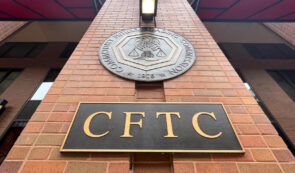
With the CLARITY Act stuck in congressional limbo, CFTC Chair Michael Selig is drawing up a Plan B.

Journalist


Kosta has reported on cryptocurrency markets and blockchain infrastructure since 2020, bringing over six years of hands-on experience in the crypto industry built through daily tracking of markets, trends, and emerging blockchain developments. Specializing in Bitcoin on-chain analysis, institutional ETF flows, and digital asset price action, his work at Coindoo has been cited by other news agencies and consistently covers market developments with a focus on data-driven reporting across Bitcoin, Ethereum, Solana, and XRP. Over the years, Kosta has contributed to multiple crypto media outlets in different regions, authoring over 6,000 articles across the sector. His reporting spans cryptocurrency markets and the broader fintech industry, tracking not only price action but also the technological and regulatory forces shaping the ecosystem. To support his analysis, Kosta actively leverages on-chain data and metrics from leading platforms such as Santiment, Glassnode, and CryptoQuant, enabling deeper, evidence-based market insights. He believes in the power of transparency and the data that underpins the blockchain ecosystem. His academic background in Marketing Management from Denmark further complements his analytical approach, adding a strong understanding of communication strategy and content positioning to his work.
With the CLARITY Act stuck in congressional limbo, CFTC Chair Michael Selig is drawing up a Plan B.
Bitcoin’s move above $72,000 drew sharply different reactions from some of the market’s best-known voices.

The XRP Ledger is considering a lending standard that would allow pooled assets to fund fixed-term loans directly on the network.

Bitcoin rose 12.3% in past 24h to trade near $71,720 on Bitstamp on August 20, climbing above $70,000 and crossing its 50-, 100- and 200-day simple moving averages.

An HTX executive has denied that exchange-controlled accounts were involved in alleged address-poisoning transfers connected to reports of Kraken account restrictions. The same account later said several affected users had regained access.

Crypto derivatives positions worth $2.99 billion were forcibly closed over 24 hours, affecting 170,001 traders.

Ethereum surged 19.4% on the day to trade near $2,290, breaking out of its sub-$1,900 consolidation and moving above its 50-, 100- and 200-day simple moving averages.

President Donald Trump used a White House meeting with crypto and financial-market leaders to press Congress for digital-asset market-structure legislation, saying the United States must pass a “fair version” of the Clarity Act to remain ahead of China and other countries.

The US Treasury will at least double the maximum size of buyback operations for older long-dated bonds, expanding a programme designed to make that part of the government-debt market easier to trade.

Bitcoin fell from its October 2025 record near $126,000 to a June 2026 low around $57,750, a decline of roughly 53%. During that stretch, Robbie Mitchnick, BlackRock’s head of digital assets, argued that the market’s strongest demand had moved elsewhere: into artificial-intelligence companies and the infrastructure built around them.

Arthur Hayes is returning to a day-to-day crypto role with an unusual launch sequence: the first public milestone for Flop Labs is expected to be a FLOP token airdrop, not a live blockchain.

FASB’s proposal could let some stablecoins count as cash equivalents, but corporate holders may lack direct issuer redemption rights.
