What is The Official Arbitrum Bridge and Top 5 Alternatives

Launched in August 2021, Arbitrum One is an Ethereum layer-2 network that uses optimistic rollups to process transactions more efficiently while settling data on Ethereum.
Last updated: July 2026
By 2026, the Arbitrum ecosystem includes Arbitrum One, Arbitrum Nova and a growing number of dedicated chains built with Arbitrum technology. Its bridge has also evolved, giving users access to both the traditional Ethereum-to-Arbitrum route and faster third-party routes from other networks.
Bridging allows users to move ETH and supported tokens to Arbitrum, where they can access lower transaction fees and applications built across the ecosystem. This guide explains how to use the official Arbitrum Bridge, what to check before approving a transfer and which alternative bridges remain available in 2026.
What to Do Before Bridging to Arbitrum
Before starting, make sure your wallet supports Arbitrum One. Most popular wallets can add the network automatically through the official bridge, although it can also be entered manually using chain ID 42161.
If you use MetaMask and prefer to configure the network manually, follow our guide on how to add Arbitrum to MetaMask. The process is similar for other compatible wallets.
You will need enough of the source network’s native token to pay the initial transaction fee. ETH is also used for gas on Arbitrum, so keep a small amount of ETH available after the transfer arrives.
When bridging an ERC-20 token for the first time, your wallet may request a separate approval transaction before the actual transfer. Once the network is configured and the required gas funds are available, you can begin bridging your assets.
What Is the Official Arbitrum Bridge?
The official Arbitrum Bridge allows users to transfer ETH and supported tokens between Ethereum, Arbitrum One, Arbitrum Nova and other supported networks.
The interface can display both the traditional Arbitrum bridge and routes supplied by third-party providers. This means the selected route may differ depending on the source network, destination, token, transfer size, fees and expected arrival time.
Before approving a transfer, check which provider will process it, how much will arrive, which version of the token will be received and whether an additional claim transaction is required.
Step-by-Step Guide for the Official Arbitrum Bridge
The Arbitrum Bridge is the most popular and straightforward way to move tokens to Arbitrum One and Nova. Since it’s easy to use, we’ll walk you through how to bridge to Arbitrum One, the more popular option than Nova. However, remember that the process is the same for Arbitrum Nova; just select Arbitrum Nova instead of One.
Step 1. Connect Your Wallet
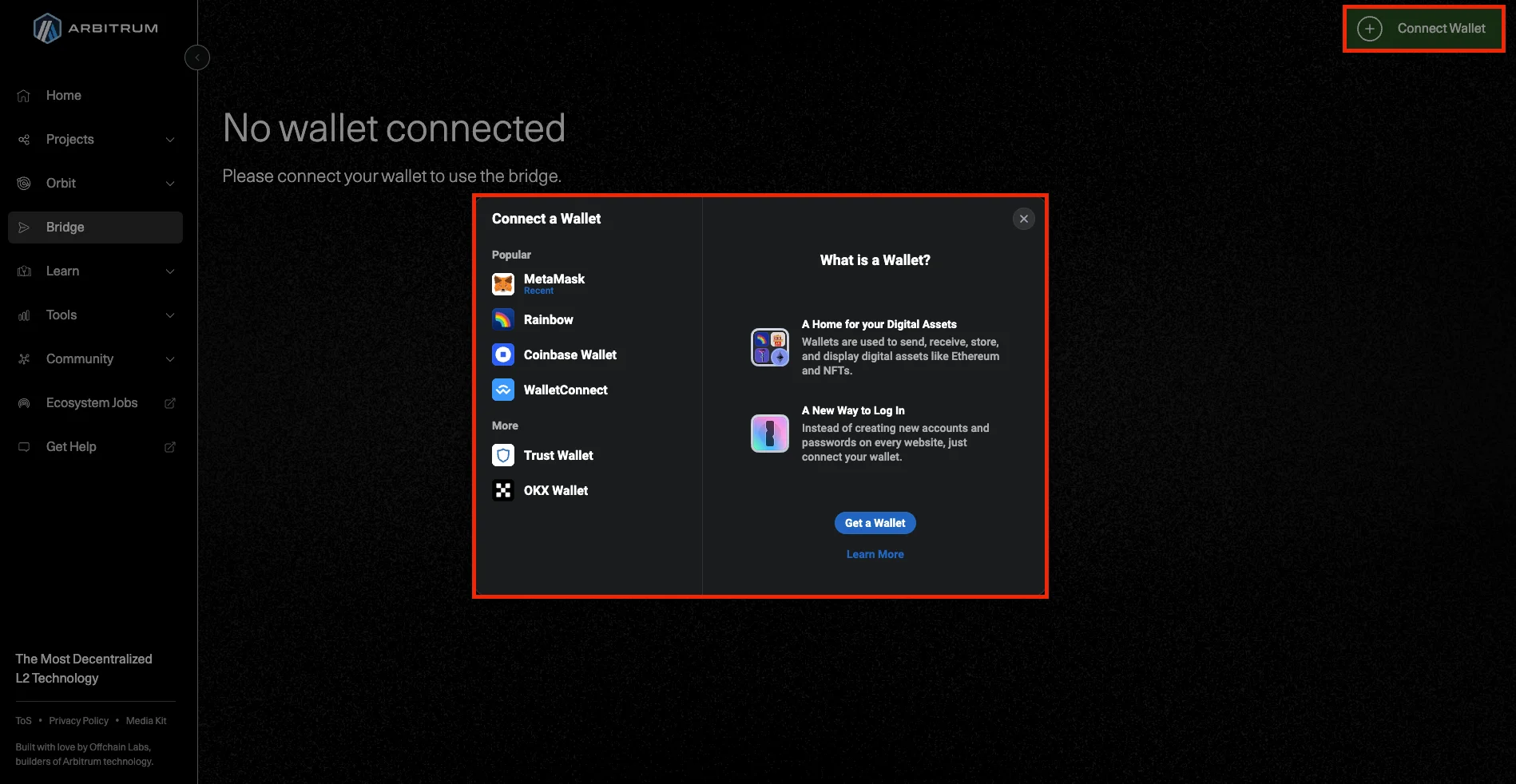
First, you need to connect your wallet to the bridge. This should be the wallet with the assets you want to transfer. Go to the bridge, click “Connect Wallet,” and choose your wallet from the options available.
Once you’ve selected the address you want to use, confirm the connection to the site.
Step 2. Select Your Assets
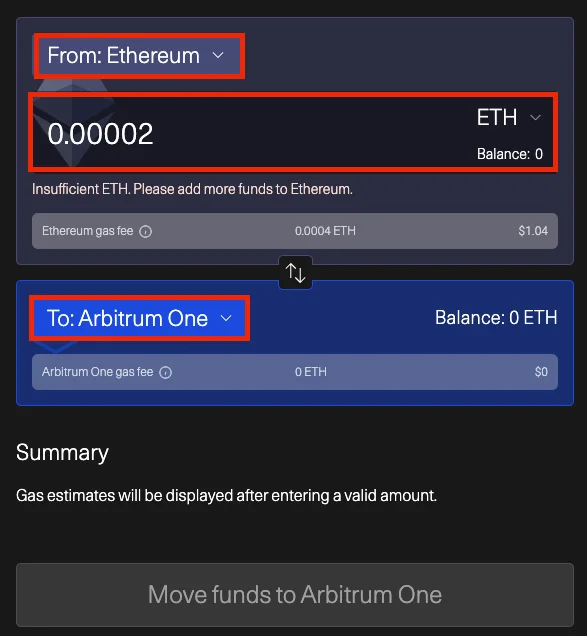
After connecting your wallet, the bridge interface will appear. Choose the chain you’re bridging from and the asset you want to move. For example, you can choose ETH from the Ethereum mainnet and set Arbitrum One as your destination. The bridge will show you the expected fees.
Step 3. Submit the Transaction and Confirm the Transfer
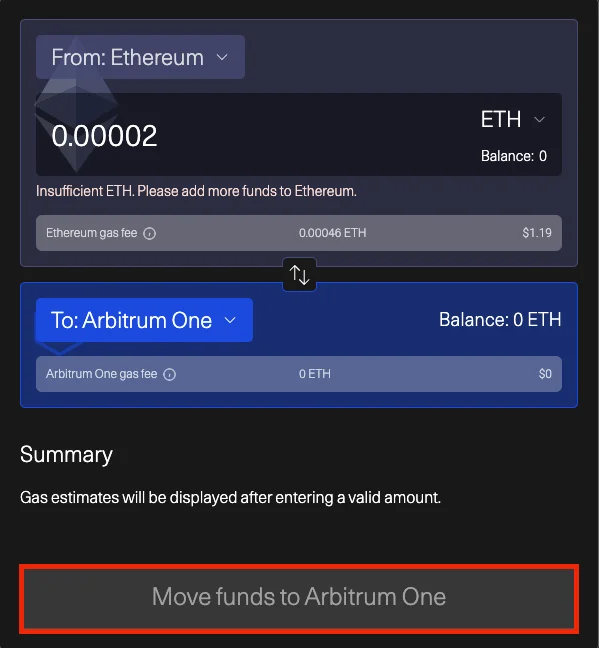
Once everything looks good, click “Move funds to Arbitrum One.” This will trigger a transaction in your connected wallet. To start the transfer, confirm it by clicking “Confirm” or the equivalent in your wallet.
You can monitor the progress on the Arbitrum Bridge interface. To check if your assets have arrived, switch your wallet to the Arbitrum ecosystem and check your balance.
Alternatively, use an Arbitrum explorer like Arbiscan to track the status and see your balances.
Important: Withdrawing Back to Ethereum
A traditional withdrawal from Arbitrum One to Ethereum through the canonical bridge normally includes a seven-day challenge period. Faster third-party routes can avoid this delay by using external liquidity, but they may charge different fees and introduce additional protocol or liquidity-provider risks.
Top 5 Arbitrum Bridge Alternatives
1. Portal Bridge: A Top-Tier Cross-Chain Bridge
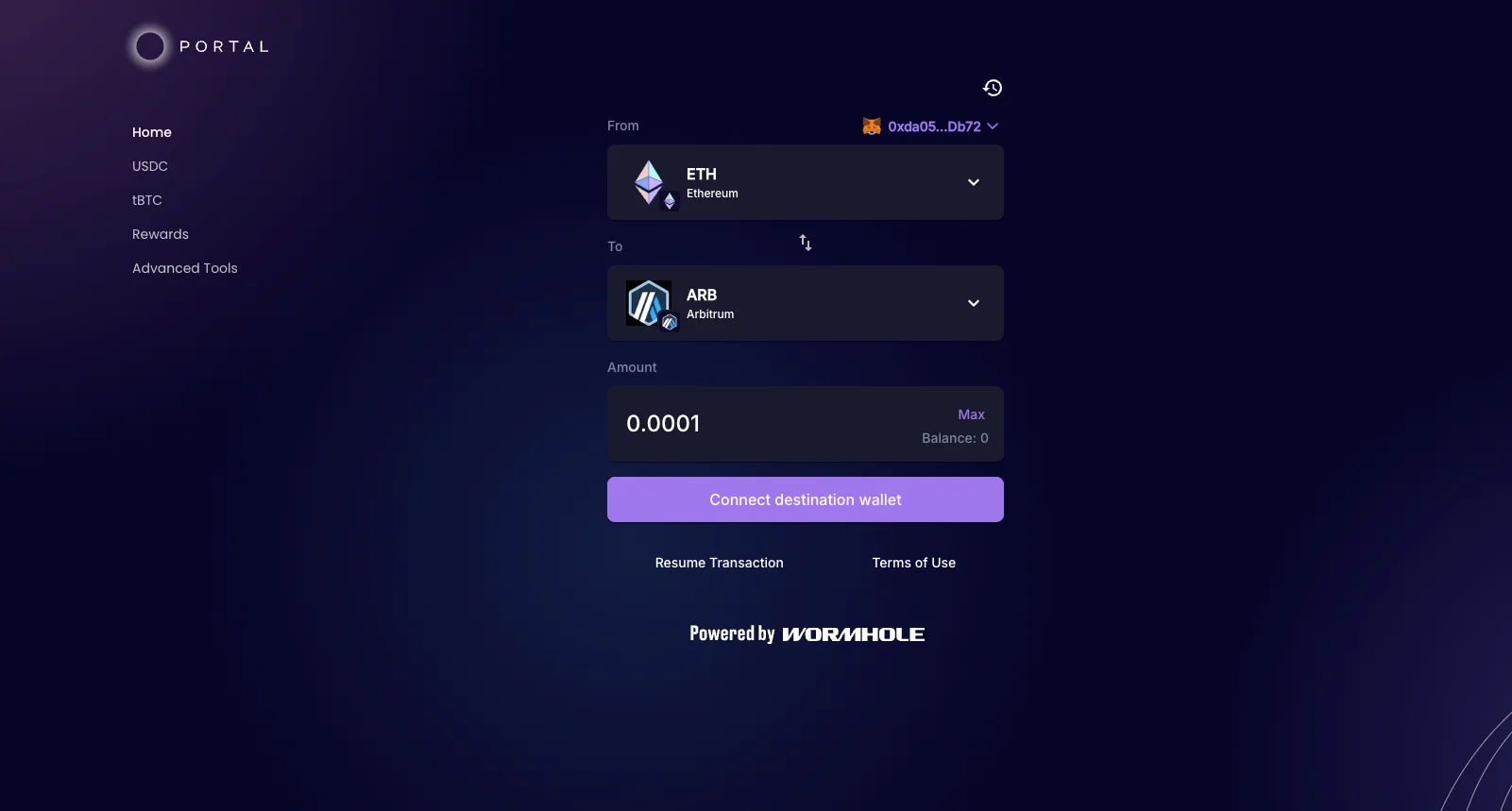
Portal Bridge, powered by Wormhole, supports cross-chain transfers across numerous blockchain networks. The interface was updated in 2026, so the exact process depends on the selected asset and route. Some transfers may require an additional redemption transaction on the destination network.
Thus, Portal Bridges is one of those decentralized applications (dApps) built on the Ethereum blockchain that allows users to transfer their assets between other blockchain networks without going through a centralized exchange.
How To Bridge to Arbitrum Using Portal Bridge
- Go to the Portal Bridge website and connect your wallet by clicking the “Connect” button in the middle of the screen.
- Select the Source chain (Ethereum network) and the Target chain (Arbitrum), then choose the token you want to bridge and enter the amount.
- Connect your wallet to the target chain (Arbitrum), select the token to cover gas fees, and confirm the transaction.
- Once your tokens are sent, go to the “Redeem Tokens” tab and click Redeem to receive them in your target wallet.
2. Orbiter Finance: A Decentralized Cross-Rollup Bridge
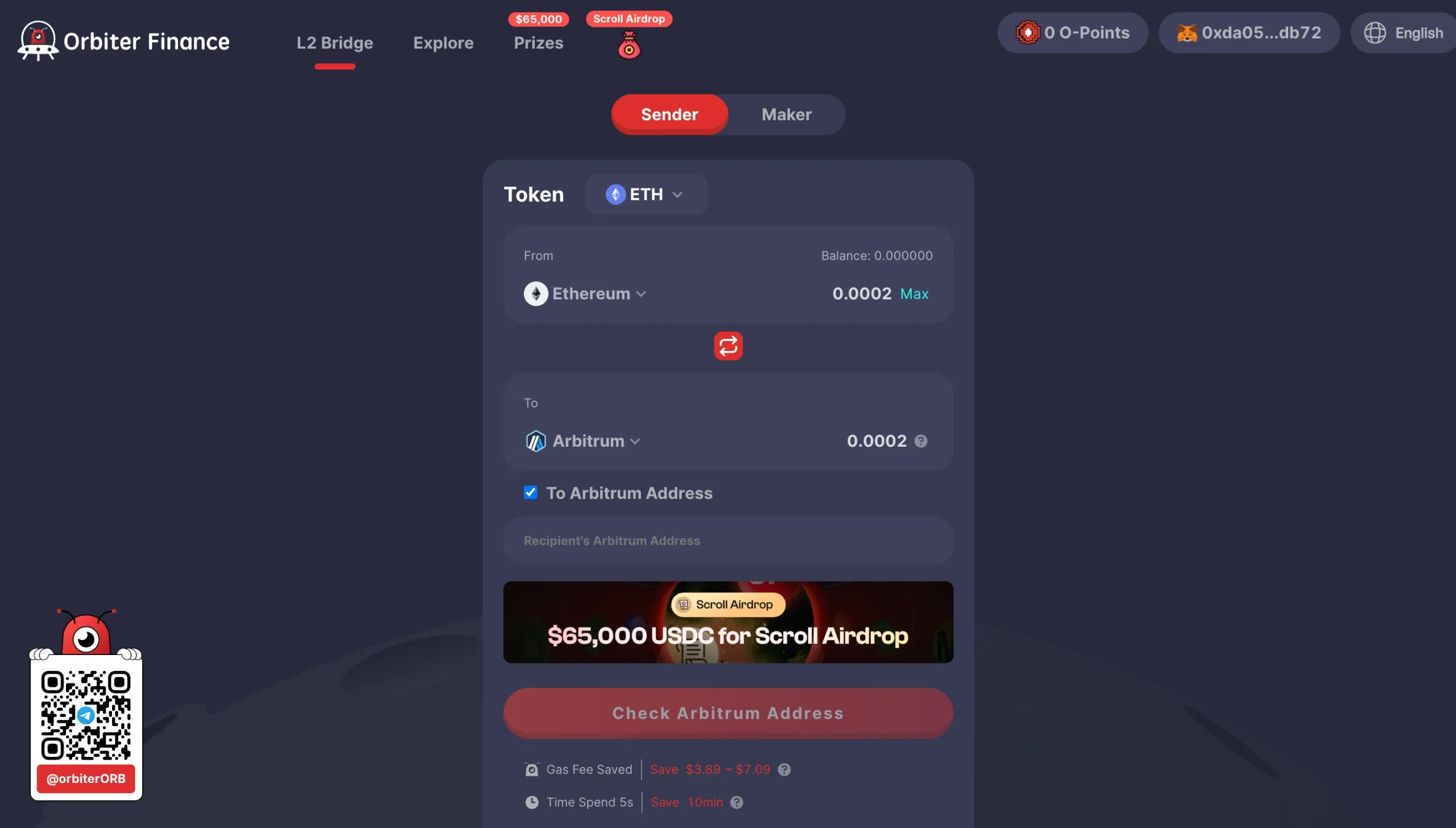
Orbiter Finance is a popular multi-chain bridge for transferring assets between Layer-2 networks, including Arbitrum. It supports several Ethereum Layer-2 networks, such as Optimism, Mantle, and zkSync Era, making it a versatile tool for effectively bridging assets.
How To Bridge to Arbitrum Using Orbiter Finance
- Head to the Orbiter Finance website and click “Connect a Wallet.” Follow the prompts to link your wallet to the platform.
- In the “From” section, select the chain you’re sending from (for example, Ethereum network). In the “To” section, choose Arbitrum. Enter the amount of ETH you want to bridge.
- Click “Send” to review the transaction details, including any fees. If everything looks good, click “Confirm and Send” to proceed with the transfer. Approve the transaction in your connected wallet.
- Once the transfer is complete, you will see your ETH in the “Received” section on the confirmation page, and the bridged funds will be available in your Arbitrum wallet.
3. Celer cBridge: A Cross-Chain Arbitrum Bridging
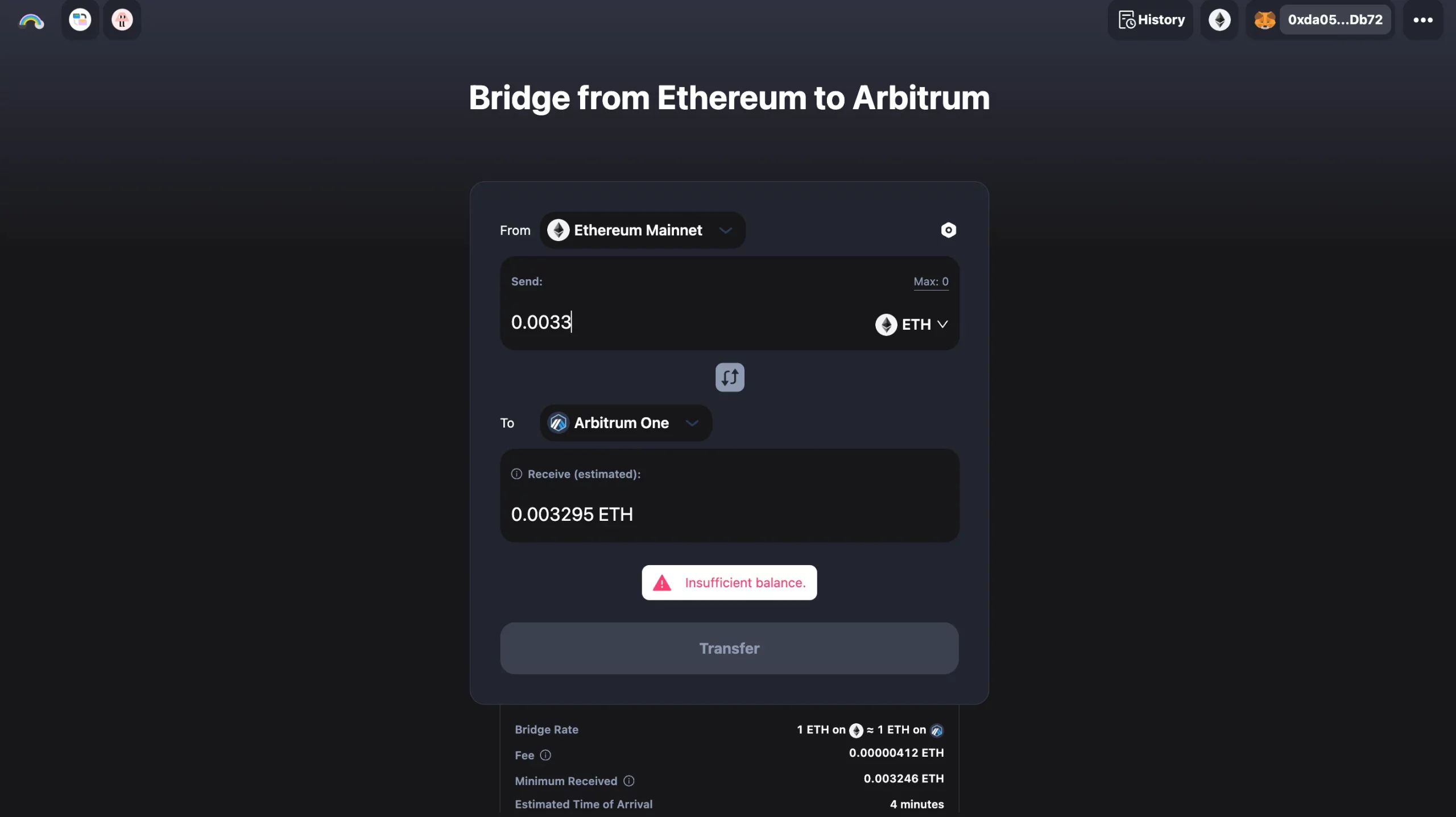
Celer cBridge is a widely used cross-chain transfer platform that enables users to bridge assets across various Layer-1 and Layer-2 networks, including Arbitrum. It supports multiple blockchain networks and offers fast and efficient asset transfers, making it a popular choice for bridging to Arbitrum.
How To Bridge to Arbitrum Using Celer cBridge
- Head to the Celer cBridge website and click “Connect a Wallet.” Follow the instructions to link your wallet to the platform.
- In the “From” section, choose the source chain you’re transferring from (Ethereum network). In the “To” section, select Arbitrum as your destination chain and enter the token amount you wish to bridge.
- Click “Transfer” to review the transaction details, including transaction fees. If everything checks out, hit “Confirm” to proceed and approve the transaction in your wallet.
- Once the transfer is processed, your bridged tokens are available in your Arbitrum wallet.
4. Stargate Finance: A DeFi Liquidity-Sharing Protocol
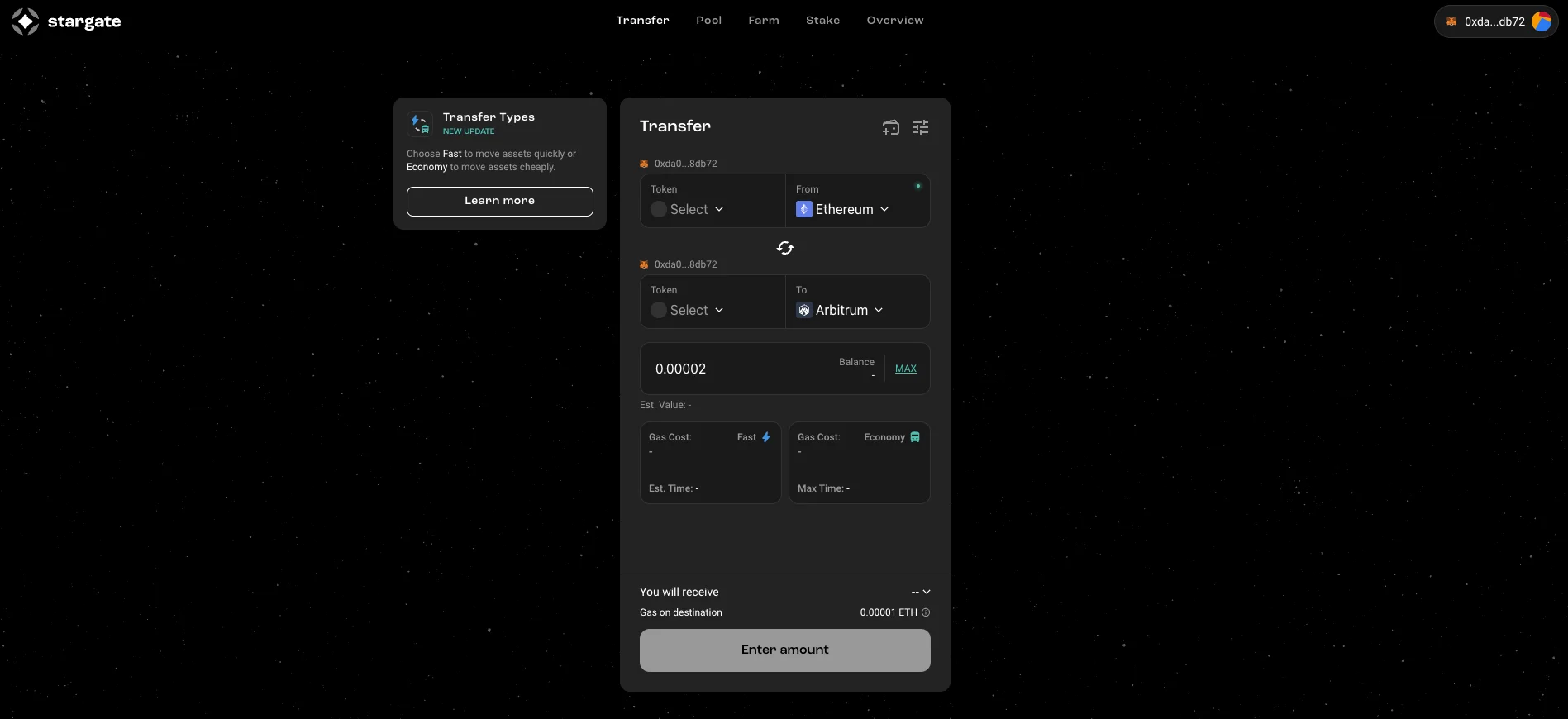
Stargate Finance is another popular bridge for transferring assets between Arbitrum and other leading EVM-compatible blockchains, also known for its low fees and reduced slippage.
How to Use Stargate Finance to Bridge Arbitrum
- Visit the Stargate Finance website and click the “Transfer” button in the top bar.
- Connect your Web3 wallet to Stargate Finance to allow for token transfers.
- Select the amount of tokens you wish to transfer, the token type, and the source network (e.g., Ethereum network). Ensure your balance is sufficient for the transfer.
- Please review the transaction details and confirm and approve the transfer in your wallet. Your tokens will soon arrive in your Arbitrum wallet, though network fees apply.
5. Across Protocol: Fast and Cost-Effective Arbitrum Bridging
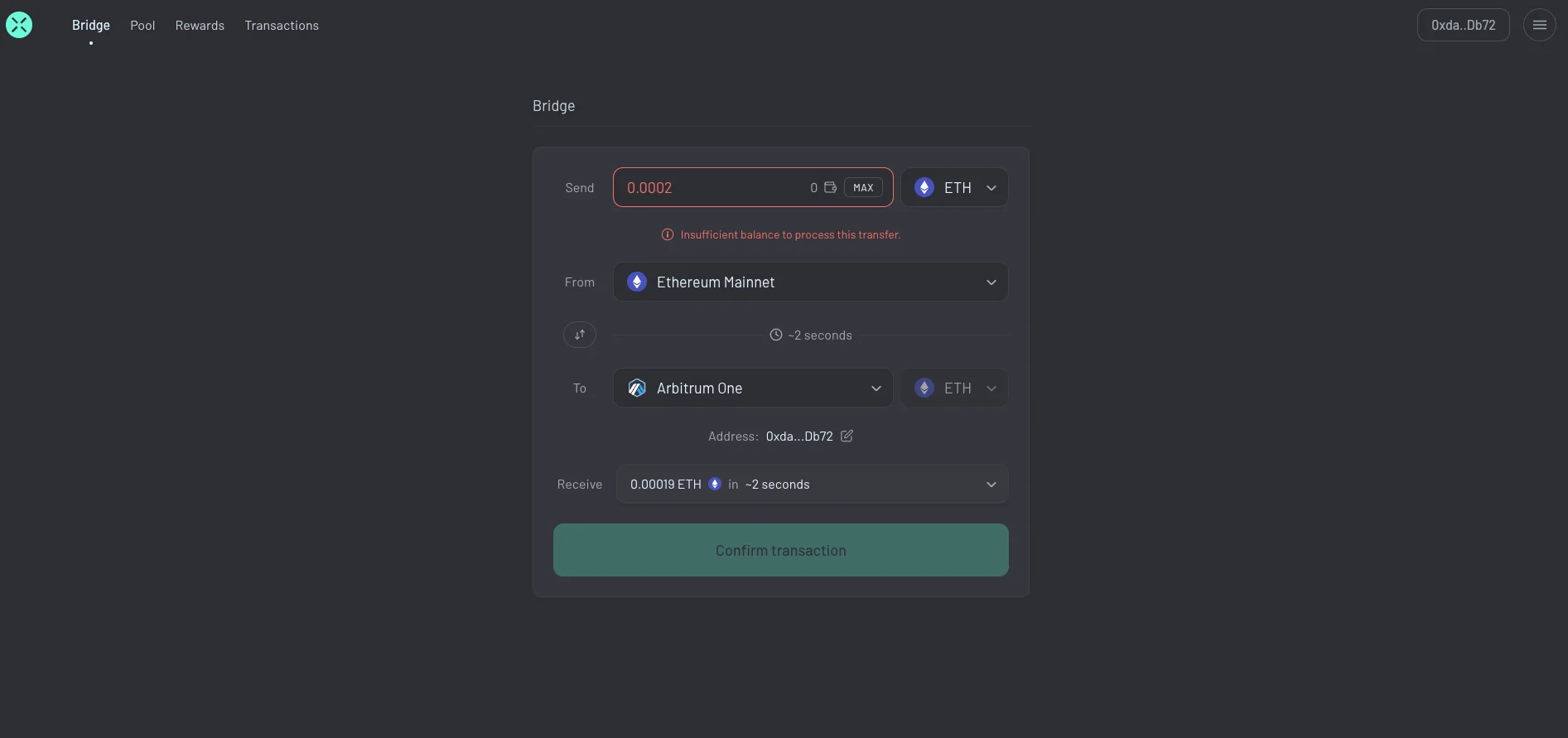
Across Protocol is a popular platform for cross-chain bridging, designed to allow users to transfer assets across Layer-1 and Layer-2 networks, including Arbitrum.
Across Protocol is an intent-based interoperability protocol that uses relayers to fill cross-chain transfers. It supports Arbitrum and can also combine bridging with swaps or other actions on the destination network.
How to Use Across Protocol to Bridge Arbitrum
- Access the Across Protocol website and click the “Connect Wallet” button from the top right corner.
- In the “From” section, select the source network you want to transfer. In the “To” section, choose Arbitrum One (or Nova) as your destination network and enter the token amount you wish to bridge.
- Click “Send” to review the transaction details, including any fees. Once satisfied, hit “Confirm” and approve the transaction in your connected wallet.
Other Arbitrum Bridge Platforms to Consider
If none of the platforms above suit your needs, you can do your own research starting with the options below, which offer a similar bridging process to the ones already discussed:
- LayerSwap;
- Owlto Finance;
- Jumper Exchange;
- Umbria Network, and more.
How to Bridge More Safely
- Open bridges only through their official websites;
- Confirm the source and destination networks;
- Verify the token and expected amount received;
- Check whether the route uses a third-party provider;
- Keep enough native tokens for gas fees;
- Consider testing a small transfer first.
No blockchain bridge is entirely risk-free. Smart-contract failures, incorrect token selections, insufficient liquidity and compromised websites can result in delays or lost funds.
FAQ
How to Bridge ETH to Arbitrum?
To bridge ETH to Arbitrum, visit the Arbitrum Bridge or use a bridging platform like the one in the article. Connect your wallet, choose Ethereum as the source network, and choose Arbitrum as the destination. Enter the amount of ETH, confirm the transaction, and once processed, your ETH will be available in your Arbitrum wallet.
What is The Best Bridge to Arbitrum?
The best bridge depends on the token, source network, fees, transfer speed and security assumptions. The official Arbitrum Bridge is a practical starting point because it can display several available routes. Users should compare the provider, expected output and arrival time rather than choosing solely on the lowest advertised fee.
However, depending on speed or fees, other bridges, such as Celer cBridge and Orbiter Finance, may be better suited for specific cases.
Is Arbitrum Bridge Safe?
The official Arbitrum Bridge is the canonical tool for transfers between Ethereum and Arbitrum, but no bridge is completely risk-free. Users should verify the website, selected route, destination network and token before confirming a transaction. Routes handled by third-party providers introduce different smart-contract and liquidity assumptions from the traditional Arbitrum bridge.
Conclusion
So, bridging to Arbitrum offers a fantastic way to enjoy lower fees and faster transactions on this efficient layer-2 solution.
Various options, such as the official Arbitrum Bridge, Portal Bridge, and others like Celer cBridge and Stargate Finance, make it easy for users to find a method that fits their needs.
Each bridging platform provides unique features, aiming to make moving tokens seamless and secure.
This article is provided for informational purposes only and does not constitute financial, legal or investment advice. Always verify the blockchain network, token version, address, minimum deposit and conversion terms before transferring digital assets.



Kosta has reported on cryptocurrency markets and blockchain infrastructure since 2020, bringing over six years of hands-on experience in the crypto industry built through daily tracking of markets, trends, and emerging blockchain developments. Specializing in Bitcoin on-chain analysis, institutional ETF flows, and digital asset price action, his work at Coindoo has been cited by other news agencies and consistently covers market developments with a focus on data-driven reporting across Bitcoin, Ethereum, Solana, and XRP. Over the years, Kosta has contributed to multiple crypto media outlets in different regions, authoring over 6,000 articles across the sector. His reporting spans cryptocurrency markets and the broader fintech industry, tracking not only price action but also the technological and regulatory forces shaping the ecosystem. To support his analysis, Kosta actively leverages on-chain data and metrics from leading platforms such as Santiment, Glassnode, and CryptoQuant, enabling deeper, evidence-based market insights. He believes in the power of transparency and the data that underpins the blockchain ecosystem. His academic background in Marketing Management from Denmark further complements his analytical approach, adding a strong understanding of communication strategy and content positioning to his work.