XRP Treasury Evernorth Clears Vote for Nasdaq Listing
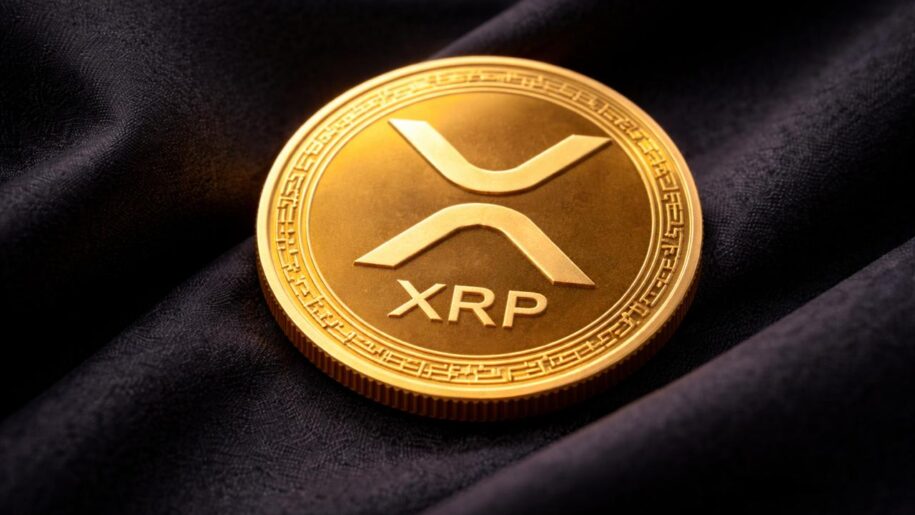
Evernorth’s planned XRP treasury listing moved closer after Armada shareholders approved the merger, with the combined company expected to start Nasdaq trading on October 8, subject to closing.
Key Takeaways
- Armada shareholders approved the proposed Evernorth business combination.
- Combined-company trading is expected to begin October 8.
- Evernorth expects roughly 473 million XRP at closing.
- XRP per share will help assess treasury growth.
The vote brings Evernorth closer to public markets
Armada Acquisition Corp. II shareholders approved the business combination on September 30 by approximately 20.5 million votes to 1.36 million, according to its October 1 SEC filing. Their approval allows the deal to proceed through Armada, a listed acquisition company formed to merge with another business and bring it into public markets.
Following the vote, Evernorth expects the transaction to close on October 7 and the combined company to begin trading on October 8, according to its official announcement. Meeting the remaining closing conditions would bring the XRP treasury plans introduced last year into public markets through Armada’s existing XRPN symbol, with Evernorth becoming the business behind the traded shares.
How the financing becomes an XRP treasury
The transaction and related private placements have raised more than $1 billion through a combination of cash and XRP supplied by investors. Some of the treasury therefore comes from in-kind contributions, where investors transfer tokens they already own in exchange for an ownership interest. Those contributions help assemble the treasury without necessarily requiring new purchases on an exchange.
The cash portion is expected to provide approximately $300 million before transaction expenses, including $225 million from private placements, $30 million in incremental convertible note financing and roughly $48 million from Armada’s trust. These rounded amounts describe gross proceeds; the cash available for purchases and operations will depend on what remains after expenses.
The same distinction between funding and assets helps explain the XRP figures. The merger prospectus reports that Evernorth held 346.3 million XRP on June 30, whereas the latest announcement projects roughly 473 million in the combined treasury at closing. Because those balances cover different dates and entities, their difference should not be presented as evidence of a recent market purchase.
For XRP holders, further buying will depend on how Evernorth deploys its cash and whether it raises additional capital. The larger closing balance establishes the scale of the planned treasury, while subsequent disclosures will show how much of its growth comes from purchases, contributions or investment returns.
Owning the stock adds a corporate layer to XRP exposure
Once the combination closes, an investor buying Evernorth stock will own part of a company whose assets and strategy are heavily linked to XRP. Corporate expenses, liabilities and management decisions will also affect that investment, so the stock’s performance can diverge from the token’s even when XRP remains the dominant treasury asset.
Buying shares also affects funding differently from buying tokens. A purchase of existing stock pays another shareholder, while Evernorth receives capital through transactions such as issuing securities or borrowing. Only when the company uses that capital to acquire XRP does the financing translate into additional treasury buying.
Investors will assess those choices against estimated net asset value, which measures assets less liabilities. Confidence in management’s ability to expand the treasury could support a share-price premium to that value, while concern about costs or execution could produce a discount. The price paid for the stock therefore influences how much underlying asset exposure an investor obtains.
A larger treasury can leave each share with less XRP
Financing becomes especially important when treasury growth is measured per share, one of Evernorth’s stated performance indicators. If acquiring more XRP requires issuing more stock, existing shareholders need to know whether the assets grew faster than the number of shares representing them.
For a simple hypothetical example, imagine a company with 100 million XRP and 10 million shares outstanding: its ratio is 10 XRP per share. Increasing the treasury to 120 million XRP while expanding the share count to 15 million reduces that ratio to 8. Although the company holds more tokens, each share represents a smaller amount, before considering other assets and liabilities.
The terms on which capital is raised can change that outcome. A premium to net asset value may let the company issue shares on favourable terms and use the proceeds to expand its holdings. If that premium shrinks, raising capital in a way that improves exposure for existing shareholders can become harder.
To apply this analysis to Evernorth, readers will need its final holdings and capital structure after closing. Its published XRP-per-share calculation includes outstanding Class A and Class C shares; warrants and other potential issuance also need to be assessed for their possible effect on future ownership.
Investment income brings another set of risks
Evernorth also intends to grow its holdings by putting some of them to work through lending, derivatives strategies and liquidity provision. These yield activities are planned to begin after closing, when their results can start to be measured alongside the effects of capital raising.
Lending illustrates the trade-off. A borrower pays for access to XRP, creating potential income for the treasury, but that return depends on repayment and the terms governing when the assets become available again. Coindoo’s explanation of how lending on the XRP Ledger would work examines why credit quality and withdrawal conditions matter when tokens are deployed in loans.
Liquidity provision and derivatives introduce their own exposures: earning trading fees can change the mix of assets held, while some income-generating derivatives strategies limit upside or create hedging risk. Investors would therefore need to assess income alongside losses and the amount of capital exposed, rather than assess its income in isolation.
The first reports will make the strategy measurable
After closing, investors will need enough information to separate the assets assembled through the transaction from the results management produces afterward:
- Closing assets: Reconciled XRP holdings and cash remaining after expenses.
- Shareholder exposure: Final share counts, financing terms and potential dilution.
- Treasury deployment: Assets committed to strategies, income earned and losses incurred.
With that starting position established, later reports can show whether financing and investment activity increase the XRP attributable to each share. That comparison will let shareholders judge what management has added to their exposure, beyond changes caused by XRP’s market price.



Kosta has reported on cryptocurrency markets and blockchain infrastructure since 2020, bringing over six years of hands-on experience in the crypto industry built through daily tracking of markets, trends, and emerging blockchain developments. Specializing in Bitcoin on-chain analysis, institutional ETF flows, and digital asset price action, his work at Coindoo has been cited by other news agencies and consistently covers market developments with a focus on data-driven reporting across Bitcoin, Ethereum, Solana, and XRP. Over the years, Kosta has contributed to multiple crypto media outlets in different regions, authoring over 6,000 articles across the sector. His reporting spans cryptocurrency markets and the broader fintech industry, tracking not only price action but also the technological and regulatory forces shaping the ecosystem. To support his analysis, Kosta actively leverages on-chain data and metrics from leading platforms such as Santiment, Glassnode, and CryptoQuant, enabling deeper, evidence-based market insights. He believes in the power of transparency and the data that underpins the blockchain ecosystem. His academic background in Marketing Management from Denmark further complements his analytical approach, adding a strong understanding of communication strategy and content positioning to his work.