USA and Iran Conflict Intensifies as Israel PM Meets Trump

Iran has signaled it is willing to negotiate with the United States over its nuclear program, but firmly ruled out expanding talks to include its ballistic missile arsenal - even as maritime tensions in the Strait of Hormuz and rising military pressure underscore the fragility of the moment.
Key takeaways:
- The first round of renewed indirect U.S.-Iran talks took place in Oman on February 6, 2026.
- Iran is open to nuclear negotiations but insists its missile program is non-negotiable.
- President Donald Trump is meeting Israeli Prime Minister Benjamin Netanyahu on February 11.
- The U.S. has warned vessels to avoid Iranian waters in the Strait of Hormuz.
- Military pressure is increasing alongside diplomatic engagement.
The developments come amid renewed indirect diplomacy between Washington and Tehran, paired with visible military signaling from the United States.
Maritime Tensions in the Strait of Hormuz
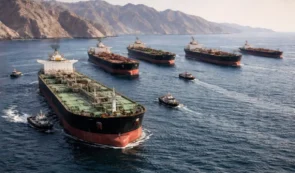
The U.S. Maritime Administration has advised U.S.-flagged commercial ships to remain “as far as possible” from Iranian territorial waters when transiting the Strait of Hormuz.
Captains were instructed to decline Iranian boarding requests. Boarding attempts – including efforts involving small boats and helicopters – have reportedly occurred as recently as February 3. If boarding takes place, crews were advised not to forcibly resist, though such restraint does not imply consent.
The advisory recommends eastbound vessels stay close to the Omani side of the Strait, a strategic chokepoint that carries roughly 13 million barrels per day of crude oil – nearly one-third of global seaborne supply. Any disruption could quickly ripple through global energy markets.
Resumption of Indirect Talks
The first round of renewed indirect negotiations occurred in Oman on February 6, 2026. The talks were led by U.S. Special Envoy Steve Witkoff and Iranian Foreign Minister Abbas Araghchi.
Both sides described the meeting as a positive “step forward” and a “good start” toward establishing a framework for further negotiations. Iranian President Masoud Pezeshkian also characterized the discussions as constructive, while cautioning that they represent only the beginning of a longer process.
President Trump similarly called the Oman meeting “very good,” but warned that failure to reach a deal would result in “very steep” consequences.
Consultations are now underway to determine the timing of the next round. Ali Larijani, secretary of Iran’s Supreme National Security Council, indicated that future discussions will depend on internal reviews in both capitals.
Nuclear Talks
Iran has reiterated that negotiations will focus strictly on its nuclear program.
Officials have expressed willingness to dilute enriched uranium stockpiles in exchange for full sanctions relief. However, Tehran has rejected what it calls “maximalist demands” from Washington.
Iran’s ballistic missile capabilities remain a red line. Senior officials have declared the program “non-negotiable,” a stance reaffirmed amid rising regional scrutiny.
White House Meeting with Netanyahu
On February 11, President Trump is hosting Israeli Prime Minister Benjamin Netanyahu at the White House.
Netanyahu is expected to urge the U.S. to broaden negotiations beyond nuclear limits to include strict constraints on Iran’s missile arsenal and its support for regional proxy groups.

Israel has consistently argued that a narrow nuclear-only deal would leave broader security concerns unresolved.
Military Pressure Builds
Diplomacy is unfolding alongside escalating military signaling. The USS Abraham Lincoln is already deployed in the region, and President Trump is reportedly considering sending a second aircraft carrier group to the Middle East.

Trump has warned that if negotiations collapse, the United States would take “something very tough” action.
The strategy appears designed to combine diplomatic engagement with visible deterrence.
What Comes Next
The trajectory of U.S.-Iran relations now hinges on whether nuclear-focused talks can gain traction without expanding into missile and regional policy disputes.
With maritime tensions elevated, oil flows through the Strait of Hormuz under scrutiny, Israel pressing for broader concessions, and military forces positioned in the region, the margin for miscalculation remains narrow.
If negotiations progress, the current phase may mark the beginning of structured diplomacy. If they stall, both geopolitical and energy market volatility could intensify rapidly.
The information provided in this article is for educational purposes only and does not constitute financial, investment, or trading advice. Coindoo.com does not endorse or recommend any specific investment strategy or cryptocurrency. Always conduct your own research and consult with a licensed financial advisor before making any investment decisions.



Alexander Zdravkov is a person who always looks for the logic behind things. He has more than 3 years of experience in the crypto space, where he skillfully identifies new trends in the world of digital currencies. Whether providing in-depth analysis or daily reports on all topics, his deep understanding and enthusiasm for what he does make him a valuable member of the team.