U.S. Seizes Russian-Flagged Oil Tanker in Atlantic Standoff
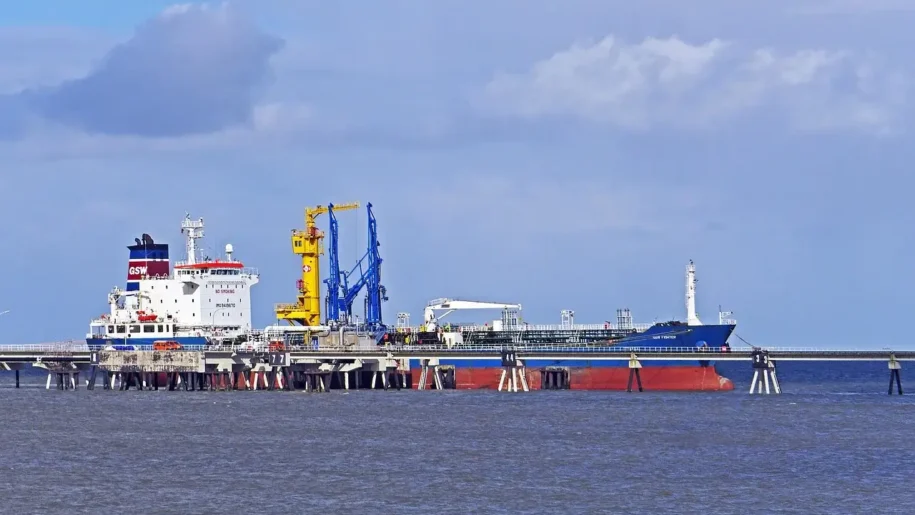
U.S. authorities have moved to take control of a Russian-flagged oil tanker in the North Atlantic, escalating a maritime standoff that has unfolded quietly over recent weeks but now carries wider geopolitical implications.
U.S. officials confirmed that the vessel has been secured, with the operation led by the Department of Homeland Security and backed by U.S. military assets.
Key takeaways
- The U.S. has seized a Russian-flagged oil tanker in international waters following a weeks-long pursuit.
- The vessel was previously sanctioned for involvement in Venezuelan oil shipments.
- The operation has heightened tensions between Washington and Moscow.
- U.S. military surveillance activity increased across the North Atlantic and the U.K.
The tanker, now sailing under the name Marinera, was previously known as Bella 1 and has been under U.S. sanctions since mid-2024. It initially drew attention after operating near Venezuela, where the United States has stepped up enforcement against oil shipments linked to the government of Nicolás Maduro. U.S. officials say the ship was part of a sanctions-evasion network moving crude through deceptive flagging practices.
JUST IN: 🇺🇸🇷🇺 US forces seize Russian-flagged oil tanker in the Atlantic. pic.twitter.com/uZh9JI2cF6
— TruthTitanX (@truthTitanX) January 7, 2026
A sanctions case turns geopolitical
What began as a routine sanctions enforcement effort quickly widened into a diplomatic confrontation. After reflagging to Russia, the tanker became a flashpoint between Washington and Moscow, particularly as the U.S. tightened pressure on Venezuela’s oil exports — a strategy that directly conflicts with Russian political backing for Caracas.
Although the Marinera was operating far from U.S. waters — at one point sailing near Scotland — American surveillance intensified. Russia’s Foreign Ministry publicly criticized the operation, accusing the U.S. and NATO of subjecting a “peaceful” vessel to disproportionate scrutiny while it navigated international waters under the Russian flag. Russian state media echoed those claims, releasing footage said to show U.S. Coast Guard ships and reconnaissance aircraft shadowing the tanker.

Military movements added to the significance of the episode. Multiple U.S. Air Force C-17 transport aircraft were deployed to the United Kingdom, while Navy P-8A Poseidon surveillance planes flew maritime patrol missions from British bases. British defense officials declined to confirm whether U.K. forces were directly involved.
The seizure comes amid a broader escalation in U.S. action against Venezuela’s oil trade. American authorities intercepted two other tankers near Venezuela late last year, and President Donald Trump has claimed that Caracas agreed to hand over tens of millions of barrels of oil to the United States — statements that further strained relations with both Russia and China.
U.S. officials describe the Marinera as part of a growing “dark fleet” — vessels that switch flags, disable tracking systems, or exploit legal gray zones to bypass sanctions. Several other tankers previously operating near Venezuela have recently shifted to Russian registration, raising concerns that enforcement efforts may face increasing resistance.
The U.S. Southern Command said it remains prepared to support U.S. agencies in tracking and confronting sanctioned vessels, emphasizing that forces are positioned to act quickly when required.
Taken together, the operation highlights how sanctions enforcement, maritime law, and great-power rivalry are increasingly colliding at sea. What started as the pursuit of a single tanker has evolved into a visible test of resolve between the United States and Russia – one likely to be repeated as pressure on Venezuela’s oil exports intensifies.
The information provided in this article is for educational purposes only and does not constitute financial, investment, or trading advice. Coindoo.com does not endorse or recommend any specific investment strategy or cryptocurrency. Always conduct your own research and consult with a licensed financial advisor before making any investment decisions.



Alexander Zdravkov is a market analyst and crypto journalist with interests in economics, broader financial markets and digital assets. His journey into crypto began more than four years ago, driven by a fascination with the rapid evolution of blockchain technology and the transformative potential of decentralized finance. He began analyzing market cycles and identifying emerging trends before they reach the mainstream. He holds a degree in International Relations - a background that helped shape his broader perspective on global economics, geopolitics, and the interconnected nature of modern financial markets. Whether covering the latest developments in the crypto sector or exploring broader macroeconomic themes, Alexander focuses on giving readers context rather than simply repeating headlines. During his career, he has authored more than 10,000 articles covering cryptocurrencies, traditional finance, and global market developments. His work spans everything from Bitcoin and altcoins to macroeconomic trends influencing risk assets worldwide.