Trump Meets Advisers on Crypto Ethics and CLARITY Act
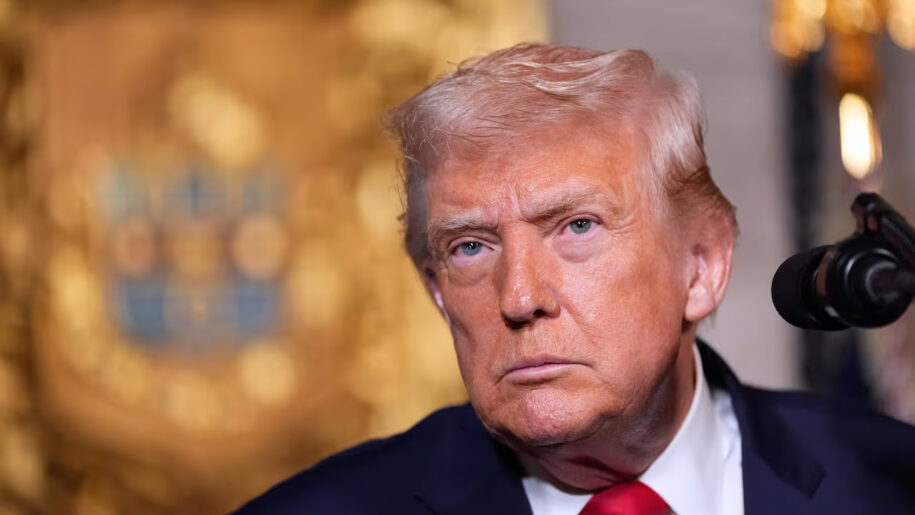
Donald Trump met advisers on September 12 to discuss government ethics language under consideration for the CLARITY Act.
Key Takeaways
- Politico reported Trump discussed CLARITY ethics rules.
- The meeting’s outcome has not been disclosed.
- Tuesday’s vote concerns Senate debate, not final passage.
- Democratic votes are necessary to reach 60.
- Ethics restrictions remain central to negotiations.
Ethics rules have become a central condition for moving the bill
A Politico report, citing two people familiar with the closed-door discussions, said it was unclear whether the meeting produced an agreement before the Senate’s upcoming procedural vote.
The CLARITY Act would set federal rules for digital-asset markets, including the boundaries between securities and commodities oversight. Its immediate challenge, however, is whether senators can agree on restrictions for officials whose financial interests overlap with the sector being regulated.
Trump’s family has ties to crypto ventures including World Liberty Financial and the TRUMP memecoin. Proposed restrictions would therefore affect businesses connected to the president’s family while his administration supports the bill. The issue gained force after Trump’s memecoin income reignited the push for a crypto ethics ban.
Politico did not report whether Trump accepted revised wording or whether negotiators reached a compromise. The meeting concerned the same conflict-of-interest rule that Senate Democrats have treated as necessary for winning their support.
Tuesday’s vote is a procedural test, not final passage
The Senate is scheduled to vote at 2:15 p.m. on September 15 on cloture for the motion to proceed to the CLARITY Act. The vote concerns whether the Senate can begin formal consideration of the bill, not whether the bill becomes law.
Cloture requires 60 votes, so Democrats are needed. Reuters reported that Democrats have cited both ethics and anti-money-laundering safeguards among their objections.
The practical question is whether a revised ethics provision can move Democratic senators from opposing debate to allowing the bill onto the Senate floor.
The earlier reported deal left the hardest details open
Trump was previously reported to have accepted an ethics framework, but no official text accompanied the reported CLARITY Act deal. That left lawmakers without a final version to assess.
Earlier reporting described a proposal that would bar certain federal officials from issuing or sponsoring digital assets. Democrats have questioned whether that approach would also restrict profits and continuing interests tied to existing crypto ventures, as well as whether its enforcement would be sufficiently independent.
The September 12 meeting concerned those unresolved details. Agreement that an ethics section belongs in the bill does not establish what the restriction would cover or how it would operate.
The revised draft needs to answer three questions
For senators assessing any new text, the provision needs to answer three practical questions.
These are not drafting details. They determine whether the proposed rule addresses the concern raised by Democrats or simply states a principle without limiting the conduct at issue.
The vote will show whether ethics language can unlock debate
The immediate question is narrower than the full future of U.S. crypto regulation. Can the Senate find enough support to begin debating the CLARITY Act while the conflict-of-interest rule remains tied to businesses connected to the president’s family?
A successful cloture vote would open the bill to amendments, where the restriction could still change. Failure would leave the Senate without a path to formal debate under the current motion.
Politico’s report establishes that the ethics dispute reached Trump directly before the Senate vote. Whether that produces language Democrats can accept remains unknown. Until it does, the CLARITY Act’s market rules are likely to remain secondary to the conflict over who may profit from the industry they would regulate.



Kosta has reported on cryptocurrency markets and blockchain infrastructure since 2020, bringing over six years of hands-on experience in the crypto industry built through daily tracking of markets, trends, and emerging blockchain developments. Specializing in Bitcoin on-chain analysis, institutional ETF flows, and digital asset price action, his work at Coindoo has been cited by other news agencies and consistently covers market developments with a focus on data-driven reporting across Bitcoin, Ethereum, Solana, and XRP. Over the years, Kosta has contributed to multiple crypto media outlets in different regions, authoring over 6,000 articles across the sector. His reporting spans cryptocurrency markets and the broader fintech industry, tracking not only price action but also the technological and regulatory forces shaping the ecosystem. To support his analysis, Kosta actively leverages on-chain data and metrics from leading platforms such as Santiment, Glassnode, and CryptoQuant, enabling deeper, evidence-based market insights. He believes in the power of transparency and the data that underpins the blockchain ecosystem. His academic background in Marketing Management from Denmark further complements his analytical approach, adding a strong understanding of communication strategy and content positioning to his work.