Toyota Puts a Retail Bond on Blockchain Rails
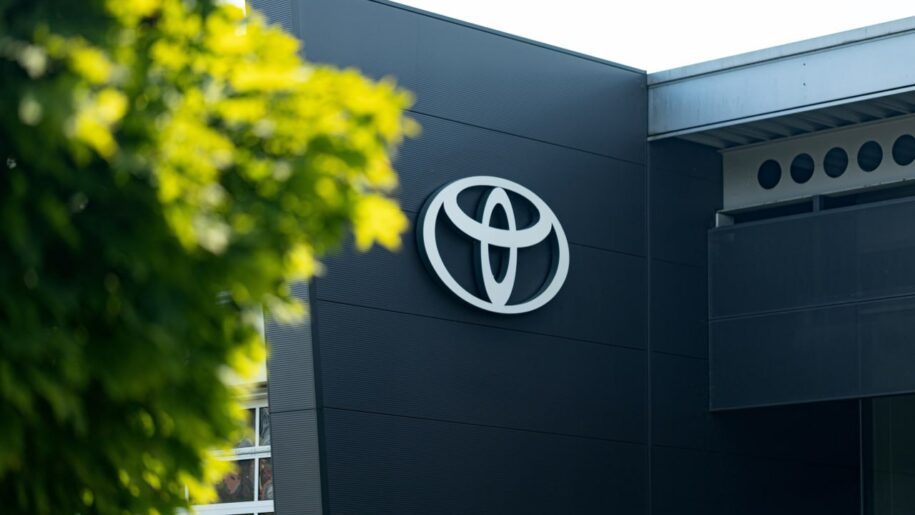
A $626 investment can now begin in Toyota Wallet, the app better known for payments, car financing and mobility services. Toyota Finance has opened applications for a roughly $6.26 million, one-year security-token bond that uses BOOSTRY’s ibet for Fin blockchain network.
Buyers do not need to open a brokerage account. Instead, Toyota is handling the application process through its own website and wallet app, placing a regulated bond alongside services that already connect customers to Toyota’s wider ecosystem.
The offering, called the TOYOTA Wallet Tsumugu Bond, is Toyota Group’s first self-offered public security-token bond. It is still a corporate bond issued by Toyota Finance. Blockchain changes the way the bond is recorded and distributed; it does not turn the investment into a freely traded crypto token.
A security token built for a closed network
Toyota Finance is issuing the bond through ibet for Fin, BOOSTRY’s consortium blockchain platform for regulated securities. The published name of the bond includes a transfer restriction, a detail that matters more than the word “token.”
The structure is designed for a controlled securities market, with rules around who can hold and transfer the asset. Toyota has not announced support for self-custody, public-chain transfers, crypto-exchange trading or DeFi use. Investors should therefore view the token as a digitally issued bond held within a regulated framework, rather than as an asset with the mobility of Bitcoin or an ERC-20 token.
- Issuer: Toyota Finance Corporation.
- Total size: About $6.26 million.
- Term: One year.
- Investment range: About $626 to $625,470, in roughly $626 units.
- Network: BOOSTRY’s permissioned ibet for Fin platform.
- Key limitation: The bond comes with transfer restrictions.
That does not make the blockchain element cosmetic. Security tokens can give issuers a digital record of ownership and a more direct way to manage investor communications. Here, though, the technology is being used inside the existing rules of a bond market. The product is built around control, not open-market liquidity.
Toyota Wallet takes over the distribution job
Toyota Financial Services said its first security-token bond, issued in March 2025, was sold through securities companies. The new issue takes a different route. Toyota Finance is accepting applications directly, while Toyota Wallet becomes the customer-facing entry point.
That is the more ambitious part of the launch. A securities firm normally sits between an issuer and a retail bond buyer. Toyota is trying to bring that relationship closer to home by using an app it already operates with Toyota Motor and Toyota Financial Services.
The app is not becoming a crypto exchange. It is becoming a channel through which a customer can apply for a blockchain-recorded security, receive notices and access related benefits. Toyota Financial Services says it can manage those parts of the relationship as one service rather than split them between the issuer, a broker and separate customer-reward systems.
Applications opened on Aug. 18 and close on Sept. 2, with issuance set for Oct. 27. SMBC Nikko Securities is advising Toyota Finance on the deal, while Sumitomo Mitsui Banking Corporation acts as bond administrator.
The transfer restriction defines the trade-off
Crypto markets have trained investors to expect transferability. A token can usually move from one wallet to another, trade on an exchange or be used elsewhere in the ecosystem. Toyota’s bond is deliberately narrower.
The transfer restriction keeps the security inside a defined legal and operational structure. That may limit the flexibility that crypto traders look for, but it also avoids the need to build a public trading market around a retail bond issue. Toyota’s announcement offers no suggestion that holders will be able to trade it around the clock or move it through ordinary crypto wallets.
For an investor, that means the familiar questions around a bond still come first: the issuer’s creditworthiness, the return offered, repayment at maturity and the terms for selling or transferring the position. The blockchain record does not remove those questions. It simply places the asset in a different distribution and administration system.

Rewards make the holder relationship more useful to Toyota
The offer also carries benefits that look closer to a customer programme than a conventional retail-bond campaign. Depending on payment and account settings, buyers may receive Toyota Wallet balance rewards. Toyota is also offering lottery-based Fuji Speedway tickets and selected driving experiences involving Lexus, GR and Toyota vehicles.
Some buyers of new Toyota or Lexus vehicles may qualify for further wallet rewards, depending on the payment method used. Those extras are separate from the bond’s financial terms. They are not yield, and they do not change the risk of lending money to Toyota Finance.
They do show why Toyota wants the product inside its own app. A brokerage account can hold a bond. Toyota Wallet can connect that bondholder with vehicle sales, events, payments and loyalty rewards. The security token gives Toyota a regulated digital asset; the wallet gives it a customer relationship around that asset.
Japan is building several kinds of blockchain finance
Toyota’s bond belongs to a different branch of Japan’s digital-asset market than the country’s stablecoin projects. Japan’s megabanks are working on a shared yen stablecoin for institutional settlement, as our team reported.
That project focuses on moving money between financial institutions. Toyota is using blockchain for a retail investment product and tying it to a consumer app. No connection between the two has been announced, but together they show how Japanese companies are applying blockchain to different parts of finance: settlement on one side, regulated real-world assets on the other.
Toyota is not creating a new crypto market with this issue. It is testing whether a customer who uses Toyota Wallet for everyday services will also buy a bond through it. If the model is repeated, the app could become a direct retail route for transfer-restricted RWAs, with the blockchain infrastructure largely staying in the background.
Disclaimer: This article is for informational purposes only and does not constitute financial, investment, or legal advice.



Kosta has reported on cryptocurrency markets and blockchain infrastructure since 2020, bringing over six years of hands-on experience in the crypto industry built through daily tracking of markets, trends, and emerging blockchain developments. Specializing in Bitcoin on-chain analysis, institutional ETF flows, and digital asset price action, his work at Coindoo has been cited by other news agencies and consistently covers market developments with a focus on data-driven reporting across Bitcoin, Ethereum, Solana, and XRP. Over the years, Kosta has contributed to multiple crypto media outlets in different regions, authoring over 6,000 articles across the sector. His reporting spans cryptocurrency markets and the broader fintech industry, tracking not only price action but also the technological and regulatory forces shaping the ecosystem. To support his analysis, Kosta actively leverages on-chain data and metrics from leading platforms such as Santiment, Glassnode, and CryptoQuant, enabling deeper, evidence-based market insights. He believes in the power of transparency and the data that underpins the blockchain ecosystem. His academic background in Marketing Management from Denmark further complements his analytical approach, adding a strong understanding of communication strategy and content positioning to his work.