The CFTC Just Made Bitcoin and Ethereum Legitimate Collateral – and Washington Is Only Getting Started
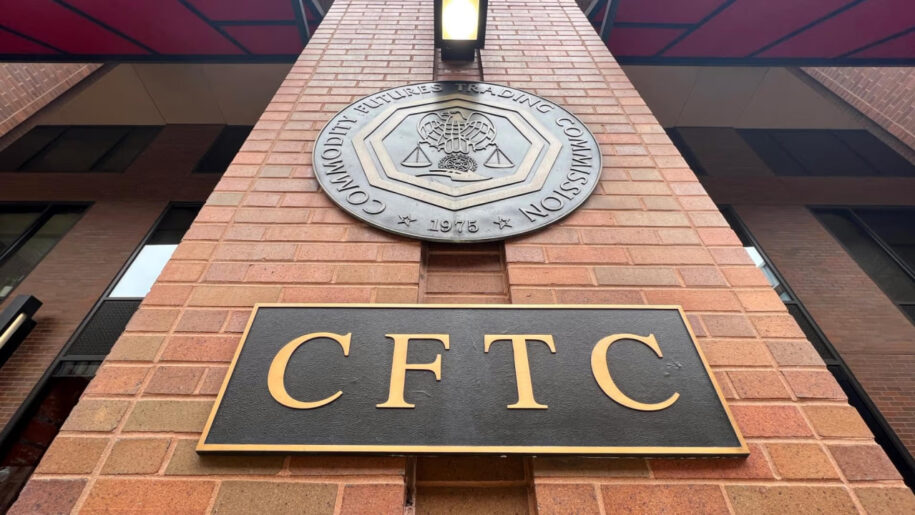
In a move that redraws the line between crypto and traditional finance, the US derivatives regulator has confirmed that Bitcoin and Ethereum can serve as collateral in regulated futures and swaps markets. Four days later, Congress is convening to discuss what comes next.
Key Takeaways
- The CFTC has confirmed that BTC, ETH, and tokenized assets now qualify as eligible collateral in regulated futures and swaps markets, subject to strict liquidity, custody, and risk management requirements.
- The House Financial Services Committee will hold a dedicated hearing on tokenization and the future of capital markets on Wednesday March 25 at 10AM EST.
- Together, these developments mark a fundamental shift in how Washington treats digital assets.
For years, the central argument against treating cryptocurrencies as serious financial instruments was regulatory ambiguity. Institutions that wanted exposure to digital assets could not always point to a clear framework that made participation safe, compliant, or defensible to their own risk committees. That argument just became considerably harder to make. The Commodity Futures Trading Commission has issued new guidance confirming that Bitcoin, Ethereum, and tokenized assets can be used as collateral in regulated derivatives markets – and before the ink is dry, the House Financial Services Committee has scheduled a hearing on tokenization and the future of capital markets for March 25. Two separate arms of the US government are moving in the same direction at the same time, and the pace is accelerating.
From Speculative Asset to Financial Instrument
The CFTC’s guidance does not arrive as a surprise to those who have been watching the regulatory landscape closely, but its significance should not be understated. Linked to Staff Letters 25-39 and 26-05, the framework outlines a structured pathway rather than a sweeping endorsement. Market participants seeking to use digital assets as collateral must satisfy rigorous liquidity standards, maintain proper custody arrangements, and operate within robust risk management frameworks.
The bar is intentionally set high, which is exactly what makes the development credible instead of too early.The guidance gives Bitcoin and Ethereum a kind of institutional legitimacy that no amount of market capitalization growth could do on its own. Regulatory recognition as eligible collateral is a whole other type of validation. It means that a derivatives desk at a big bank or asset manager can now see its Bitcoin holdings not as a risky investment sitting in a separate bucket, but as useful capital that can be used in the current market.

Congress Steps In: The March 25 Hearing
If the CFTC’s guidance represents the regulatory arm of US financial oversight moving decisively on digital assets, the House Financial Services Committee’s upcoming hearing represents the legislative branch arriving at the same destination from a different direction. Scheduled for Wednesday March 25 at 10AM EST, the session will focus specifically on tokenization and the future of capital markets – a scope that sits directly at the intersection of everything the CFTC just addressed.The timing is not coincidental.
🇺🇸 UPDATE: The House Financial Services Committee is set to host a hearing on tokenization and the future of capital markets next Wednesday, March 25 at 10AM EST. pic.twitter.com/4LPZkiyFk2
— Cointelegraph (@Cointelegraph) March 21, 2026
Congressional hearings on financial innovation rarely happen in a vacuum, and one scheduled within days of a landmark CFTC guidance on crypto collateral suggests a shared sense of urgency between two bodies that do not always move in lockstep. The hearing gives lawmakers the opportunity to examine the broader implications of what the regulator has just permitted, to probe the risks that the new framework introduces, and to begin shaping the legislative architecture that will govern tokenized assets over the longer term.
For the industry, a dedicated congressional hearing on tokenization carries weight in its own right. It signals that the conversation has moved well beyond whether digital assets deserve a place in traditional finance and toward the more practical and consequential question of how that integration should be structured, governed, and protected against systemic risk. That is a materially different discussion than the one Washington was having eighteen months ago – and the shift in tone reflects how much the underlying landscape has changed.
The Infrastructure That Makes It Real
Both developments land at a moment when the operational infrastructure required to actually implement crypto collateral arrangements has reached genuine maturity. Regulated custodians, institutional-grade security solutions, and compliance frameworks built specifically for digital assets have been developing quietly alongside the regulatory conversation for years. The convergence of those two tracks – technical readiness meeting regulatory permission – is what transforms the CFTC’s guidance from a symbolic gesture into something firms can act on immediately.
READ MORE:

2026 Survey Data Confirms What Many Suspected: Institutional Crypto Adoption Is No Longer Optional
The practical implications extend well beyond simple collateral substitution. On-chain collateral models, where digital assets are held and transferred natively on blockchain infrastructure rather than routed through traditional custodial intermediaries, become viable within a regulated framework for the first time. Continuous settlement – unconstrained by the operating hours of legacy clearing systems – moves from a theoretical advantage of crypto to a realistic feature of mainstream derivatives markets. Capital efficiency improves across the board as institutions gain the ability to deploy holdings that were previously sitting idle.
The Convergence Is Operational Now
What this week’s developments confirm is that the integration of crypto and traditional finance is no longer a roadmap item or a regulatory aspiration. It is happening in real time, through concrete mechanisms, with the explicit backing of US financial authorities. The CFTC has established the collateral framework. Congress is convening to examine the broader architecture. The institutional infrastructure to support both is already in place.
The firms that move fastest to operationalize these changes – deploying Bitcoin and Ethereum as working collateral, building custody and compliance pipelines around the new framework, and positioning ahead of whatever legislative clarity emerges from the March 25 hearing – will have a structural advantage over those that wait for further confirmation. In markets, the window between regulatory permission and widespread adoption is often shorter than it appears. This one may be shorter than most.
The information provided in this article is for educational purposes only and does not constitute financial, investment, or trading advice. Coindoo.com does not endorse or recommend any specific investment strategy or cryptocurrency. Always conduct your own research and consult with a licensed financial advisor before making any investment decisions.



Alex is Editor-in-Chief of Coindoo and co-founder of Millennial Media Group, with nearly a decade of experience covering financial markets - crypto first, then everything else. It started in 2016 with Bitcoin. Like most people at the time, he didn't fully understand it - so he kept digging. Blockchain, tokenomics, the projects, the cycles. That curiosity never stopped, and eventually pulled him into traditional markets too: equities, commodities, macro. Not because he left crypto behind, but because you can't properly understand one without the other. What drives him is straightforward: he wants to know why something is happening, not just that it's happening. Most market coverage stops at the headline - price up, price down, here's a chart. Alex finds that kind of reporting actively unhelpful. If you walk away from an article without understanding the mechanism behind the move, what did you actually learn? He holds a degree in Tourism from New Bulgarian University - not the most obvious path into financial markets, but markets have a way of pulling in people who are simply too curious to stay out. He has authored over 200 in-depth analyses and more than 10,000 articles across crypto and traditional finance. He still thinks every day in markets teaches him something new. That's probably why he hasn't stopped.