Who Owns the Most Bitcoin in 2026? [Updated Rich List]
![Who Owns the Most Bitcoin in 2026? [Updated Rich List]](https://coindoo.com/wp-content/uploads/2018/07/pexels-photo-315788-915x600.jpeg)
Who actually controls the 21-million Bitcoin supply in 2026? The answer is no longer just early retail adopters or anonymous dark-web millionaires.
Table of Contents
- The Founder and Early Visionaries
- The Corporate Whales & Builders
- Companies With the Most Bitcoin
- Bitcoin ETFs and Investment Funds
- The Sovereign Frontier: Nation-States Holding Strategic Bitcoin Reserves
- The Shifting Balance of Global Bitcoin Wealth
When Satoshi Nakamoto mined Bitcoin’s genesis block, the asset belonged to tech idealists. In 2026, the supply belongs to corporate vaults, Wall Street titans, and sovereign nations. Following the explosive growth of spot ETFs and aggressive corporate treasury plays, the distribution of wealth in crypto has drastically changed. While the mysterious creator remains the largest individual ghost entity, a new class of multi-billion-dollar corporate whales now commands the market. Based on the latest on-chain data, here is the definitive, updated 2026 Bitcoin Rich List detailing exactly who holds the most BTC right now.
The Founder and Early Visionaries
1. Satoshi Nakamoto – The Anonymous Founder and Crypto’s Largest Sovereign Entity

The anonymous creator of Bitcoin remains its largest individual holder by an insurmountable margin. Blockchain researchers estimate that Nakamoto owns approximately 1.1 million BTC. This staggering stash was accumulated between January 2009 and 2010 through early network mining, famously identified by data scientists as the “Patoshi pattern” – a specific flaw in the early mining software’s nonce generator that links thousands of early blocks to a single entity.
At current market valuations, this monolithic reserve positions Nakamoto among the wealthiest individuals on Earth. What cements this holding as the ultimate anomaly in global finance is its absolute immobility; not a single Satoshi has ever been spent, transferred, or mixed. Distributed across more than 20,000 individual wallets, these coins have remained completely dormant for over 17 years. Whether Nakamoto has passed away, lost access to the private keys, or chooses to leave the supply untouched to preserve Bitcoin’s decentralization remains one of the greatest mysteries in the financial world.
2. Cameron and Tyler Winklevoss – Converting Facebook Settlement Millions into a Venture Capital Empire

Cameron and Tyler Winklevoss remain among the most influential top bitcoin holders in existence, famously converting a historic legal settlement into an iconic crypto fortune. In 2013, the twins allocated roughly $11 million to acquire what was estimated to be nearly 1% of the circulating Bitcoin supply at the time (roughly 70,000 BTC purchased at roughly $11 per coin). This massive early bet solidified their status near the top of every bitcoin rich list 2026.
However, modern blockchain intelligence reveals that their portfolio has heavily evolved. While Forbes maps their legacy empire against that original multi-billion-dollar baseline, Arkham Intelligence on-chain data shows they actively manage a fraction of that in directly tagged corporate wallets, such as those belonging to Winklevoss Capital. Over the years, the twins have strategically reallocated large portions of their wealth to self-fund their exchange, Gemini, and navigate intensive regulatory restructuring. Despite these operational shifts, the Winklevoss brothers remain definitive biggest bitcoin whales, wielding immense personal capital and deep institutional market influence.
3. Tim Draper – The Silicon Valley Venture Capitalist Who Cornered the Silk Road Auction

Venture capitalist Tim Draper stands out as one of the most legendary top bitcoin holders from the traditional finance world. In July 2014, Draper made history by solo-purchasing 29,656 BTC during a US Marshals Service auction of assets seized from the illicit Silk Road marketplace. While the world viewed crypto as a dangerous gamble, Draper secured the entire lot for roughly $18.7 million – pricing his entry point at an astonishing $632 per coin.
That single strategic play has yielded one of the highest venture capital ROIs in history, cementing Draper’s legacy on the bitcoin rich list 2026. Unlike modern corporate buyers who hoard coins inside institutional funds, Draper has used his stash to actively fund the ecosystem. Through Draper Associates, he has spent years investing parts of his wealth directly into early-stage crypto startups and blockchain infrastructure. As one of the biggest bitcoin whales in Silicon Valley, Draper remains aggressively bullish, maintaining a strict “HODL” philosophy on his core position while predicting that digital scarcity will ultimately replace traditional fiat networks.
The Corporate Whales & Builders
4. Michael Saylor – The Corporate Treasury Strategist Weaponizing Institutional Debt for Bitcoin

Michael Saylor remains the most publicly outspoken individual Bitcoin advocate of the modern era, driving a massive architectural paradigm shift in institutional corporate treasuries. As the executive chairman of Strategy Inc. (formerly MicroStrategy), Saylor has weaponized corporate debt to construct a colossal corporate treasury holding 843,706 BTC – positioning the firm as one of the single most influential biggest bitcoin whales on earth. Beyond his corporate empire, Saylor personally commands a legendary individual stash of 17,732 BTC in his private cold wallets, cementing his high placement across every bitcoin rich list 2026.
However, 2026 has brought a monumental evolution to Saylor’s historical “HODL and never sell” doctrine. In June 2026, Strategy Inc. made shockwaves by filing an SEC disclosure confirming its first token sale in years, offloading 32 BTC for $2.5 million to optimize its capital structure and fund preferred-stock yield distributions. While the sale represents a microscopic fraction of their overall multibillion-dollar stash, it signals a definitive maturation. Saylor’s empire has transitioned from a passive accumulator into an active, credit-generating Bitcoin titan, reinforcing his legacy as a premier figure among the world’s top bitcoin holders.
5. Changpeng Zhao – The Global Exchange Billionaire Holding His Fortune in Native Tokens

Changpeng Zhao, widely known as “CZ,” commands an unmatched presence among the world’s top bitcoin holders, despite a series of unprecedented personal and corporate transitions. Following his 2024 four-month prison sentence and a high-profile late 2025 executive pardon, CZ has re-emerged in 2026 as crypto’s wealthiest individual, with Forbes tracking his personal net worth at an astronomical $111.1 billion. While he stepped down as Binance CEO, his 90% equity ownership stake in the global exchange remains the primary engine behind his wealth.
However, recent on-chain disclosures have shattered long-held industry assumptions about his personal Bitcoin allocation. In a verified portfolio breakdown published on Binance Square, CZ revealed that he is heavily ‘all-in’ on his own ecosystem, holding roughly 98.48% of his crypto net worth in Binance Coin (BNB). While he remains one of the market’s biggest bitcoin whales due to a massive personal stash originally funded by selling his apartment for $1 million of BTC back in 2014, Bitcoin only represents roughly 1.32% of his active crypto portfolio. Even as a minority percentage of his fortune, that 1.32% allocation translates to an estimated $1.4 billion personal stash, cementing his status as an undeniable Bitcoin billionaire.
6. Brian Armstrong – The Gateway Custodian Controlling Wall Street’s Keys
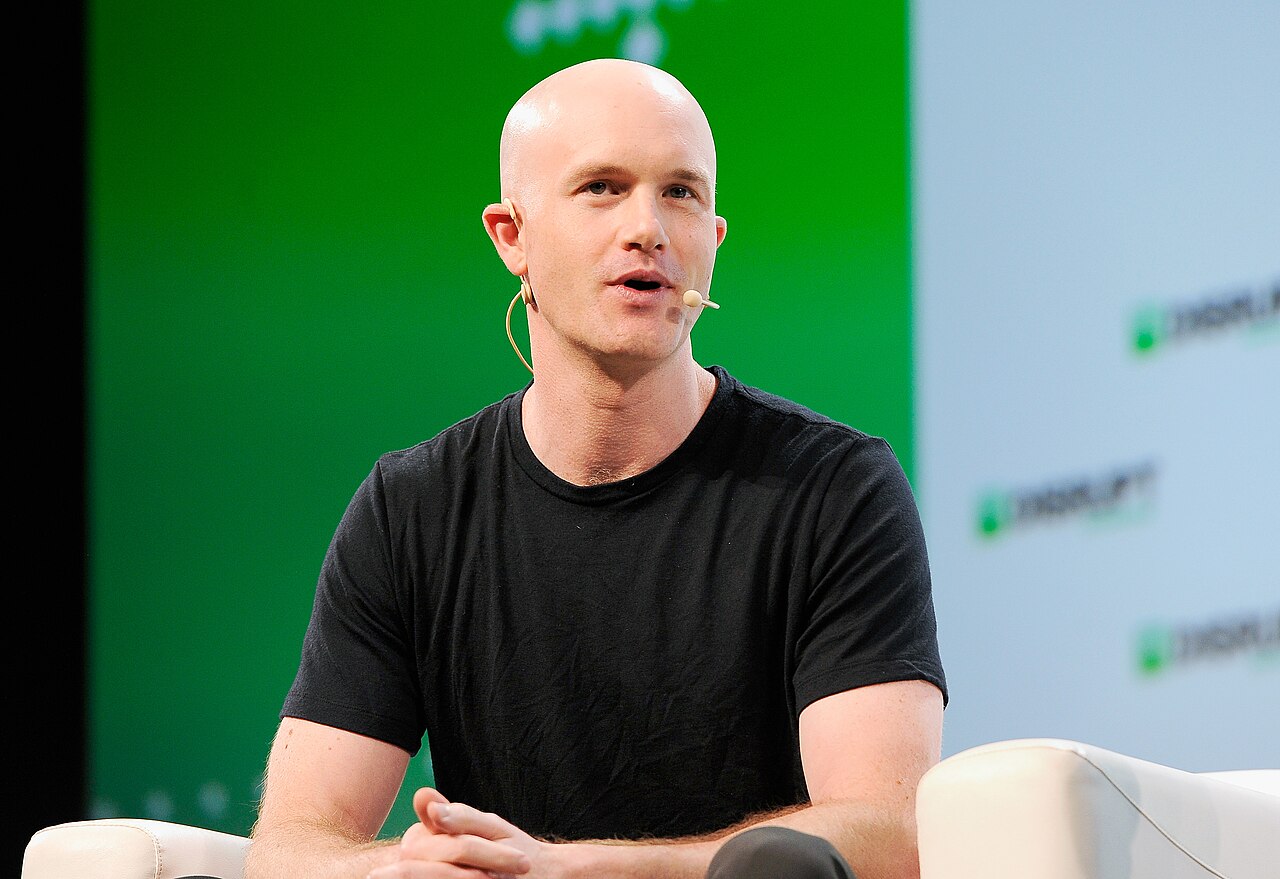
As the co-founder and CEO of Coinbase – the largest publicly traded cryptocurrency exchange in the United States – Brian Armstrong occupies a unique position among the world’s top bitcoin holders. While his exact personal on-chain Bitcoin wallet addresses remain private, Forbes and the Bloomberg Billionaires Index track his personal net worth between $8.4 billion and $9.3 billion in 2026. This immense wealth is heavily anchored by his ~14% equity stake in Coinbase (COIN), which he originally built from the ground up after buying his first batch of Bitcoin for just $9 per coin back in 2012.
Armstrong’s true influence on the bitcoin rich list 2026 extends far beyond his personal bank account. Coinbase operates as the absolute backbone of the modern institutional crypto ecosystem, managing a staggering $376 billion in assets on its platform. The exchange has secured a near-monopoly on corporate custody, acting as the primary institutional custodian for 8 out of the 11 major U.S. spot Bitcoin ETFs – including BlackRock’s iShares Bitcoin Trust (IBIT). By securing the private keys for Wall Street’s corporate giants, Armstrong’s platform functions as one of the biggest bitcoin whales by proxy, controlling the gateway through which institutional capital flows.
Companies With the Most Bitcoin
MicroStrategy (Strategy): The Sovereign Corporate Treasury Titan
MicroStrategy stands in an uncontested category of its own among publicly traded companies. Following a major corporate evolution, the enterprise rebranded its market identity to Strategy Inc., fully leaning into its status as the world’s pioneer “Bitcoin Treasury Company”. By aggressively weaponizing institutional debt, convertible notes, at-the-market stock offerings, and operating cash, the firm has hyper-accelerated its accumulation curve. As of June 2026, the company commands a colossal balance sheet holding 843,706 BTC – representing roughly 4% of the entire 21-million token supply. This historic reserve was acquired at a cumulative cost basis exceeding $63.8 billion, with an average buy price of roughly $75,699 per coin.
However, 2026 has introduced a groundbreaking shift in the company’s historic “HODL and never sell” doctrine. In an SEC Form 8-K filing published on June 1, 2026, Strategy Inc. confirmed its first Bitcoin sale in four years, offloading 32 BTC for $2.5 million to optimize its liquidity matrix and support cash distributions for its Variable Rate Perpetual Preferred Stock series. While the minor sale represents a microscopic fraction of their overall multibillion-dollar war chest, it signals a maturity shift. Strategy Inc. has transitioned from a passive hoard entity into an active, credit-generating asset powerhouse, while its stock (MSTR) remains the ultimate high-leverage proxy for institutional Bitcoin exposure on the Nasdaq.
MARA Holdings: Trading the Treasury for AI Power
MARA Holdings stands as a premier giant in the digital mining world, though its financial strategy has undergone a complete metamorphosis. For years, the company operated as a pure-play miner that aggressively stockpiled its production. However, 2026 brought a tectonic shift to its digital asset management framework. MARA formally abandoned its strict 2025 policy – which only allowed the liquidation of daily mined coins – and opened the door to selling its historical balance sheet reserves to fund massive corporate infrastructure plays.
This updated policy culminated in a historic market move in the first quarter of 2026. To retire near-term convertible notes and fund a massive $1.5 billion acquisition of the Long Ridge Energy & Power campus in Ohio, MARA aggressively liquidated roughly 20,880 BTC from its core treasury. This massive asset sale effectively halved their multi-billion-dollar stack. While the company still actively mines Bitcoin, this structured sell-off knocked MARA down from its longtime spot as the world’s second-largest public Bitcoin treasury holder to the fourth-largest. This strategic pivot signals a massive evolution: MARA has re-engineered its model away from a passive asset vault to become a diversified digital energy and artificial intelligence compute infrastructure powerhouse.
Tesla: The High-Profile Dormant Giant
Tesla remains one of the most high-profile and scrutinized names on the global corporate ledger, serving as a historic bridge between Silicon Valley and digital asset adoption. Elon Musk’s electric vehicle titan fundamentally shifted institutional sentiment in early 2021 with a watershed $1.5 billion Bitcoin purchase. While the firm subsequently liquidated roughly 75% of that position in mid-2022 to maximize its cash position during global supply chain lockups, Tesla has maintained a strict “no-sell” stance on its remaining reserves ever since.
For years, public third-party databases estimated Tesla’s balance sheet at exactly 9,720 BTC. However, advanced on-chain wallet tagging and a major corporate wallet rotation revealed that Tesla actually commands a larger stash of 11,509 BTC. This multi-million-dollar war chest is distributed across several newly formed, highly secure cold storage wallets. While Tesla has transitioned away from accepting crypto payments or actively accumulating more tokens, its massive, untouched position firmly cements the automotive giant as a dominant corporate holder, trailing only a select few dedicated treasury entities like Strategy Inc.
Galaxy Digital: The Diversified Wall Street Prime Broker
Founded by billionaire former Goldman Sachs partner Mike Novogratz, Galaxy Digital occupies a unique position in the institutional Bitcoin landscape – one that goes well beyond simply holding coins on a balance sheet. The company recently achieved a major milestone by listing its stock on the Nasdaq under the ticker GLXY, bringing it into direct view of mainstream institutional investors. Where pure treasury companies like MicroStrategy hold Bitcoin as a static reserve asset, Galaxy puts its capital to work across a multi-billion-dollar operation spanning institutional asset management, trading desks, investment banking, and prediction markets.
According to the firm’s 2026 financial results, Galaxy’s corporate Bitcoin treasury has grown to 25,723 BTC, representing over 90% of its direct liquid digital asset portfolio. Rather than sitting dormant, these holdings actively backstop the company’s credit markets and large-scale institutional OTC liquidity pools. Galaxy’s institutional standing was further cemented when BlackRock – the world’s largest asset manager – selected it as an approved validator infrastructure partner, underlining that Galaxy is not merely a participant in the digital asset economy but a core piece of its infrastructure.
Bitcoin ETFs and Investment Funds: The Institutional Concentration of Supply
BlackRock dominance
74%
of total ETF supply
GBTC outflow
-76%
from 619k to 148k BTC
The approval of spot Bitcoin ETFs in the United States in January 2024 stands as the most critical structural milestone in the asset’s history. It bridge-linked legacy financial architecture with digital scarcity. In 2026, these regulated investment vehicles function as the principal engine behind Bitcoin price discovery, collectively channeling billions from institutional wealth managers, pension programs, and retail accounts into direct corporate custody vaults.
1. BlackRock: iShares Bitcoin Trust (IBIT)
BlackRock’s iShares Bitcoin Trust (IBIT) has achieved legendary financial status, solidifying its place as the fastest-growing ETF in market history. After breaking records by eclipsing $10 billion in assets under management (AUM) in a mere seven weeks post-launch, IBIT’s aggressive accumulation flywheel has shown no signs of slowing down. As of mid-2026, the fund manages an astronomical $76 billion in assets, holding an estimated 761,800 BTC. IBIT stands as the definitive institutional gateway to the digital asset class globally, using Coinbase Prime as its exclusive underlying custodian.
2. Grayscale Bitcoin Trust (GBTC)
Grayscale historically operated as the market’s original closed-end institutional vehicle before successfully winning a high-profile legal battle to convert into a spot ETF in January 2024. However, the product entered the competitive ETF arena burdened by a steep 1.5% management fee, which stood in stark contrast to its cheaper competitors. This cost disparity triggered a historic, multi-year exodus of capital. From its launch-day baseline of 619,162 BTC, relentless outflows have deeply diminished the fund’s war chest. By 2026, GBTC’s reserves have leveled out at roughly 148,687 BTC (valued at $15.6 billion). Despite this intense structural depletion, Grayscale retains a prominent, albeit reduced, operational footprint.
3. Fidelity: Wise Origin Bitcoin Fund (FBTC)
Fidelity’s Wise Origin Bitcoin Fund (FBTC) launched alongside BlackRock in early 2024, successfully positioning itself as the premier alternative choice for capital allocators. By 2026, FBTC has cemented its market share, firmly securing its rank as the second-largest spot Bitcoin ETF with an asset valuation hovering near $18 billion. The foundational catalyst behind Fidelity’s sticky inflows is its execution of a sovereign custody infrastructure. Unlike BlackRock and the vast majority of its peers who outsource storage to Coinbase, Fidelity completely self-custodies its Bitcoin via its in-house entity, Fidelity Digital Assets. This structural autonomy completely eliminates third-party counterparty risk, appealing directly to old-school institutional investors who demand total vertical integration.
The Sovereign Frontier: Nation-States Holding Strategic Bitcoin Reserves
The ultimate evolution of the Bitcoin wealth landscape is the transition from corporate balance sheets to national treasuries. Today, several global governments hold multi-billion-dollar stashes, primarily accumulated through criminal law enforcement forfeitures or deliberate macroeconomic strategies.
- United States Government (~328,372 BTC): The U.S. remains the world’s largest sovereign holder. This immense cache was seized during historic cyber-crime takedowns, including the Silk Road shutdowns and the 2016 Bitfinex hack.
- China (~194,000 BTC): China commands a massive digital asset vault, completely seized from the operators of the multi-billion-dollar PlusToken Ponzi scheme crackdown.
- United Kingdom (~61,245 BTC): The UK government holds a significant position, recovered during major multi-agency anti-money laundering operations by the Metropolitan Police.
- El Salvador (~7,600 BTC): While smaller in size, El Salvador is the only nation actively buying Bitcoin daily as a matter of state law, treating it as a core national reserve asset to protect against inflation.
The Shifting Balance of Global Bitcoin Wealth
The digital asset ecosystem has traveled an extraordinary distance from its humble beginnings in Satoshi Nakamoto’s early miner network. As this comprehensive look at who owns the most bitcoin reveals, the concentration of supply is undergoing a permanent institutional migration. While early pioneers and legendary individual billionaires still command generation-defining fortunes, they are increasingly sharing the upper echelons of the wealth hierarchy with sovereign nation treasuries, corporate balance sheets, and multi-billion-dollar Wall Street ETF managers.
As digital scarcity continues to redefine traditional financial frameworks, the distribution of these 21 million coins will continue to evolve on-chain. Whether the future market remains anchored by legacy tech idealists or completely dominated by global macroeconomic institutions, the data confirms one undeniable reality: Bitcoin has matured into a permanent, highly institutionalized pillar of global wealth architecture.
Originally published in November 2024; fully revised and updated for June 2026 to reflect the latest institutional on-chain data changes.



Kosta has reported on cryptocurrency markets and blockchain infrastructure since 2020, bringing over six years of hands-on experience in the crypto industry built through daily tracking of markets, trends, and emerging blockchain developments. Specializing in Bitcoin on-chain analysis, institutional ETF flows, and digital asset price action, his work at Coindoo has been cited by other news agencies and consistently covers market developments with a focus on data-driven reporting across Bitcoin, Ethereum, Solana, and XRP. Over the years, Kosta has contributed to multiple crypto media outlets in different regions, authoring over 6,000 articles across the sector. His reporting spans cryptocurrency markets and the broader fintech industry, tracking not only price action but also the technological and regulatory forces shaping the ecosystem. To support his analysis, Kosta actively leverages on-chain data and metrics from leading platforms such as Santiment, Glassnode, and CryptoQuant, enabling deeper, evidence-based market insights. He believes in the power of transparency and the data that underpins the blockchain ecosystem. His academic background in Marketing Management from Denmark further complements his analytical approach, adding a strong understanding of communication strategy and content positioning to his work.