Stellar, Litecoin, Cardano, and BlockDAG Compared Across Utility and Ecosystem Updates
Stellar, Litecoin, Cardano, and BlockDAG are compared across payment utility, network reliability, governance growth, and Legacy Sale activity.
Digital coin ecosystems are going through a phase of stricter checks and major technical updates. Market participants are increasingly looking for clear proof of liquidity, transparent structures, and verifiable security from newer networks. With global rules becoming stricter, attention is moving toward platforms that can show their resources and activity openly on-chain. Many hype-driven coins are fading, leaving more room for networks focused on utility and security features.
Finding stronger digital asset projects today depends on identifying platforms that combine safety-focused structures with ongoing technical improvements. Reviewing basic foundations, ecosystem progress, and public liquidity details remains an important way to assess long-term setups in a fast-moving and competitive digital space.
This publication is sponsored and written by a third party. Coindoo does not endorse or assume responsibility for the content, accuracy, quality, advertising, products, or any other materials on this page.
1. BlockDAG: Legacy Sale and Buyback Program
When assessing newer crypto projects, verifiable trust remains important. BlockDAG is launching its official Legacy Sale with defined entry terms and a structured buyback plan. In this market, promises carry more weight when users can review activity and terms directly on the network. To support this launch, BlockDAG has opened a Legacy Sale structure for users to acquire coins and register eligible tokens through the project dashboard.
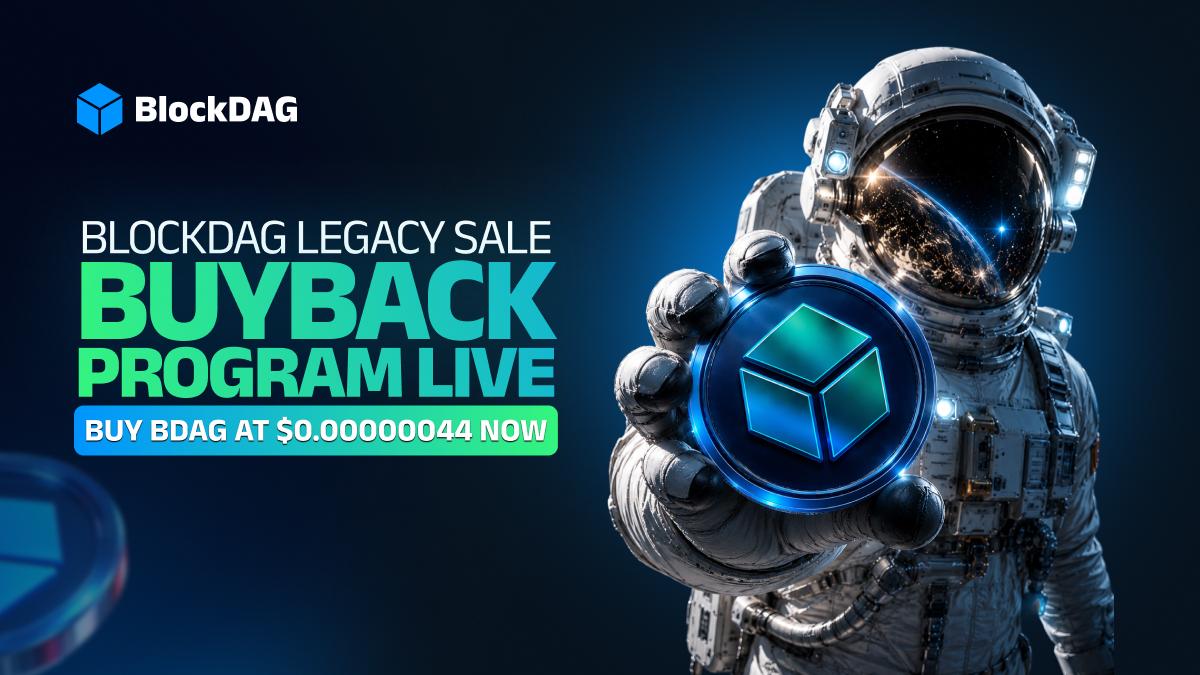
BDAG is currently available at $0.00000044 during this Legacy Sale event. Participants can sign up eligible coins from their personal dashboard and join a buyback pool that lets them sell accepted tokens back at $0.001 each under the project’s stated terms.
There are no coin transfers required for users buying into this Legacy round, and daily sell limits are uncapped for this group. Clear rules and dashboard visibility are part of the project’s current structure. Users can review the dashboard details and program information before participating.
Existing BDAG holders can also participate through a separate route. The project allows current holders to swap their assets at 30% below the current market rate to enter the buyback system. For these existing holders, the buyback price is set at $0.00025 per token, with a daily wallet submission cap of 250,000,000 BDAG. These buyback payouts are scheduled for October 1, 2026.

This is a notable moment for the community as the network grows through ecosystem utility, rising user numbers, online casino expansion, crypto miner rollout, and upcoming platform connections.
This level of transparency positions BlockDAG as one of the projects being discussed by users who value visible structures and on-chain verification. Making details available on the ledger reduces some of the uncertainty that often comes with joining a new token launch.
2. Stellar: Global Payments Network
Stellar continues to focus on moving money across global borders. The network connects traditional banking systems with decentralized tools so users can send international payments quickly and at low cost.
New deals with global money transfer firms have supported network activity, making it easier to switch between fiat money and digital coins. Stellar uses a streamlined setup to approve transactions, which consumes less power than older blockchain networks.

App creators are also building financial tools on this network to support users who do not have access to standard bank accounts. As the platform adds more real-world currencies to its system, users gain more practical payment options. Stellar remains part of the global payments discussion as it expands its network tools into growing economies.
3. Litecoin: Fast Low-Fee Transactions
Litecoin continues to operate as one of the more established networks for moving money globally. Running smoothly without downtime since launch, this blockchain handles daily transactions while keeping user fees low.
Throughout this year, Litecoin has seen increased use across online shops, retail point-of-sale setups, and international payment processors. New privacy-focused upgrades allow users to make secure transfers without significantly slowing the network or changing its overall structure.
As digital payments become more common, Litecoin offers a practical alternative to traditional payment systems. Its long operating history, simple access, and wide availability keep it relevant for users who want tools for everyday transactions.
4. Cardano: Smart Contract Ecosystem Growth
Cardano is moving forward as it rolls out its Voltaire upgrade phase. This new cycle brings community governance to the network, allowing token holders to vote on code changes and treasury spending.
The platform has also launched smart contract tools that continue to attract decentralized finance projects and business applications. Cardano follows a research-driven approach and formal methods to support security for developers and users.
Recent speed and capacity upgrades have increased the number of transfers the system can process, supporting a growing global user base. Cardano continues building a governance-focused and research-based digital ecosystem designed for long-term development.
Final Thoughts
Assessing the current crypto market means looking closely at safety, transparency, and practical usefulness. Stellar focuses on global payment transfers. Litecoin offers long-running reliability for everyday digital payments. Cardano continues developing community governance and smart contract infrastructure.
BlockDAG adds a different structure through its Legacy Sale and buyback framework. By outlining buyback values and dashboard tracking, BlockDAG gives participants a defined process under the project’s stated terms.

For users focused on financial transparency and structured participation, BlockDAG presents a model based on on-chain visibility, sale mechanics, and ecosystem activity. Future outcomes will depend on adoption, execution, liquidity, and broader market conditions.
This publication is sponsored and written by a third party. Coindoo does not endorse or assume responsibility for the content, accuracy, quality, advertising, products, or any other materials on this page. Readers are encouraged to conduct their own research before engaging in any cryptocurrency-related actions. Coindoo will not be liable, directly or indirectly, for any damages or losses resulting from the use of or reliance on any content, goods, or services mentioned.


Krasimir Rusev is a journalist and digital content creator with over 4 years of experience and more than 1,000 published pieces in the financial space. His work focuses on stock markets and commodities, closely tracking asset movements and the factors that drive them. He has a particular interest in gold and oil markets - not just their current movements, but their history, structure, and long-term trends. For him, understanding the context behind prices matters just as much as the prices themselves. A self-described Bitcoin maximalist, Krasimir has been following crypto markets long before he became a journalist. What started as a casual interest in Bitcoin gradually turned into a deep conviction - one that shaped how he thinks about money, value, and the broader financial system. That perspective quietly informs everything he writes. Beyond writing analysis and news, he actively creates content for social media including TikTok, Facebook, and Instagram, presenting market topics in a more accessible and visually engaging format. He believes financial information should reach a wide audience - not just those already following the markets. At Coindoo, he contributes to both editorial content and the development of the platform's digital presence. He works with tools like Photoshop, CapCut, and Canva, with a particular focus on visual storytelling - videos, infographics, and images that add an extra layer of value to news and analysis.