Ripple CEO Brad Garlinghouse: Banks Are Holding Crypto Regulation Hostage – And the White House Is Done Waiting

The battle over U.S. crypto legislation has entered a decisive phase. Ripple CEO Brad Garlinghouse took to X on March 3, 2026, to declare that the Digital Asset Market CLARITY Act is fundamentally about protecting American consumers - not the industry - and warned that Washington's patience with delay is running out.
Key Takeaways
- Ripple CEO Brad Garlinghouse puts 90% odds on the CLARITY Act passing by end of April 2026
- The bill passed the House 294-134 in July 2025 but faces a Senate standoff over stablecoin yield rules
- Traditional banks and crypto firms are in direct conflict, with the White House siding against the banks
- XRP price targets range from a $2.80 floor to bullish projections of $15–$30 if the bill passes
Garlinghouse described a recent White House ultimatum directed at traditional banks as an “extremely pointed message” to those dragging their feet on the legislation. His confidence in the outcome is striking: he puts the probability of passage at 90% before the end of April 2026. Decentralized prediction markets are more cautious, currently pricing passage at roughly 70–72% for the year.
What the Bill Actually Does
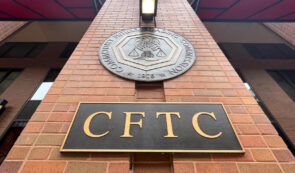
The CLARITY Act is, at its core, a jurisdictional restructuring. It draws a hard line between SEC oversight of securities and CFTC oversight of commodities – a distinction the crypto industry has spent years demanding after what many in the space characterize as “regulation by enforcement.” The bill also replaces the decades-old Howey Test with a so-called “maturity test” for classifying digital assets, a change that could fundamentally alter how tokens are treated under U.S. law.
On the consumer side, the bill mandates segregation of customer funds, tightens Anti-Money Laundering requirements, and explicitly protects individuals’ right to self-custody their digital assets.
The House passed it in July 2025 by a 294-134 bipartisan margin – a lopsided vote that, in theory, suggested smooth sailing. The Senate has proven another matter.
Where the Logjam Is
The central sticking point is stablecoin yield. The bill, in its current form, would allow crypto exchanges to pay yield on stablecoins – a provision that traditional banking groups, including the American Bankers Association, are fighting hard to kill. Their concern is straightforward: if consumers can earn competitive returns through crypto platforms, deposits could migrate out of traditional savings accounts.

The White House isn’t sympathetic. President Trump and his advisors have publicly accused banks of “holding the Clarity Act hostage” to protect what they’ve described as record profits. Trump has stated plainly that Americans should be earning more on their money – framing the banking opposition as self-serving obstruction rather than legitimate regulatory concern.
A Fractured Industry
The crypto industry itself isn’t speaking with one voice. Garlinghouse is advocating for a pragmatic position – his argument, essentially, is that “clarity beats chaos” even if the final bill falls short of ideal. Ripple has already moved aggressively on that thesis, deploying $3 billion in acquisitions since 2023 to build out infrastructure ahead of expected regulatory clarity.
Cardano founder Charles Hoskinson holds the opposite view. He has publicly called the bill a “trap” and a “horrific, trash bill,” arguing it hands the SEC too much initial authority and could do lasting damage to the U.S. crypto industry. His objection isn’t to regulation in principle – it’s to this specific architecture of power.
Coinbase CEO Brian Armstrong initially pulled support over Senate revisions before recently visiting the White House to negotiate a path forward on the stablecoin provisions. His position remains the most fluid of the major players.
The XRP Question
For those watching market implications, Standard Chartered analysts have set a cautious floor of $2.80 for XRP contingent on passage. The bull case is considerably more aggressive – some analysts and AI-driven models are projecting a range of $15 to $30, premised on XRP transitioning from a speculative asset into functional infrastructure for banks and payment providers operating under the new framework.
Whether that scenario materializes depends on whether the Senate can untangle the stablecoin dispute. The clock is ticking.
The information provided in this article is for educational purposes only and does not constitute financial, investment, or trading advice. Coindoo.com does not endorse or recommend any specific investment strategy or cryptocurrency. Always conduct your own research and consult with a licensed financial advisor before making any investment decisions.



Alexander Zdravkov is a person who always looks for the logic behind things. He has more than 3 years of experience in the crypto space, where he skillfully identifies new trends in the world of digital currencies. Whether providing in-depth analysis or daily reports on all topics, his deep understanding and enthusiasm for what he does make him a valuable member of the team.