Norway’s Central Bank Signals Slower Path to Easing as Inflation Rebounds
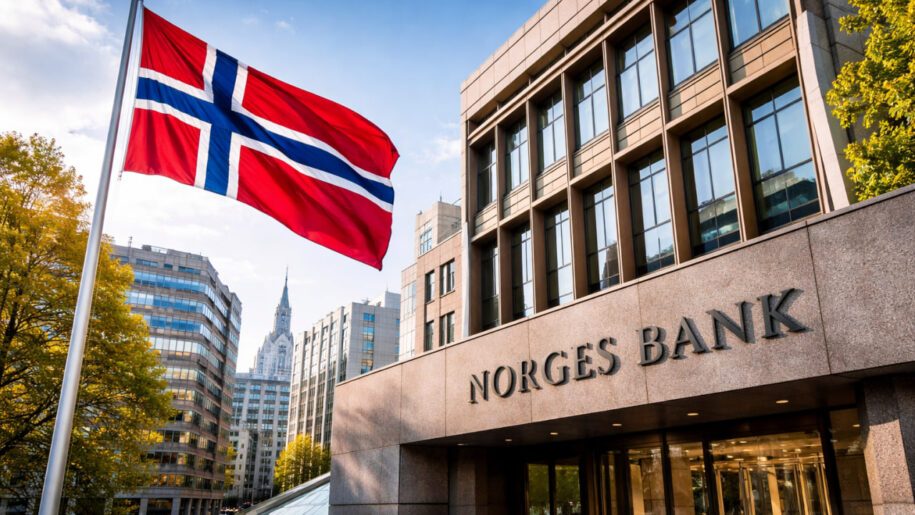
Norges Bank may keep borrowing costs unchanged for longer than previously expected, as fresh inflation pressures complicate the path toward lower rates.
- Economists now expect the next Norges Bank rate cut in Q3 2026.
- January inflation surprised to the upside, delaying easing expectations.
- Wage growth and a weaker krone are sustaining price pressures.
- The policy rate remains at 4 percent, with a terminal rate near 3.5 percent projected for early 2027.
- The central bank continues to stress a cautious, data-driven approach.
Economists surveyed by Bloomberg now see the next interest rate cut arriving in the third quarter of 2026, pushing back earlier projections that pointed to a move in the second quarter.
The revised outlook follows an unexpected jump in January inflation, which forced analysts to rethink how quickly policymakers can ease. While a gradual normalization is still anticipated, the timeline now looks slower and more cautious.
Revised Rate Path Points to Delayed Easing
Current projections suggest the following trajectory:
- The next rate cut is expected in Q3 2026 instead of Q2.
- The policy rate currently stands at 4 percent.
- Economists still expect the terminal rate to settle around 3.5 percent by early 2027.
- The easing cycle is seen concluding at the start of 2027.
- The shift underscores how sensitive the rate outlook remains to incoming inflation data.
Inflation and Wages Complicate the Outlook
Underlying consumer-price growth excluding energy climbed to 3.4 percent in January, marking a three-month high and catching markets off guard. At the same time, strong wage growth continues to fuel domestic price pressures, particularly in services.
Currency dynamics are adding another layer of uncertainty. The krone has weakened in recent months, increasing the risk of imported inflation. That trend, combined with global trade tensions and new international trade barriers, has reinforced a cautious stance within the central bank.
A Central Bank in No Rush
Officials have repeatedly emphasized that future decisions will remain data-dependent. While the long-term objective remains a return to the 2 percent inflation target, policymakers have signaled they are prepared to wait if price growth proves persistent.
The next policy decision and updated forecasts are scheduled for March 26, 2026, a meeting that could further clarify how concerned the bank is about renewed inflation risks.
Looking Back: From Tight Grip to Careful Normalization
Norway held its benchmark rate at a 16-year high of 4.5 percent throughout 2024, standing apart from many trading partners that began cutting earlier. The extended plateau reflected concerns over elevated wage growth and a fragile krone.
The first reduction came in June 2025, when rates were lowered to 4.25 percent as inflation eased faster than expected. A second 25-basis-point cut followed in September, bringing the rate to its current 4 percent level.
However, the easing momentum stalled late in 2025. In November and December, policymakers opted to pause further reductions, citing unpredictable international trade conditions and renewed uncertainty around inflation.
Now, with price pressures resurfacing, the path toward lower rates appears even more gradual. The message from Norges Bank is clear: the door to easing remains open – but only if inflation convincingly moves in the right direction.
The information provided in this article is for educational purposes only and does not constitute financial, investment, or trading advice. Coindoo.com does not endorse or recommend any specific investment strategy or cryptocurrency. Always conduct your own research and consult with a licensed financial advisor before making any investment decisions.



Alex is an experienced financial journalist and cryptocurrency enthusiast. With over 8 years of experience covering the crypto, blockchain, and fintech industries, he is well-versed in the complex and ever-evolving world of digital assets. His insightful and thought-provoking articles provide readers with a clear picture of the latest developments and trends in the market. His approach allows him to break down complex ideas into accessible and in-depth content. Follow his publications to stay up to date with the most important trends and topics.