Ledger Confirms Unauthorized Implant in Affected Device
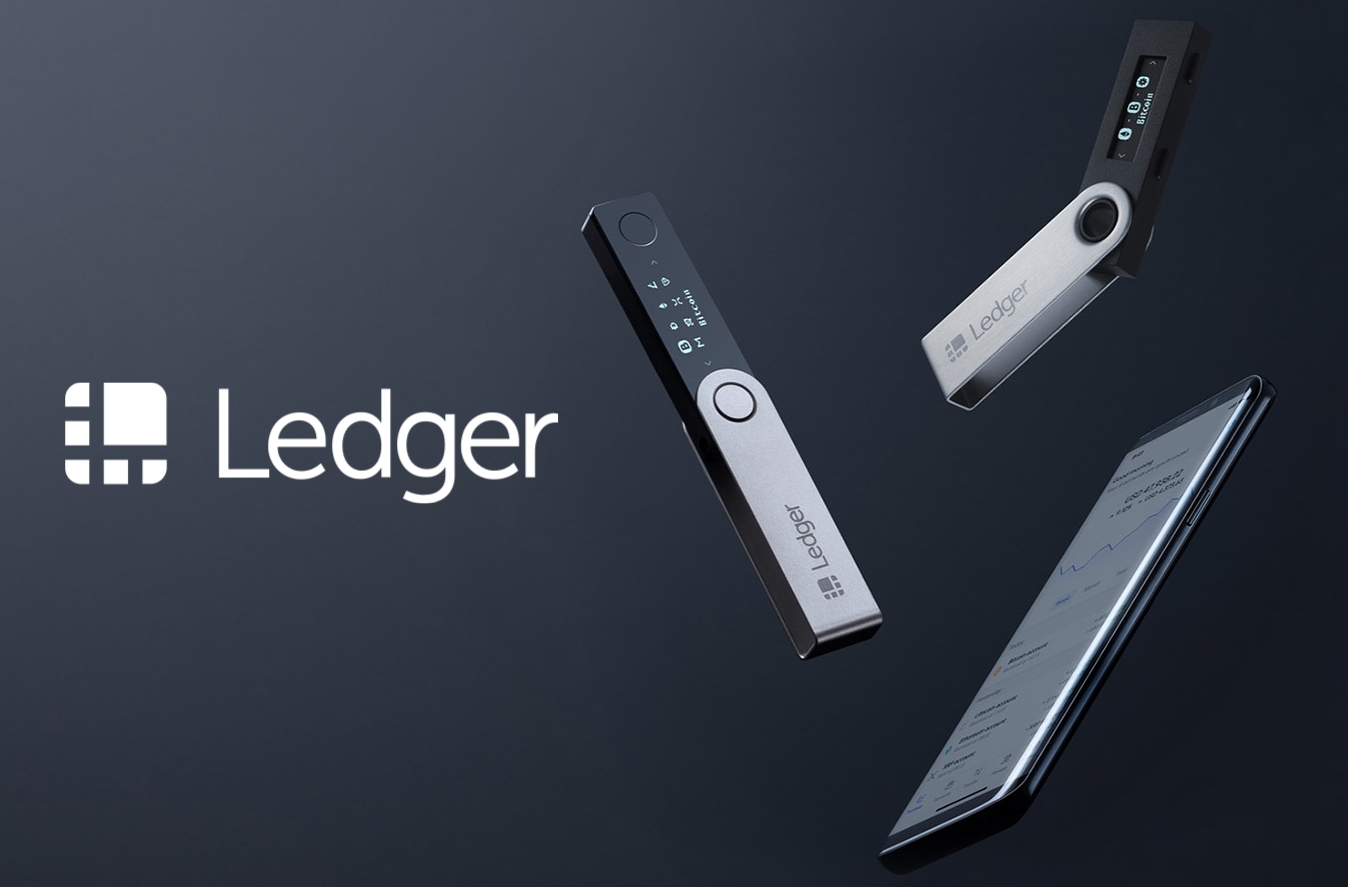
Ledger has confirmed that one device linked to its investigation into lost-funds reports contained an unauthorized hardware implant, giving the case a verified physical-security finding.
Key Takeaways
- Ledger identified an unauthorized hardware implant in one impacted device.
- The company has not said how many devices may be affected.
- CryptoBillis has paused sales of its hardware-wallet inventory.
- Ledger says it has found no indication its systems or services were compromised.
- Buyers who already set up a device should consider moving funds to a new signer with a new recovery phrase.
Ledger has a confirmed physical lead
In its latest public update, Ledger said one device belonging to an impacted user contained an unauthorized hardware implant. The company is contacting affected users, working with reseller CryptoBillis and cooperating with the appropriate authorities.
Ledger also said it has found no indication that its security infrastructure, systems or services were compromised. The finding directs attention to the device’s distribution path, while the company continues to examine the wider circumstances of the reported losses.
Confirmed
One impacted device contained an implant
Ledger has identified an unauthorized physical modification in a device connected with the lost-funds reports.
Still under review
How many devices and what role the implant played
Ledger has not disclosed the potential scope or publicly linked the implant to every reported loss.
How the case reached this point
Ledger began investigating after users reported lost funds linked to devices bought through CryptoBillis. At that stage, the company had not confirmed a shared cause, the reported loss totals or a compromise of its own systems. It asked the reseller to pause sales while warning customers not to initialize unused devices. The earlier reports and Ledger’s initial guidance are covered here.
The latest statement gives the investigation a concrete device-level finding. It does not establish how many units may be affected or explain how every reported loss occurred.
CryptoBillis has stopped selling hardware wallets
Ledger said CryptoBillis has ceased sales of all hardware-wallet inventory until the investigation concludes. That pause limits further distribution through the reseller while the companies determine the next steps.
The finding places the focus on the supply chain. A hardware wallet’s security begins before its owner creates a wallet: the device must reach them without unauthorized modification. Ledger has not said that every CryptoBillis device was altered, which is why the investigation and the sales pause remain important.
Social-media lists should not be treated as confirmation
A new X post from CryptoQuant contributor Darkfost named other Ledger resellers in Southeast Asia that it said could face supply-chain exposure because of their regional proximity to CryptoBillis. The post explicitly described that suggestion as speculation and did not present evidence that those retailers sold altered devices.
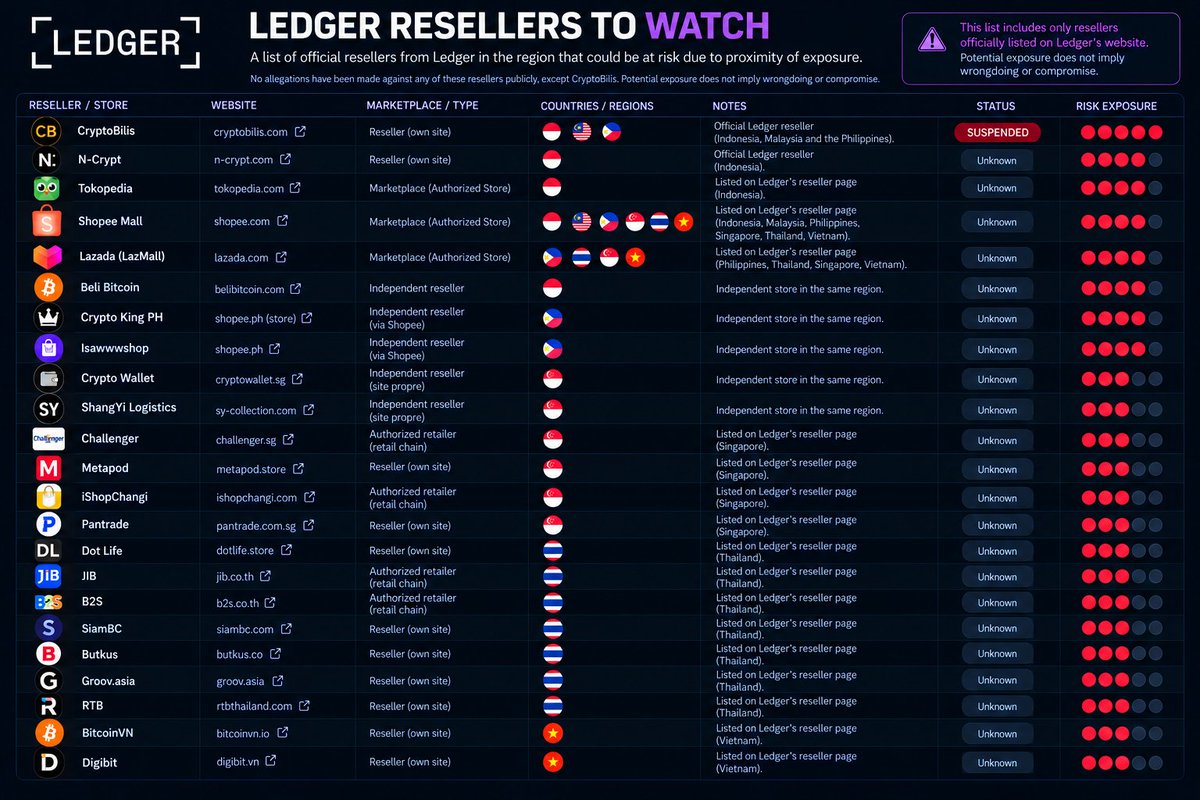
Ledger has confirmed an unauthorized implant in one device tied to CryptoBillis. It has not publicly identified additional resellers, confirmed a wider distribution problem or advised every customer in the region to move funds. Buyers should therefore avoid treating a circulating reseller list as an official warning, while following Ledger’s guidance if they purchased from CryptoBillis or receive a direct update from the company.
What affected buyers should consider
These steps apply to people who bought a Ledger device through CryptoBillis. Ledger has not issued a migration instruction for all Ledger users.
- Leave an unused device uninitialized.
Customers who bought from the reseller and have not started setup should not initialize the device while the investigation continues. - Do not reuse an existing recovery phrase on a replacement.
A replacement device loaded with the old 24-word phrase restores the same wallet. It does not create a separate security boundary. - Consider moving assets to a new signer with a new phrase.
For a previously initialized device, Ledger advises considering a migration to a fresh wallet setup. Users should verify every destination address on the hardware-wallet screen before approving a transaction. - Never disclose the recovery phrase.
Ledger says it will never ask users for their 24-word recovery phrase. Any request for it should be treated as a scam attempt.
The investigation now has a physical lead
Ledger’s confirmation changes the case from a series of user reports into an investigation with a confirmed device-level finding. Questions remain over the scale of the issue and the connection between the implant and the reported losses.
For CryptoBillis buyers, the immediate priority is simple: do not initialize an unused device, and use a fresh recovery phrase if deciding to move assets. For other self-custody users, the episode is a reminder that wallet security depends on the integrity of the device before its first transaction is signed.
This article is provided for informational purposes only and does not constitute financial or security advice. Users who believe a device may be affected should follow Ledger’s official guidance and never share their recovery phrase.



Alexander Zdravkov is a market analyst and crypto journalist with interests in economics, broader financial markets and digital assets. His journey into crypto began more than four years ago, driven by a fascination with the rapid evolution of blockchain technology and the transformative potential of decentralized finance. He began analyzing market cycles and identifying emerging trends before they reach the mainstream. He holds a degree in International Relations - a background that helped shape his broader perspective on global economics, geopolitics, and the interconnected nature of modern financial markets. Whether covering the latest developments in the crypto sector or exploring broader macroeconomic themes, Alexander focuses on giving readers context rather than simply repeating headlines. During his career, he has authored more than 5,000 articles covering cryptocurrencies, traditional finance, and global market developments. His work spans everything from Bitcoin and altcoins to macroeconomic trends influencing risk assets worldwide.