Here’s What’s Actually Moving Crypto Markets This Week

Tether's $127.5 million intervention in Solana's DeFi ecosystem, a Bitcoin rally fueled by institutional ETF money, and one of the stranger stock pivots in recent memory defined Thursday's crypto session, according to social data analysis from Santiment.
Key Takeaways
- Tether committed $127.5M to rescue Drift Protocol after a ~$285M exploit.
- Bitcoin approached $76,000 as BlackRock-led ETF inflows pushed total crypto market cap past $2.54 trillion.
- A Bitcoin protocol proposal (BIP-361) to freeze up to 5.6 million BTC in quantum-vulnerable wallets has split the developer community
The most consequential story of the day is Tether’s structured bailout of Drift Protocol, the Solana-based trading platform hit by an approximately $285-295 million exploit on April 1 – an attack later linked to North Korean-affiliated actors. Tether’s response was not a straightforward rescue loan. The $127.5 million commitment, part of a broader ~$150 million package, is structured as a revenue-linked credit facility, meaning Tether’s exposure is tied directly to Drift’s future performance rather than paid out upfront as goodwill.
More importantly, the terms of the deal require Drift to abandon Circle’s USDC and adopt USDT as its core settlement layer going forward. This needs to be understood in the context of a wider stablecoin war. While Tether holds the largest supply overall, Circle’s USDC has been gaining ground in on-chain activity, partly because its regulatory positioning under frameworks like the EU’s MiCA gives institutional operators more comfort. Solana’s DeFi volume has been surging, and Circle was positioned to capture a meaningful share of it. By injecting $127.5 million into Drift at the moment of maximum vulnerability, Tether effectively forced USDC out of a key protocol and locked in its own dominance over that liquidity channel. Tether simultaneously moved around 951 BTC into reserves, reinforcing its balance sheet while executing the deal. What looks like a rescue is more accurately described as a defensive moat – built at a competitor’s expense, using a crisis as the entry point.
BlackRock Money Is Driving the Bitcoin Rally, Not Retail
Bitcoin’s approach toward $76,000 is being driven primarily by institutional inflows rather than retail enthusiasm. BlackRock’s spot ETF is pulling significant daily volumes, with broad buying pressure reaching across BTC, ETH, XRP, and SOL. Total crypto market capitalization has crossed $2.56 trillion in the process.
What’s notable here is that on-chain data shows whale accumulation running in parallel with ETF demand, yet Bitcoin continues to lag behind equities in relative performance terms – the S&P 500 and Nasdaq both hit fresh all-time highs this week as global liquidity expands and geopolitical risk premiums ease. Traders are reading the crypto rally as a downstream effect of that broader risk-on environment rather than anything crypto-specific. That reading is supported by a less-discussed Santiment data point: even as Bitcoin’s price climbs, its social dominance is actually declining relative to gold, silver, and real-world assets. Investors appear to be chasing tangibility – hard assets, yield-bearing instruments, and ETF wrappers that connect crypto to regulated financial infrastructure – rather than the asset itself. The rally is real, but the enthusiasm surrounding it is increasingly flowing toward gold and Bitcoin-linked equities rather than Bitcoin on its own terms.
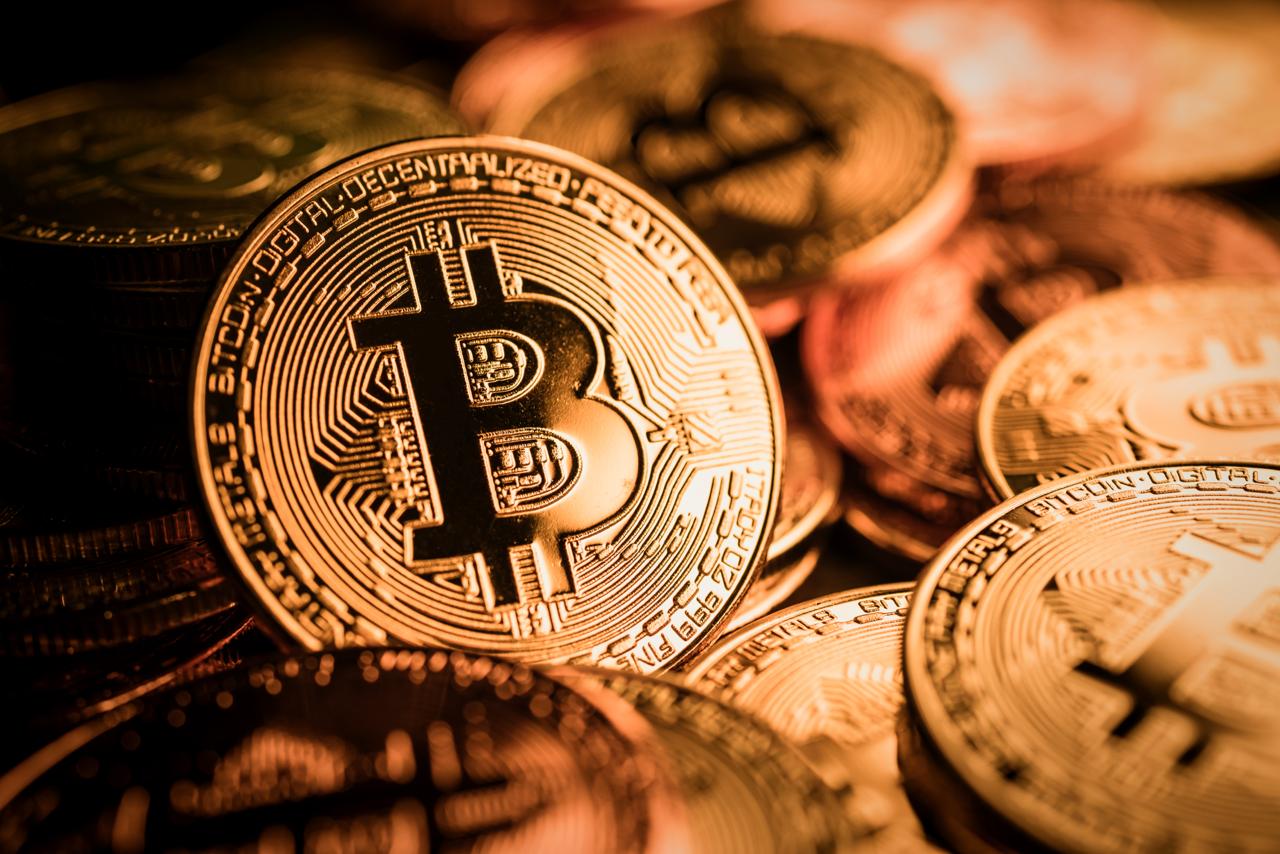
BIP-361: The Proposal That Could Freeze Satoshi’s Bitcoin
The Bitcoin rally is happening against the backdrop of a serious and unresolved debate inside the developer community over BIP-361 – a proposal to freeze Bitcoin held in so-called quantum-vulnerable addresses if those holders don’t migrate to newer cryptographic formats within a five-year grace period. The proposal, associated with developers including Jameson Lopp, targets wallets where the public key is exposed on-chain, a category that includes early P2PK outputs and reused addresses.
Estimates of the affected supply range from 1.7 to 5.6 million BTC – nearly 30% of Bitcoin’s total supply. That figure includes approximately 1.1 million BTC attributed to Satoshi Nakamoto’s original mining addresses. Proponents frame the proposal as a necessary precaution against future advances in quantum computing that could eventually compromise elliptic curve cryptography, giving a sufficiently powerful actor the ability to drain those wallets before their owners can respond.
Critics argue the proposal does something far more damaging in the near term: it puts an expiration date on coin ownership, transforming Bitcoin from an asset with unconditional finality into one that requires active maintenance to remain valid. Some community members have described BIP-361 as predatory precisely because it uses a speculative future threat to justify stripping immutability from wallets that have, by definition, never been touched or consented to any protocol change. The “your keys, your coins” principle doesn’t come with an asterisk about migration deadlines – and critics argue it shouldn’t. The argument is not settled, and it is unlikely to be settled quickly.
Coordinated Hype Runs Alongside the Institutional Story
Social data from Santiment also flagged coordinated social media activity around at least one crypto token, characterized by multilingual posts, FOMO-driven language, airdrop references, and high emoji density – the standard fingerprint of organized pump-and-dump promotion rather than organic interest. That activity ran alongside the legitimate institutional story, which is a pattern that tends to appear whenever Bitcoin momentum picks up and retail attention follows institutional money back into the market. The two narratives share a session but not a logic – one is driven by ETF flows and stablecoin geopolitics, the other by actors who need retail volume to exit.
What ties all of it together, though, is something happening well outside the crypto sector. Investors are increasingly optimistic about de-escalation in the Middle East – Trump announced a 10-day ceasefire between Israel and Lebanon, and a second round of talks between the US and Iran is reportedly underway. That geopolitical relief is doing real work in markets right now, restoring a risk-on sentiment that has been largely absent since the conflict escalated. It is a reminder that for all the noise around stablecoin wars, quantum freeze proposals, and AI rebrands, the biggest lever on crypto prices remains the same as it does for every other asset class – and it has nothing to do with on-chain activity.
The information provided in this article is for educational purposes only and does not constitute financial, investment, or trading advice. Coindoo.com does not endorse or recommend any specific investment strategy or cryptocurrency. Always conduct your own research and consult with a licensed financial advisor before making any investment decisions.



Alex is Editor-in-Chief of Coindoo and co-founder of Millennial Media Group, with nearly a decade of experience covering financial markets - crypto first, then everything else. It started in 2016 with Bitcoin. Like most people at the time, he didn't fully understand it - so he kept digging. Blockchain, tokenomics, the projects, the cycles. That curiosity never stopped, and eventually pulled him into traditional markets too: equities, commodities, macro. Not because he left crypto behind, but because you can't properly understand one without the other. What drives him is straightforward: he wants to know why something is happening, not just that it's happening. Most market coverage stops at the headline - price up, price down, here's a chart. Alex finds that kind of reporting actively unhelpful. If you walk away from an article without understanding the mechanism behind the move, what did you actually learn? He holds a degree in Tourism from New Bulgarian University - not the most obvious path into financial markets, but markets have a way of pulling in people who are simply too curious to stay out. He has authored over 200 in-depth analyses and more than 10,000 articles across crypto and traditional finance. He still thinks every day in markets teaches him something new. That's probably why he hasn't stopped.