Goldman Sachs CEO Flags Delayed Market Reckoning Over U.S.-Iran Conflict
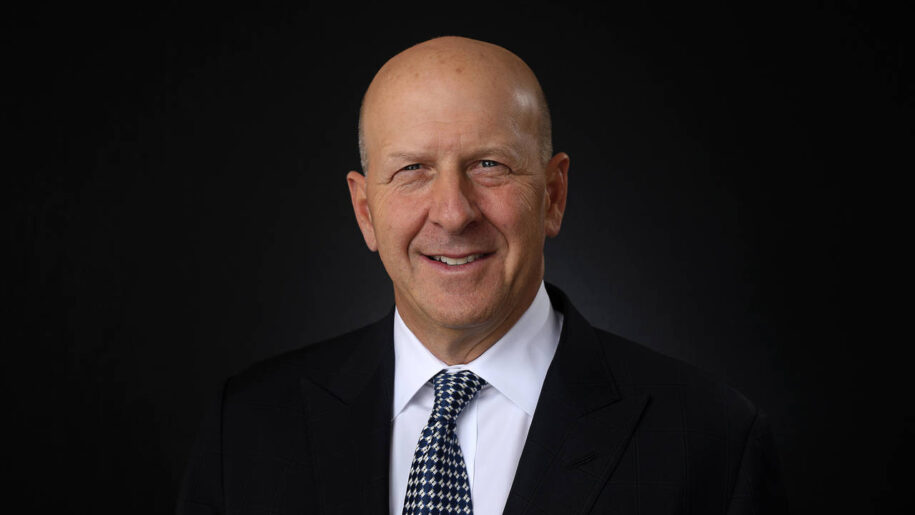
Goldman Sachs chief executive David Solomon raised a cautious flag on Wednesday over what he described as a deceptively quiet market response to the intensifying U.S.–Iran standoff - suggesting the calm may not last.
Key Takeaways
- Goldman Sachs CEO David Solomon says markets have been surprisingly calm despite the U.S.–Iran conflict escalating.
- He warns the full economic impact could take weeks to materialize, with a potentially sharper market reaction ahead.
- Oil prices have surged over 15%, raising fears of renewed inflation and a rethink of Fed rate cuts.
- Analysts warn a prolonged Strait of Hormuz closure could push crude above $100 per barrel.
Speaking at a business summit in Sydney on March 4, Solomon said he was struck by how “benign” and “tame” investor reaction had been so far. His read: markets haven’t fully processed what’s unfolding. “It may take a couple of weeks,” he said, for the cumulative weight of the conflict to sink in.
Equity Markets Hold – For Now
The remarks come as global equity markets have dipped but not cratered. The S&P 500 is down less than 1% on the week. The Dow shed 0.83% on Tuesday, the Nasdaq 1.02%. By historical standards – given the scale of a direct U.S. military confrontation with Iran – those are restrained numbers.
Solomon’s explanation for the muted response tracks with how markets typically behave: geopolitical events rarely move the needle unless they translate directly into slower economic growth. So far, that transmission hasn’t fully kicked in. But he was careful not to read the stillness as a verdict.
Oil Tells a Different Story
Where markets have reacted is in energy. Brent crude climbed more than 15% from the prior week, now trading in the low-to-mid $80s. WTI advanced to the mid-to-high $70s. The driver is straightforward – the reported closure of the Strait of Hormuz, through which roughly a fifth of the world’s oil supply passes, has injected serious supply anxiety into energy markets.
Inflation Risk Complicates the Fed’s Path
The broader macro picture is more complicated. The U.S. dollar has strengthened as investors rotate into safe-haven assets, a standard playbook move. Less standard: Treasury yields are rising, not falling. Normally a flight to safety pushes yields down. The upward pressure here reflects growing concern that an oil-driven inflation spike could force the Federal Reserve to pull back from its rate-cutting trajectory.

Solomon acknowledged that resilience in the U.S. economy – underpinned by an easing monetary cycle and significant deregulation – has provided a buffer. But he was blunt about the limits of any forecast: there are too many unknowns in play to speculate with confidence on how the conflict evolves or what it ultimately does to consumer spending.
Analysts Warn the Worst May Be Ahead
Other analysts are more specific in their concerns. TCW has suggested that “Operation Epic Fury,” the codename for the U.S. military campaign, could run longer than the initially projected four-to-five week window. If the Strait of Hormuz remains closed for an extended stretch, some strategists warn crude could breach $100 per barrel – a threshold that would complicate central bank policy across multiple economies.
Diversification Under Pressure
There are also structural worries emerging. Some market observers argue that the conflict is scrambling the usual logic of portfolio diversification, as sanctions and security risks distort normal relationships between asset classes.
For now, the numbers look orderly. Solomon’s point – and it’s worth taking seriously – is that orderly and stable are not the same thing.
The information provided in this article is for educational purposes only and does not constitute financial, investment, or trading advice. Coindoo.com does not endorse or recommend any specific investment strategy or cryptocurrency. Always conduct your own research and consult with a licensed financial advisor before making any investment decisions.



Alex is Editor-in-Chief of Coindoo and co-founder of Millennial Media Group, with nearly a decade of experience covering financial markets - crypto first, then everything else. It started in 2016 with Bitcoin. Like most people at the time, he didn't fully understand it - so he kept digging. Blockchain, tokenomics, the projects, the cycles. That curiosity never stopped, and eventually pulled him into traditional markets too: equities, commodities, macro. Not because he left crypto behind, but because you can't properly understand one without the other. What drives him is straightforward: he wants to know why something is happening, not just that it's happening. Most market coverage stops at the headline - price up, price down, here's a chart. Alex finds that kind of reporting actively unhelpful. If you walk away from an article without understanding the mechanism behind the move, what did you actually learn? He holds a degree in Tourism from New Bulgarian University - not the most obvious path into financial markets, but markets have a way of pulling in people who are simply too curious to stay out. He has authored over 200 in-depth analyses and more than 10,000 articles across crypto and traditional finance. He still thinks every day in markets teaches him something new. That's probably why he hasn't stopped.