Gold and Silver Extend Historic Rally as 2026 Trading Begins

Precious metals opened 2026 with renewed strength, extending a historic rally that already marked 2025 as their strongest year in more than four decades.
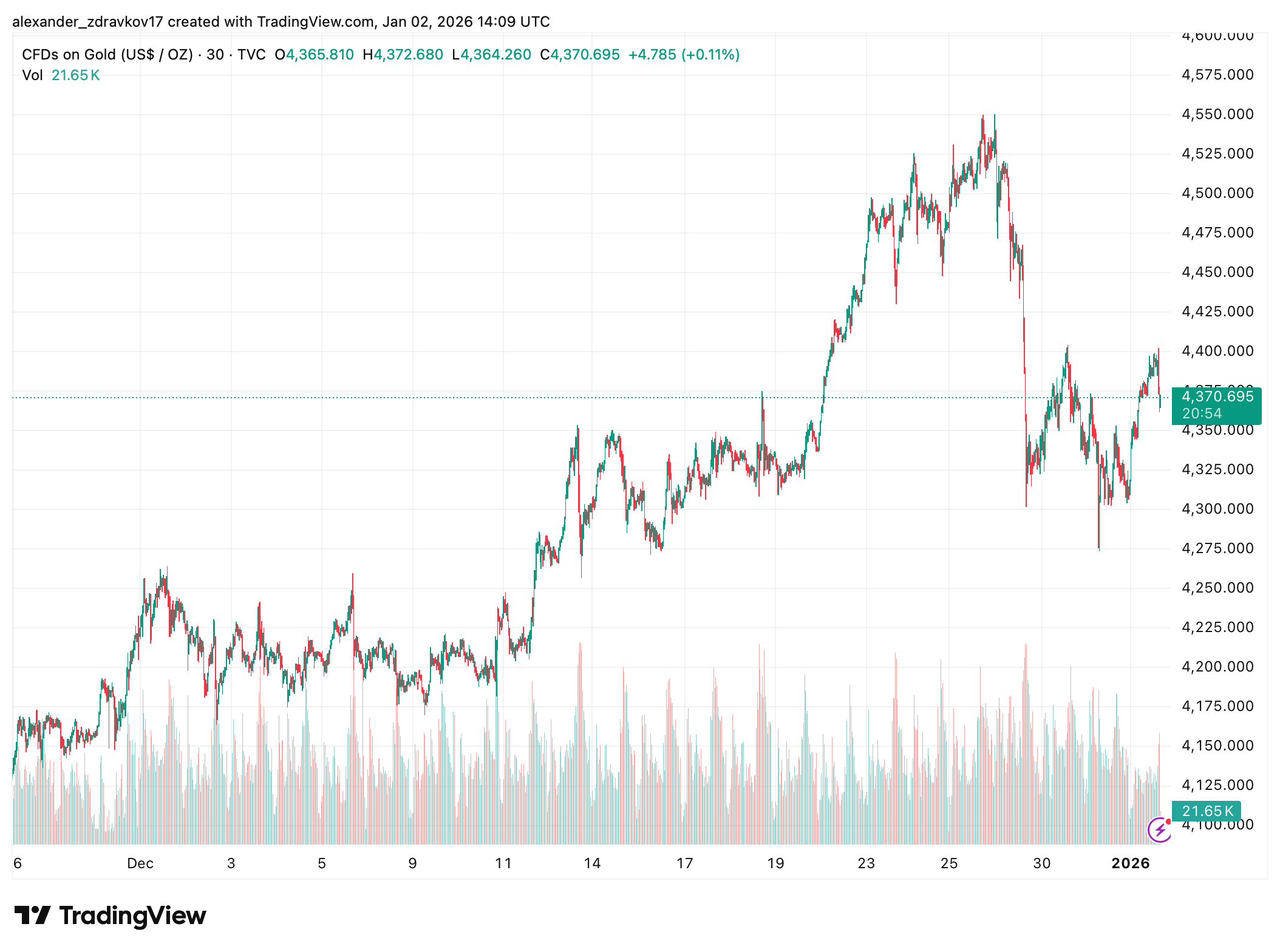
Gold edged closer to the $4,400-per-ounce level while silver surged more than 3%, underscoring sustained investor appetite — even as technical and mechanical pressures loom in the near term.
Key takeaways
- Gold and silver are building on their strongest annual gains since 1979
- Index rebalancing could trigger billions of dollars in near-term selling
- Silver faces the largest technical pressure due to overweight positioning
- Longer-term outlook remains supportive amid rate cuts and dollar weakness
A Powerful Start to 2026, With a Catch
As reported by Bloomberg, bullion prices continued their upward momentum in early 2026, supported by expectations of further US interest-rate cuts and a structurally weaker dollar. Gold approached the $4,400 range, while silver outperformed once again, reflecting its higher volatility and tighter supply dynamics.
However, the very strength that fueled the rally is now creating short-term risks. Both metals have become significantly overweight in major commodity benchmarks, raising the likelihood of forced selling by passive funds that track those indices. With trading volumes still thin due to global holidays, even modest rebalancing flows could have an outsized impact on prices.
Index Rebalancing Puts Silver in the Crosshairs
The most acute pressure is expected in silver. Futures linked to the metal currently represent about 9% of the Bloomberg Commodities Index, well above its 2026 target weighting of just under 4%. To realign portfolios, index-tracking funds may need to offload more than $5 billion worth of silver contracts during a five-day roll period beginning next week. Gold faces a similar, though slightly smaller, adjustment, with roughly $6 billion in futures potentially up for sale.

Daniel Ghali, a senior commodity strategist at TD Securities, warned that as much as 13% of open interest in COMEX silver markets could be liquidated over the coming weeks, a move that could trigger sharp, short-term price swings — particularly in low-liquidity conditions.
Long-Term Fundamentals Still Favor Bullion
Despite these near-term headwinds, the broader backdrop for precious metals remains constructive. Gold logged a series of record highs in 2025, driven by aggressive central-bank buying, easing Federal Reserve policy, and persistent geopolitical and trade-related uncertainty. Silver not only followed gold higher but also benefited from fears of potential US import tariffs on refined metal, adding a policy-driven premium.
Among major financial institutions, expectations remain bullish. Goldman Sachs recently reiterated its base-case forecast for gold to climb toward $4,900 an ounce, citing further rate cuts and political influence over US monetary policy as upside risks.
As 2026 begins, precious metals are balancing two powerful forces: short-term technical selling driven by index mechanics, and longer-term macro tailwinds rooted in policy easing, currency weakness, and demand for safe-haven assets. While volatility may increase in the weeks ahead, the broader trend that carried gold and silver to multi-decade highs appears far from exhausted.
The information provided in this article is for educational purposes only and does not constitute financial, investment, or trading advice. Coindoo.com does not endorse or recommend any specific investment strategy or cryptocurrency. Always conduct your own research and consult with a licensed financial advisor before making any investment decisions.



Alex is an experienced financial journalist and cryptocurrency enthusiast. With over 8 years of experience covering the crypto, blockchain, and fintech industries, he is well-versed in the complex and ever-evolving world of digital assets. His insightful and thought-provoking articles provide readers with a clear picture of the latest developments and trends in the market. His approach allows him to break down complex ideas into accessible and in-depth content. Follow his publications to stay up to date with the most important trends and topics.