G20 Puts Stablecoins Inside the Global Payments Rebuild

G20 finance ministers and central bank governors have linked digital-asset regulation and cross-border stablecoin work to a wider effort to modernize global payments.
The September 1 G20 Chair’s Statement calls for clearer regulatory paths for digital assets, longer operating hours for large-value payment systems, wider use of the ISO 20022 messaging standard and stronger implementation of global financial-crime rules.
The statement shows how G20 officials now view stablecoins: as one part of cross-border finance whose performance depends on the banking, messaging and compliance systems surrounding them.
Key Takeaways
- G20 officials connected stablecoin work with payment-system reform.
- The statement supports longer hours for large-value payment systems.
- It also calls for wider, more consistent use of ISO 20022.
- The commitments are political priorities, not binding international rules.
Why the G20 language matters, but does not make law
The Group of Twenty, or G20, is a forum for the world’s major economies. It consists of 19 countries, the European Union and the African Union. Together, its members represent approximately 85% of global GDP, 75% of international trade and two-thirds of the world’s population, according to the G20’s official membership overview.
Its finance ministers and central bank governors can coordinate priorities and direct work toward organizations such as the Financial Stability Board, the Financial Action Task Force and the Bank for International Settlements. The group is not a global legislature, however. Its statements do not create licenses, authorize issuers or automatically alter national payment systems.
The September 1 statement therefore matters as a map of where policy work is heading. Officials committed to establishing “clear pathways for sound digital financial and digital assets innovation” while requesting further FSB work on the cross-border effects of global stablecoins and gaps in the available data.
The document was agreed by the G20 members present except China, which recorded objections to four other paragraphs. The digital-asset, payment and FATF provisions were not among those listed objections. That does not guarantee agreement on how every country will implement them, but it shows that crypto was not the source of the recorded dispute.
A 24/7 token can still run into banking hours
Stablecoins are often described as continuously available because their blockchains do not close overnight or for weekends. That is true for transfers already taking place onchain, but it does not cover the entire payment.
A buyer may first need to send conventional currency to an issuer or intermediary before new tokens are created. A recipient who wants dollars rather than tokens must later redeem them. Institutional settlements can also require money to move between commercial-bank accounts or through a central bank’s large-value payment system.
Those fiat movements form the other side, or cash leg, of the transaction. If the relevant banking system is closed, a token may arrive while the recipient still waits to complete redemption or move the corresponding money.
This is why the G20’s call to expand operating hours for large-value payment systems belongs in the same paragraph as its stablecoin work. Longer hours could reduce the gap between an always-open blockchain and banking infrastructure that still follows local schedules. The statement does not require immediate round-the-clock operation, and extending hours in one country would not help every corridor unless connected systems also become available.
The limits of the cash leg also affect cost. Reserve management, foreign-exchange conversion, redemption and compliance can add expenses that are not visible in an onchain transaction fee. Our examination of the Bank of Italy’s stablecoin warning showed why a cheap token transfer does not necessarily make the complete cross-border payment cheaper.
Faster payments still need a shared language
Keeping payment systems open longer addresses availability, but banks must also exchange information that other institutions can interpret. A payment can slow down when the sender’s bank, intermediary and recipient’s bank use different formats for names, account details, transaction purposes or compliance data.
ISO 20022 provides a structured standard for carrying that information. Consistent fields can reduce manual repairs and preserve more transaction data as a payment passes through several institutions. The G20 statement encourages countries to use the harmonized ISO 20022 model as part of the wider cross-border roadmap.
That does not turn ISO 20022 into a blockchain, nor does it certify a token as compliant. Sharing a messaging format also does not make every bank, ledger and stablecoin automatically interoperable. Institutions still need compatible technology, legal arrangements and rules governing how the information can cross borders.
The Bank for International Settlements has warned that inconsistent implementation could limit the standard’s benefits. The value comes from institutions using the relevant fields in the same way, rather than merely saying that their systems support ISO 20022.
Compliance follows the transaction
Faster operating hours and more consistent messages can improve a payment’s route, but regulated institutions must still determine who sent the funds, where they are going and whether the transfer can legally be processed.
The Chair’s Statement therefore asks the Financial Action Task Force to prioritize jurisdictions where virtual-asset use is significant but implementation of FATF standards remains inadequate. It also supports risk-based supervision for anti-money-laundering, terrorist-financing and proliferation-financing controls.
This completes the connection among the G20’s proposals. Payment systems provide the settlement route, ISO 20022 carries structured information, and compliance rules determine whether institutions can process the transfer. A stablecoin may become another asset moving through that framework, but it does not remove those functions.
There is still room for disagreement over how much information should accompany an onchain transfer, which entities should collect it and how data-protection laws apply when it crosses borders. The G20 statement points toward closer coordination without resolving those questions.
The 2027 targets expose the execution gap
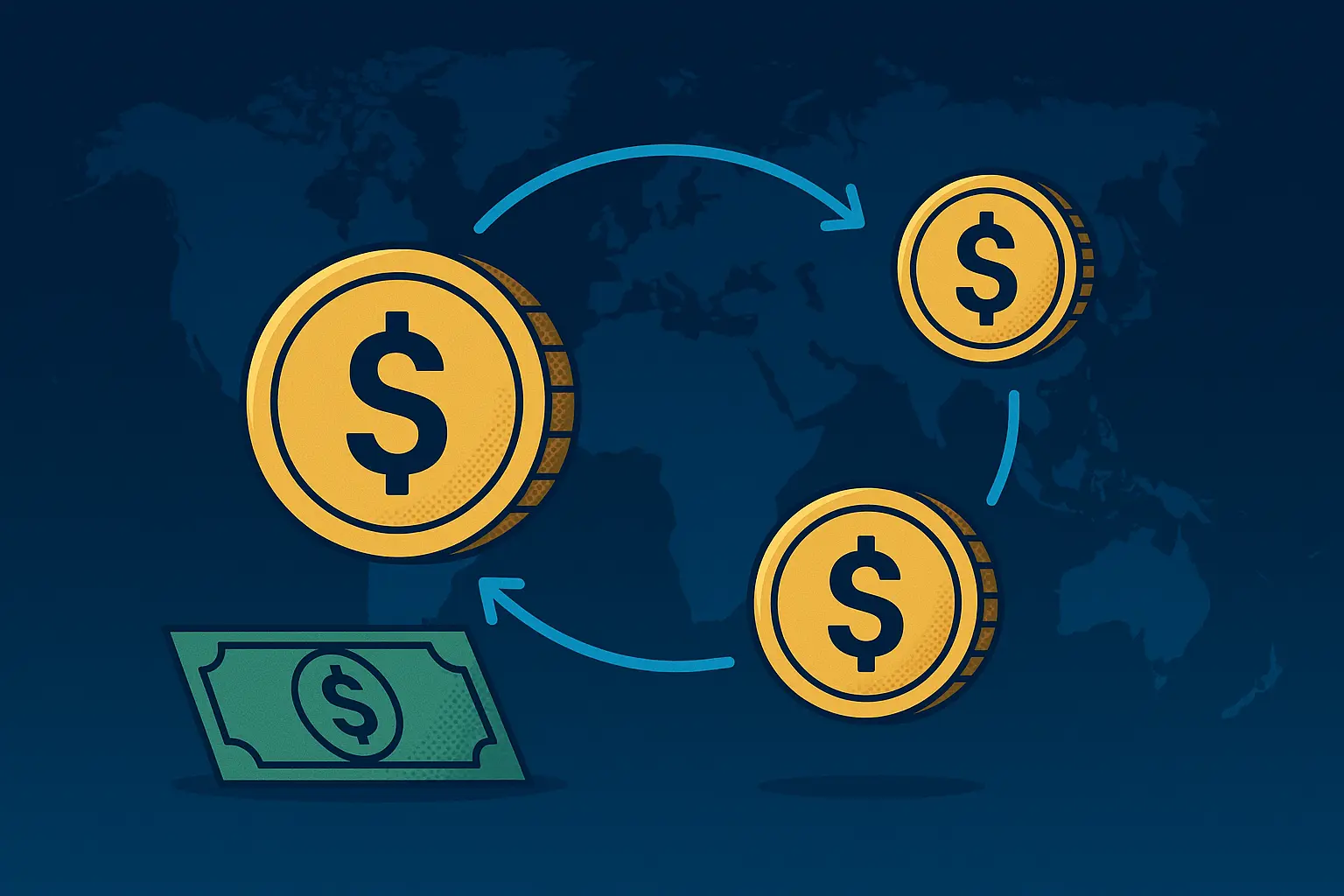
The cross-border payments project predates the latest stablecoin discussion. The G20 launched its roadmap in 2020 and later established targets covering cost, speed, access and transparency, with most scheduled for the end of 2027.
Among them, 75% of cross-border wholesale and retail payments are supposed to reach recipients within one hour, while users should receive clearer information about costs, delivery times and payment status. Yet the FSB’s 2025 progress report found that years of policy work had not produced substantial improvements for users at the global level. It said satisfactory progress was unlikely within the existing 2027 timetable.
That record places the September statement in context. The remaining problem is less about identifying what should change than persuading countries, central banks, financial institutions and infrastructure operators to make compatible changes at the same time.
Stablecoins could expose that gap more clearly because they create an expectation of continuous movement. When the token arrives quickly but redemption, screening or conventional settlement does not, the delay becomes easier for the user to see.
Stablecoins are joining the system, not replacing it
The G20 has not produced an international stablecoin license or a finished regulatory framework. It has placed work on global stablecoins inside the same agenda as payment availability, common financial messages and cross-border compliance.
That framing rejects two easy conclusions. Stablecoins are not being treated solely as speculative crypto products, but they are also not being presented as a shortcut around banks, regulators and national payment systems.
The practical test now sits outside the statement. National authorities and financial institutions must keep the cash side available for longer, use payment data consistently and apply rules that can work across borders. Until those changes reach operating systems, a stablecoin may move continuously while the financial infrastructure around it still keeps business hours.
Disclaimer: This article is for informational purposes only and does not constitute financial or investment advice.



Alexander Zdravkov is a market analyst and crypto journalist with interests in economics, broader financial markets and digital assets. His journey into crypto began more than four years ago, driven by a fascination with the rapid evolution of blockchain technology and the transformative potential of decentralized finance. He began analyzing market cycles and identifying emerging trends before they reach the mainstream. He holds a degree in International Relations - a background that helped shape his broader perspective on global economics, geopolitics, and the interconnected nature of modern financial markets. Whether covering the latest developments in the crypto sector or exploring broader macroeconomic themes, Alexander focuses on giving readers context rather than simply repeating headlines. During his career, he has authored more than 5,000 articles covering cryptocurrencies, traditional finance, and global market developments. His work spans everything from Bitcoin and altcoins to macroeconomic trends influencing risk assets worldwide.