From Beginner to Steady: Build a 7-Step “Executable System” for Crypto Trading
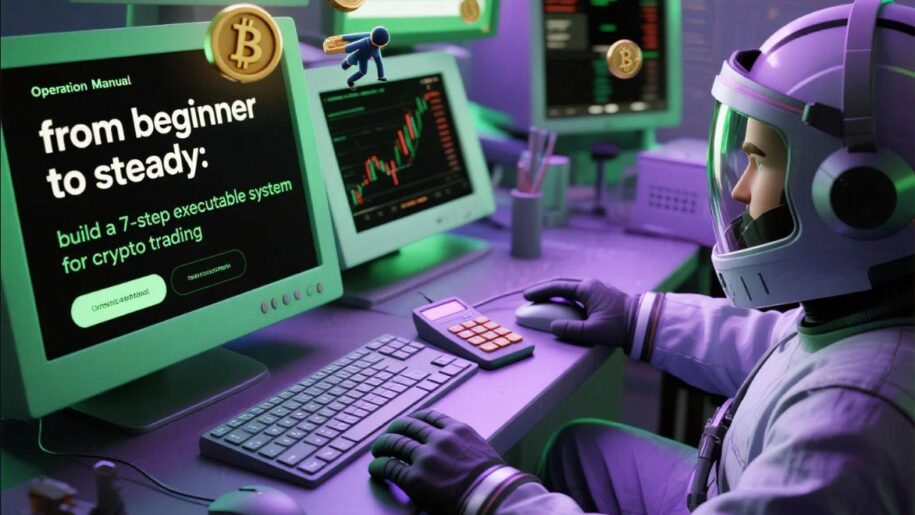
Many people get dragged around by the market—chasing pumps, panicking on dips—and end up losing to fees or emotions. Instead of doom-scrolling charts, build a compact executable system: clear goals, a repeatable process, and the right tools.
This publication is sponsored and written by a third party. Coindoo does not endorse or assume responsibility for the content, accuracy, quality, advertising, products, or any other materials on this page.
1) Start with a “usage profile”
If unsure, review a Vietnam-focused exchange selection & checklist to clarify your core needs before choosing a platform.
2) Use a “sample trade basket” to calculate real costs
Write down the next week’s likely actions, e.g.:
To save long-term costs, first check fee and product differences: OKX vs Bitget in detail.
3) Targets & position sizing: turn “how much I want to make” into numbers
To compute target prices, break-even, and remaining PnL after scaling out, use the logic behind a Bitcoin ROI/profit calculator to “do the math before the trade.”
4) DCA vs lump-sum—how to choose?
Run two scenarios (+20% / −20%) and quantify outcomes with ROI & DCA estimates so you don’t rely on gut feel.
5) Two-minute safety setup (non-negotiable)
Not sure about security/support differences across platforms? Check a localized overview: exchange comparison hub.
6) The “3 questions + 1 calculation” before every order
Fees quietly erode profits; before you trade, quickly review OKX vs Bitget—fees & products so decimals don’t eat your edge.
7) Review: writing it down beats 90% of traders
Also simulate “what if I used DCA / different targets” using profit & break-even calculators to compare outcomes fast.
5 common pitfalls (with fixes)
Further reading & tools (neutral references)
The links above are study/checkup tools only, not investment advice; adopt them at your own discretion.
Final noteYou can’t control the market, but you can control your process. Follow these seven steps: less screen-staring, more planning, math before action. Your equity curve gets smoother and drawdowns more manageable. Steady progress beats lucky spikes.
This publication is sponsored and written by a third party. Coindoo does not endorse or assume responsibility for the content, accuracy, quality, advertising, products, or any other materials on this page. Readers are encouraged to conduct their own research before engaging in any cryptocurrency-related actions. Coindoo will not be liable, directly or indirectly, for any damages or losses resulting from the use of or reliance on any content, goods, or services mentioned.


Krasimir Rusev is a journalist and digital content creator with over 4 years of experience and more than 1,000 published pieces in the financial space. His work focuses on stock markets and commodities, closely tracking asset movements and the factors that drive them. He has a particular interest in gold and oil markets - not just their current movements, but their history, structure, and long-term trends. For him, understanding the context behind prices matters just as much as the prices themselves. A self-described Bitcoin maximalist, Krasimir has been following crypto markets long before he became a journalist. What started as a casual interest in Bitcoin gradually turned into a deep conviction - one that shaped how he thinks about money, value, and the broader financial system. That perspective quietly informs everything he writes. Beyond writing analysis and news, he actively creates content for social media including TikTok, Facebook, and Instagram, presenting market topics in a more accessible and visually engaging format. He believes financial information should reach a wide audience - not just those already following the markets. At Coindoo, he contributes to both editorial content and the development of the platform's digital presence. He works with tools like Photoshop, CapCut, and Canva, with a particular focus on visual storytelling - videos, infographics, and images that add an extra layer of value to news and analysis.