Ethereum Spot vs Shorts: Market Can’t Agree on What Happens Next

ETH reserves hit a one-year low, network activity is surging, and nobody is in profit, but derivatives traders are aggressively short.
Key Takeaways
- ETH exchange reserves hit a one-year low of 14.7M.
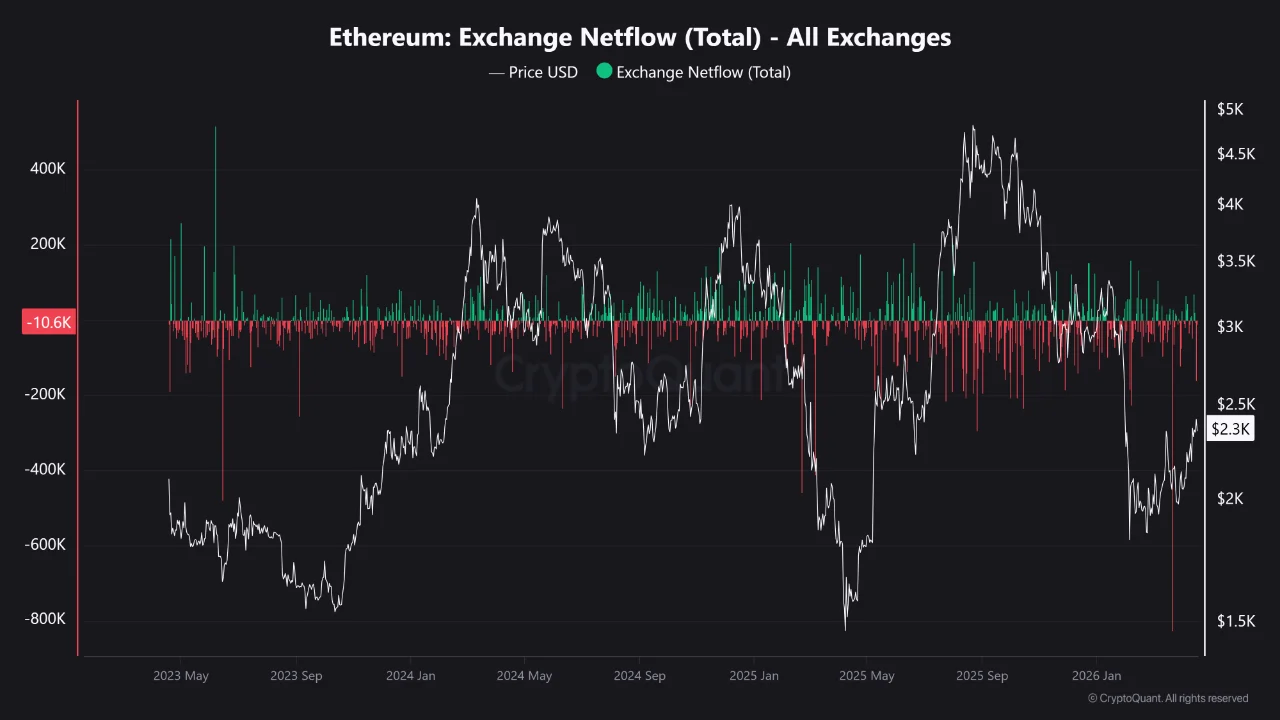
- Netflow is negative at -10.6K.
- Block size at 185.4K.
- NUPL at 0.046.
- Realized price at $2,308.
- Funding rates at -0.005.
- Price holding ascending channel, RSI at 52.80.
Ethereum has had a strong April. From a low near $2,000 on April 7, it climbed steadily to $2,450 by April 17, riding the same geopolitical optimism that lifted the whole market when Iran briefly opened the Strait of Hormuz and a Lebanon ceasefire took effect. Then the strait closed again today, sentiment cooled, and ETH pulled back to $2,365 at the time of writing.
Now the market is split. And the on-chain data makes that split unusually visible.
A Year of Draining
Since May 2025, ETH sitting on exchanges across all platforms has fallen from 21 million to 14.7 million, a drop of nearly 30% over twelve months. This is not a recent development triggered by the Iran war or April’s volatility. It has been happening continuously, through bull runs and drawdowns alike, through the war starting in February and the chaos that followed.
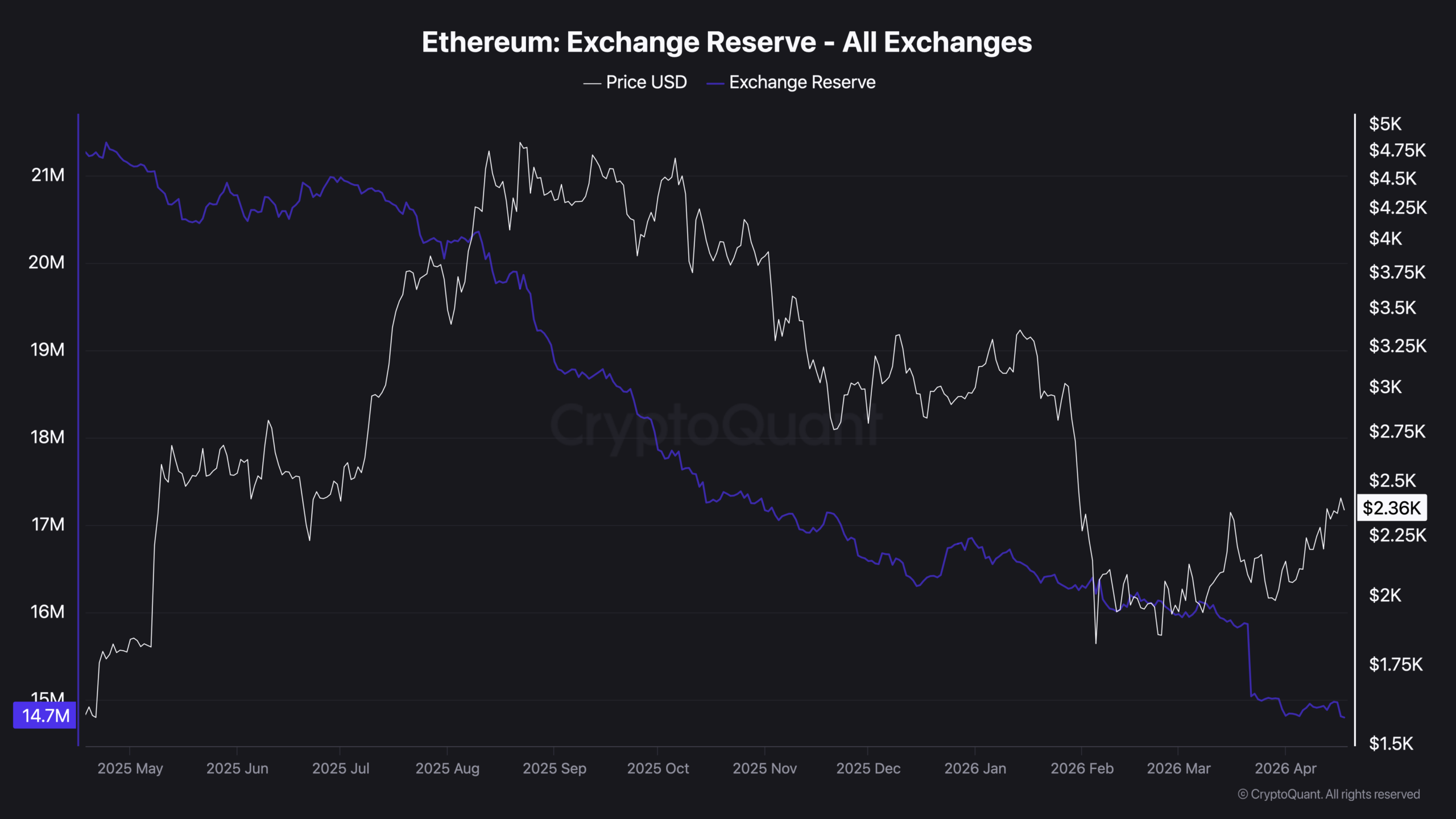
More ETH has been leaving exchanges than arriving for a year straight. People are moving it into cold wallets, staking it, holding it away from the market. The available sell supply has shrunk dramatically, and it keeps shrinking. Netflow is still at -10.6K right now. Not reversing, not flattening. Still draining.
Before you look at anything else, understand that. The structural supply picture has been tightening for twelve months.
The Network Is Busier Than the Price Suggests
Ethereum’s mean block size is currently at 185.4K and has been climbing sharply since late 2025. When ETH was trading between $3,500 and $5,000 in 2024, block size was in a similar range. The network is processing as much activity now at $2,365 as it was when price was nearly double.
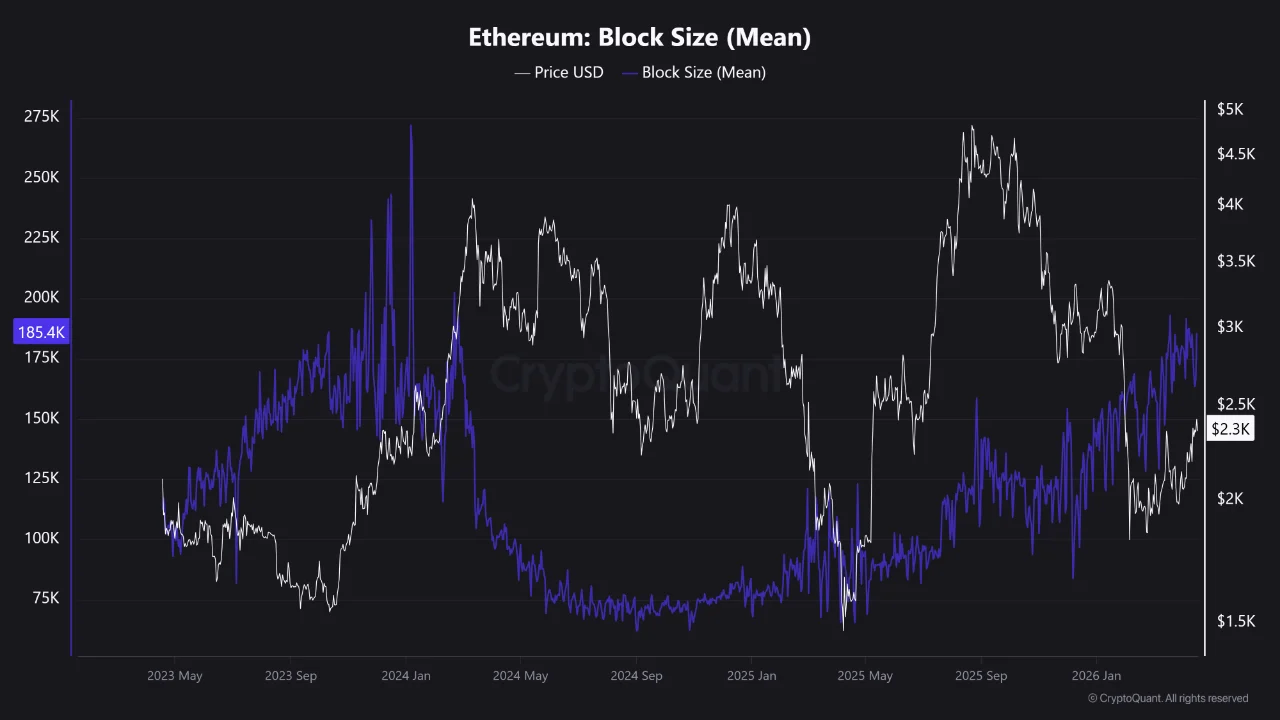
Block size measures real demand for Ethereum block space, transactions, smart contracts, DeFi activity, all of it. When the network is this busy but price hasn’t followed, the gap usually closes one of two ways: activity slows and price stays here, or price catches up to the activity. The Metcalfe data points toward the second, highly active addresses at 2,366 have crossed above both their 7-day and 14-day moving averages. Adoption is moving faster than price. That gap tends to close.
Nobody Is Sitting on Profits
NUPL is at 0.046. Across the entire Ethereum market, the average unrealised profit is just 4.6%. The realized price, the average cost basis of all ETH in existence, sits at $2,308. Current price is $2,358. We are barely above the point where the average holder breaks even.
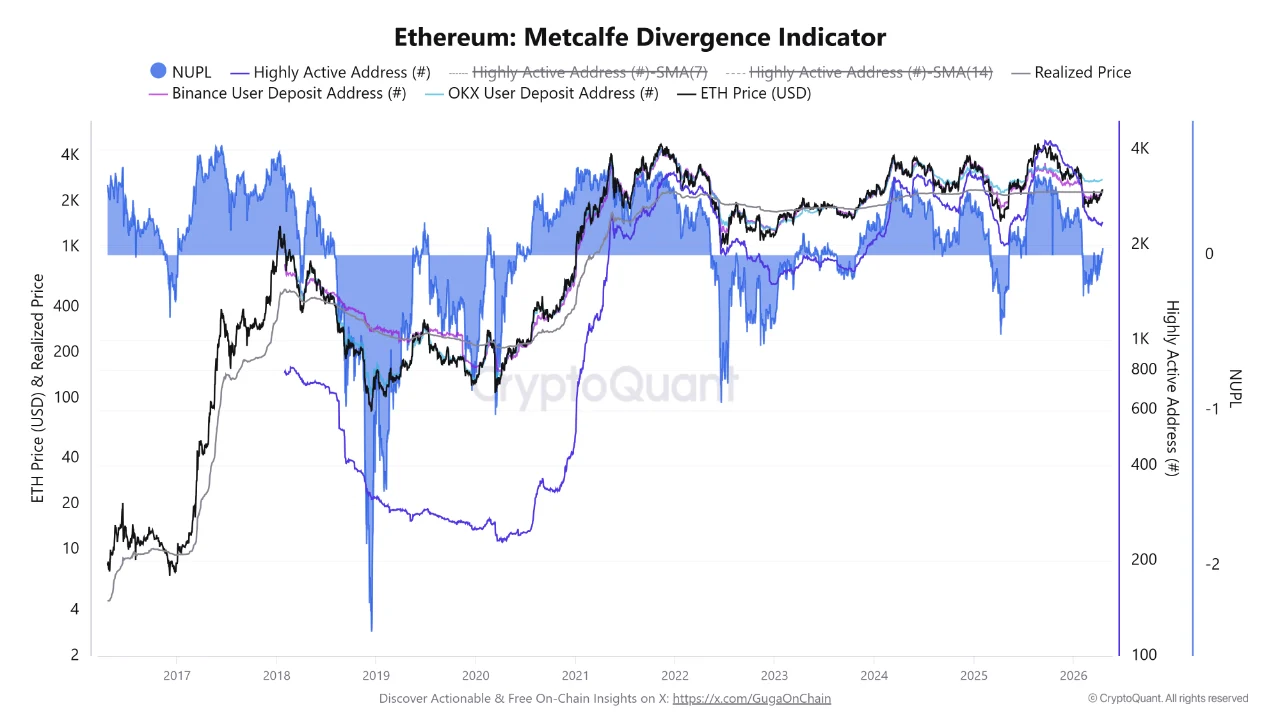
At market peaks, NUPL runs to 0.5, 0.6, higher, holders sitting on 50–60% unrealized gains with every incentive to sell. Right now there is almost nothing to sell into. No euphoria, no one with outsized profits looking for an exit, no wave of supply waiting to hit the market the moment price ticks up.
This is what makes the current setup different from previous tops. The selling pressure that causes cascading drawdowns needs fuel, profits to lock in, panic to spread. Neither exists at these levels.
Derivatives Traders Are Betting the Opposite
Funding rates data from CryptoQuant across all exchanges have turned sharply negative since mid-April, currently at -0.005, the most negative reading on the chart going back to March. Negative funding means short positions are dominant in perpetual futures. Traders are paying longs to keep their positions open, which only happens when the majority is positioned for price to fall.
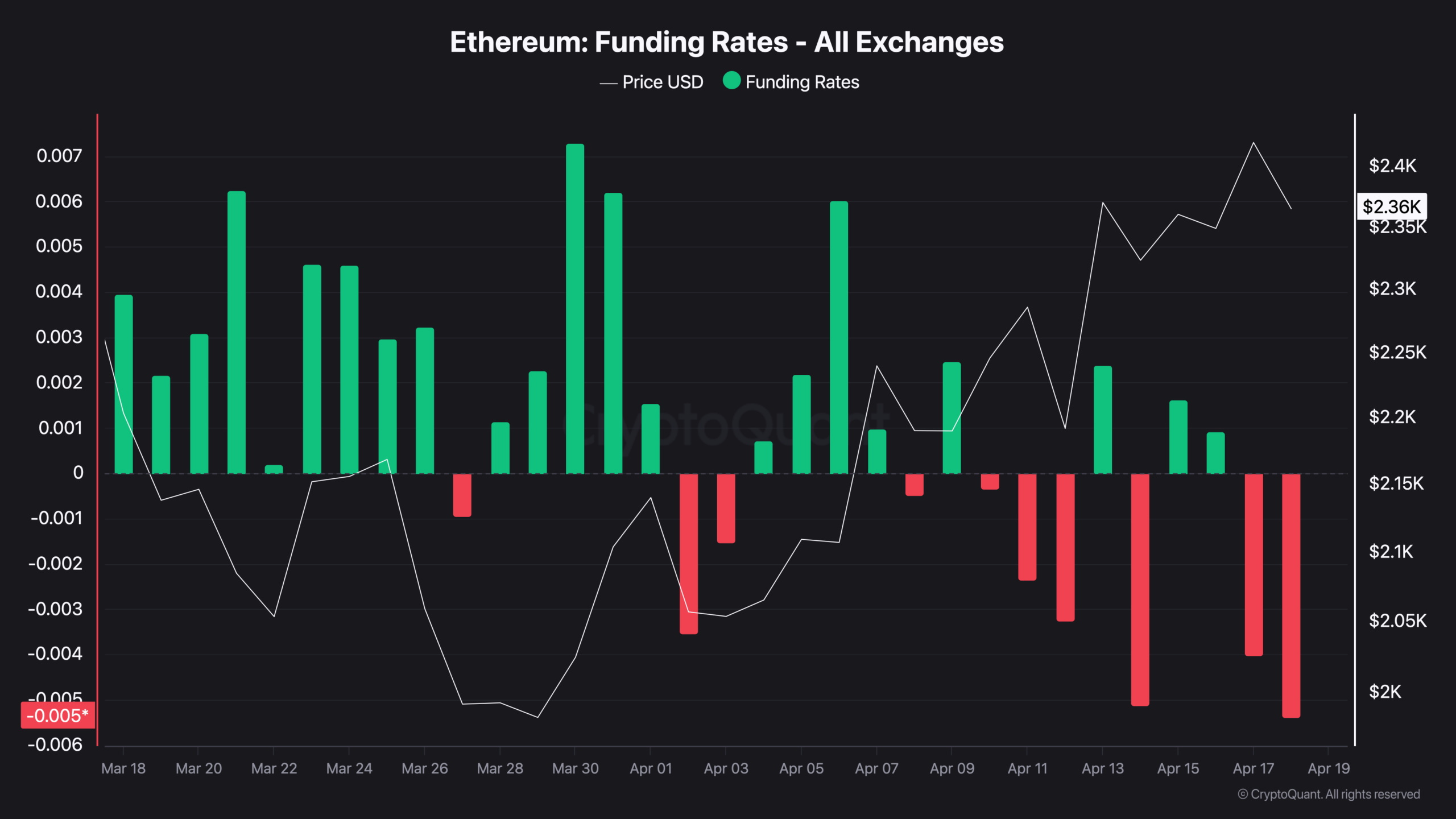
Spot holders accumulating, reserves draining for a year, network activity elevated, almost no one in profit, and simultaneously, derivatives traders aggressively short. One of them is wrong.
Spot holders are not paying funding every eight hours. They are not at risk of liquidation if price moves against them. They can wait. Short derivatives traders cannot, and heavily negative funding with strong spot fundamentals is a short squeeze waiting for a trigger.
The Price Chart: Still in the Channel
On the 4-hour chart, ETH has been trading inside a clear ascending channel since April 7. The move from $2,000 to $2,450 was structured and clean. The pullback to $2,365 has brought price back toward the lower boundary of that channel, sitting around $2,280–$2,300.
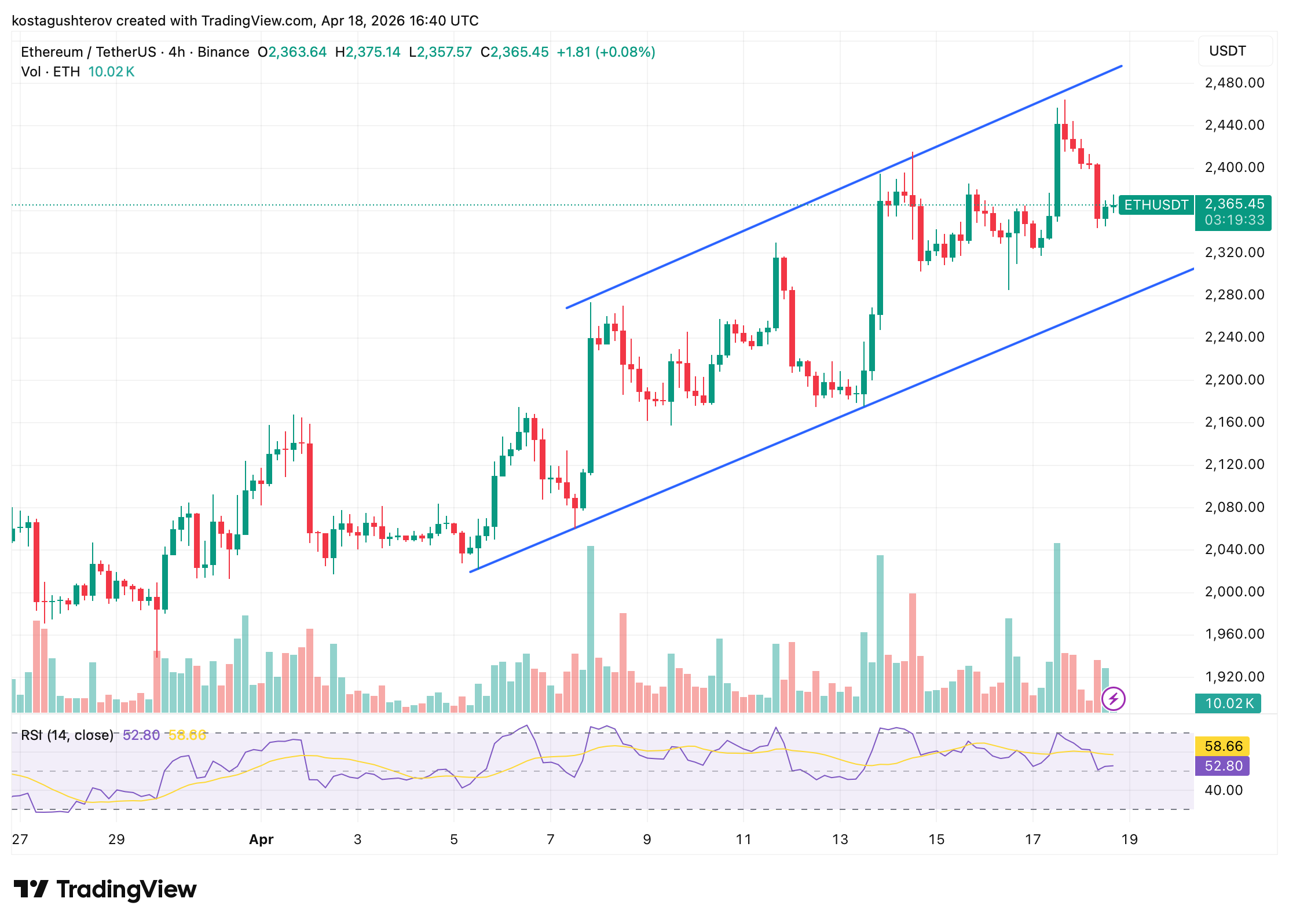
RSI is at 52.80, below the signal line at 58.66, momentum has cooled after the push to $2,450 but nothing has broken. Channel intact, price above support, no panic in the volume.
The key level is $2,300, where channel support meets the realized price of $2,308. That confluence of technical and on-chain support makes it a significant floor. Losing it would be a real warning sign. Holding it keeps everything in play.
Two Markets, One Winner
The spot market and the derivatives market are telling two completely different stories, and one of them is wrong.
If any positive macro catalyst arrives, progress in US-Iran talks, a sustained ceasefire, any meaningful reduction in geopolitical uncertainty, the short squeeze triggers fast. Heavily short positions get liquidated, price moves up sharply, and twelve months of spot accumulation provides the foundation for it to hold rather than immediately fade.
The risk is straightforward. If macro deteriorates and ETH loses $2,300, the channel breaks, short sellers get validated, and $2,150–$2,200 comes into view. That would be a macro-driven move, not a reflection of what the on-chain data is showing, but price does not always care about that distinction in the short term.
The spot market has been building this case for twelve months. Derivatives traders have been fighting it for two weeks. A year of accumulation tends to matter more than a fortnight of pessimism.
The information provided in this article is for educational purposes only and does not constitute financial, investment, or trading advice. Coindoo.com does not endorse or recommend any specific investment strategy or cryptocurrency. Always conduct your own research and consult with a licensed financial advisor before making any investment decisions.



Kosta has reported on cryptocurrency markets and blockchain infrastructure since 2020, bringing over six years of hands-on experience in the crypto industry built through daily tracking of markets, trends, and emerging blockchain developments. Specializing in Bitcoin on-chain analysis, institutional ETF flows, and digital asset price action, his work at Coindoo has been cited by other news agencies and consistently covers market developments with a focus on data-driven reporting across Bitcoin, Ethereum, Solana, and XRP. Over the years, Kosta has contributed to multiple crypto media outlets in different regions, authoring over 6,000 articles across the sector. His reporting spans cryptocurrency markets and the broader fintech industry, tracking not only price action but also the technological and regulatory forces shaping the ecosystem. To support his analysis, Kosta actively leverages on-chain data and metrics from leading platforms such as Santiment, Glassnode, and CryptoQuant, enabling deeper, evidence-based market insights. He believes in the power of transparency and the data that underpins the blockchain ecosystem. His academic background in Marketing Management from Denmark further complements his analytical approach, adding a strong understanding of communication strategy and content positioning to his work.