Donald Trump Raises Global Tariff to 15% After Supreme Court Blow

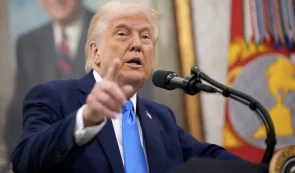
President Donald Trump has escalated his trade offensive, announcing a 15% global tariff on imports effective immediately.
Key Takeaways
- Trump lifted the global tariff to 15% after the Supreme Court blocked his previous trade plan.
- The new rate is based on Section 122 and lasts up to 150 days unless Congress extends it.
- Canada and Mexico remain largely exempt under USMCA, with some essential goods also spared.
- The White House is preparing country-specific tariffs under Section 301 once the temporary window ends.
The move, unveiled Saturday, February 21, 2026, marks a sharp increase from the 10% rate he introduced less than 24 hours earlier.
The decision comes just one day after the Supreme Court of the United States struck down his previous tariff framework in a 6-3 ruling. The Court determined that Trump’s earlier duties, imposed under emergency powers, exceeded presidential authority. Calling the ruling “extraordinarily anti-American,” Trump responded by shifting to a different legal pathway – and pushing the rate to the maximum allowed.
A New Legal Path
Instead of relying on the International Emergency Economic Powers Act, the administration has now invoked Section 122 of the Trade Act of 1974. This provision permits the president to impose temporary import surcharges of up to 15% for 150 days in response to serious balance-of-payments deficits.
Unlike the emergency authority rejected by the Court, Section 122 is considered a more clearly defined trade tool. However, the tariffs automatically expire after 150 days unless Congress votes to extend them.
Who Is Exempt?
Not all trade partners or products will face the full brunt of the 15% levy.
Goods that comply with the United States-Mexico-Canada Agreement – known in Canada as CUSMA – remain largely exempt. That means a significant share of imports from Canada and Mexico will avoid the new surcharge.
The White House has also signaled possible carve-outs for critical minerals, certain agricultural goods such as oranges and beef, pharmaceuticals, and select electronics products considered essential to supply chains.
What Happens After 150 Days?
The administration is already preparing for the next phase. Officials indicated that new investigations under Section 301 of trade law could begin soon. Those probes would examine alleged unfair trade practices by specific countries and could pave the way for longer-term, country-specific tariffs beyond the temporary global measure.
In effect, the 15% tariff may serve as a bridge strategy – maintaining pressure on trading partners while laying the groundwork for more permanent duties.
With markets still digesting the Court’s ruling and now facing a higher-than-expected tariff rate, the escalation underscores that Trump’s trade agenda is far from over.
The information provided in this article is for educational purposes only and does not constitute financial, investment, or trading advice. Coindoo.com does not endorse or recommend any specific investment strategy or cryptocurrency. Always conduct your own research and consult with a licensed financial advisor before making any investment decisions.



With over 6 years of experience in the world of financial markets and cryptocurrencies, Teodor Volkov provides in-depth analyses, up-to-date news, and strategic forecasts for investors and enthusiasts. His professionalism and sense of market trends make the information he shares reliable and valuable for everyone who wants to make informed decisions.