Canada and Mexico Dodge New 10% Trade Tariff From Trump
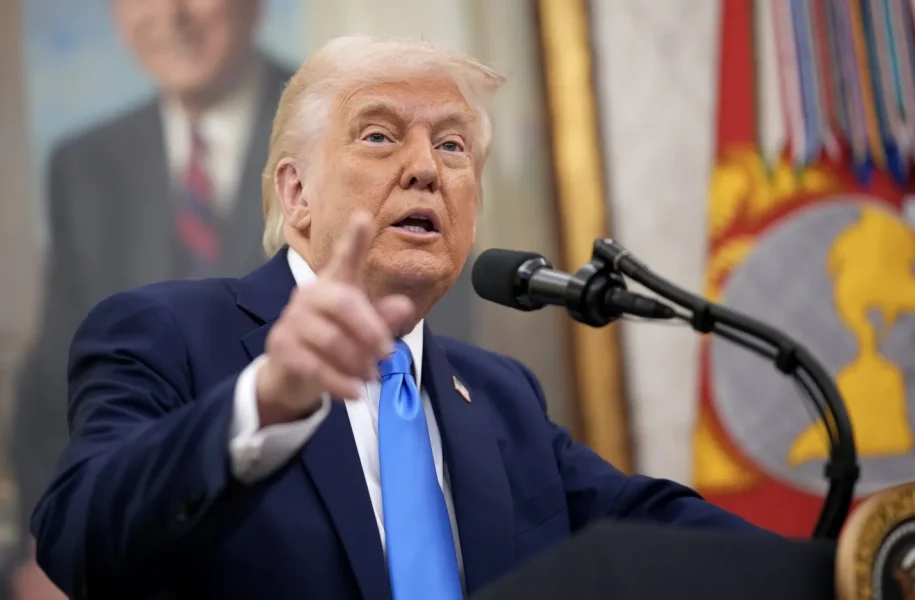
The White House confirmed on February 20, 2026 that Mexico and Canada will be largely exempt from a newly announced 10% global import tariff, offering temporary relief to North America’s tightly integrated trade bloc.
- Mexico and Canada are mostly exempt from the new 10% tariff.
- The Supreme Court struck down Trump’s previous emergency-based tariffs.
- A temporary 10% duty was reintroduced under a different trade law.
- The measure expires in 150 days unless Congress extends it.
The decision came just hours after the U.S. Supreme Court struck down President Donald Trump’s earlier sweeping tariff regime, forcing the administration to pivot to a narrower legal pathway.
Supreme Court Blocks Emergency Tariff Authority
In a 6-3 ruling, the Supreme Court determined that the administration exceeded its authority by using the International Emergency Economic Powers Act (IEEPA) to impose broad global tariffs. The justices concluded that the law was not intended to justify across-the-board trade duties.
The ruling effectively invalidated the previous, higher tariff structure and opened the door to potential legal and financial consequences.
New 10% Tariff Under Different Law
Within hours of the decision, President Trump signed a new executive order invoking Section 122 of the Trade Act of 1974. The order imposes a temporary 10% tariff on imports from all countries.
However, goods that comply with the U.S.-Mexico-Canada Agreement (USMCA), known in Canada as CUSMA, are exempt from the new levy. Roughly 90% of Canadian exports qualify under the agreement, shielding a large portion of North American trade.
Sector-specific tariffs remain in place. Duties on steel, aluminum, and automobiles – imposed under Section 232 and Section 301 authorities – are unaffected by the court ruling and continue to apply.
Effective Tariff Rates Drop Sharply
The exemption significantly reduces the overall tariff burden on both Mexico and Canada.

Mexico’s effective tariff rate declines to about 4.4%, down from prior levels that reached 25% on non-qualifying goods. Canada’s effective rate falls to roughly 3.7%, compared to earlier rates as high as 35% on goods outside trade agreement protections.
For businesses operating across North American supply chains, the move provides short-term certainty but does not eliminate longer-term risks.
What Happens Next
The new Section 122 tariffs are temporary and expire after 150 days unless Congress approves an extension. That creates a tight political timeline heading into the second half of 2026.
A mandatory review of the USMCA is also scheduled later this year, and the Trump administration is widely expected to seek additional concessions from trade partners during that process.
Meanwhile, the Supreme Court decision could trigger lawsuits seeking up to $170 billion in refunds for tariffs collected under the invalidated IEEPA framework. If successful, those claims could carry significant fiscal implications.
For now, North America has avoided the full impact of the new global tariff. But with legal challenges, political negotiations, and trade reviews ahead, the tariff battle is far from over.
The information provided in this article is for educational purposes only and does not constitute financial, investment, or trading advice. Coindoo.com does not endorse or recommend any specific investment strategy or cryptocurrency. Always conduct your own research and consult with a licensed financial advisor before making any investment decisions.



Alex is Editor-in-Chief of Coindoo and co-founder of Millennial Media Group, with nearly a decade of experience covering financial markets - crypto first, then everything else. It started in 2016 with Bitcoin. Like most people at the time, he didn't fully understand it - so he kept digging. Blockchain, tokenomics, the projects, the cycles. That curiosity never stopped, and eventually pulled him into traditional markets too: equities, commodities, macro. Not because he left crypto behind, but because you can't properly understand one without the other. What drives him is straightforward: he wants to know why something is happening, not just that it's happening. Most market coverage stops at the headline - price up, price down, here's a chart. Alex finds that kind of reporting actively unhelpful. If you walk away from an article without understanding the mechanism behind the move, what did you actually learn? He holds a degree in Tourism from New Bulgarian University - not the most obvious path into financial markets, but markets have a way of pulling in people who are simply too curious to stay out. He has authored over 200 in-depth analyses and more than 10,000 articles across crypto and traditional finance. He still thinks every day in markets teaches him something new. That's probably why he hasn't stopped.