PayPal has officially expanded its US dollar-backed stablecoin, PayPal USD (PYUSD), to 70 markets worldwide.

PayPal has officially expanded its US dollar-backed stablecoin, PayPal USD (PYUSD), to 70 markets worldwide.
Mastercard Inc. has agreed to acquire stablecoin infrastructure firm BVNK in a deal valued at up to $1.8 billion, marking one of the most significant moves by a global payments giant into blockchain-based financial rails.

Hana Financial Group and Standard Chartered signed an MOU to expand cooperation in global finance and digital assets.

Italy’s UniCredit is pushing forward with plans to acquire Germany’s Commerzbank, announcing that it intends to make a formal offer to purchase all outstanding shares of the German lender.

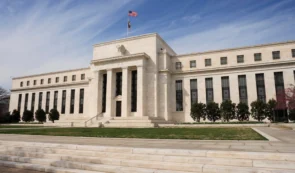
On March 13, 2026, a federal appeals court handed the Federal Reserve a sweeping win — and a Wyoming crypto bank one of its worst defeats.
The global stablecoin market is entering a new phase as Circle’s USDC has surpassed Tether’s USDT in transaction volume for the first time since 2019, signaling a shift in how digital dollars are used across the crypto economy.

Blockchain payments company Ripple is acquiring BC Payments Australia as part of a strategy to strengthen its regulatory footprint and expand cross-border payment capabilities across the Asia-Pacific region.

Fintech giant Revolut has officially become a fully licensed bank in the United Kingdom, marking a major milestone in its expansion into traditional financial services.

Mastercard has formally expanded its Crypto Partner Program to more than 85 companies, pulling together some of the biggest names in both traditional finance and the blockchain industry - Binance, PayPal, Ripple, JPMorgan Chase, Coinbase, Stripe, and others - in what amounts to one of the most coordinated efforts yet to wire crypto into the everyday payment infrastructure consumers already use.

The European Central Bank’s Eurosystem has unveiled Appia, a strategic initiative designed to support the development of a European tokenized financial ecosystem while maintaining central bank money at the core of the system.

The financial system wasn't built for machines. That's becoming a problem. As autonomous AI agents move from experimental tools to active economic participants, a structural mismatch is emerging: the infrastructure powering global finance - correspondent banking, card networks, ACH transfers - operates on timelines and fee structures designed for humans.

Elon Musk confirmed that X Money, the payments arm of his social media platform, will enter early public access in April 2026.


That role has become more useful as bridging and onchain lending have become routine.…

Solana is a public blockchain built to process transactions at a pace and cost…

Key takeaways Bluesky leads decentralized social on scale, without using a blockchain. Farcaster changed…

Crypto trading can look simple until a fast market, thin order book or leveraged…