Despite price growth hovering near target and interest rates sitting unchanged for months, the European Central Bank is refusing to lock itself into a predictable path.

Despite price growth hovering near target and interest rates sitting unchanged for months, the European Central Bank is refusing to lock itself into a predictable path.
After nearly twenty years of stalled talks, the European Union and India have finally locked in a free-trade agreement, reshaping one of the world’s most important economic corridors at a moment when global trade is fragmenting.

The US Federal Reserve is signaling confidence in its current policy stance, but behind that calm messaging lies a growing debate over when - and whether - interest rates should move again.

The U.S. dollar is sliding to levels not seen in years, and markets across the globe are starting to react.

Germany has entered the new year with its economic recovery still on shaky ground. The latest survey from the Ifo Institute shows that business expectations weakened in January, catching economists off guard and reinforcing concerns that momentum remains limited despite promises of large-scale government spending ahead.

For the first time this century, the United States may be preparing to step directly into foreign exchange markets by selling U.S. dollars and buying Japanese yen.

After months of political paralysis and repeated government breakdowns, investors finally got something they could price: a budget.

Europe is approaching a moment where its long-standing approach to trade with China is being fundamentally questioned.

Japan’s fiscal narrative has shifted again, only weeks after Prime Minister Sanae Takaichi declared that the country was on track to achieve its first primary budget surplus in nearly three decades.

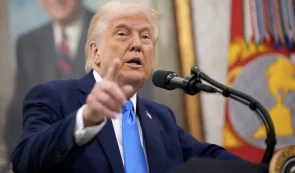
What began as a geopolitical tussle over a remote Arctic territory is now threatening to spill into global financial markets, after Donald Trump openly warned Europe against using US assets as a bargaining chip.
UK government borrowing dropped far more than anticipated in December, offering a rare positive signal for the country’s strained public finances.

Strategists at Jefferies are warning that investors may be underestimating the risks surrounding the Supreme Court’s upcoming decision on tariffs.


It offers developers, crypto enthusiasts, enterprise users, and analysts a unified way to query…

This trend has gained momentum in recent years as companies and even governments explore…

Crypto scams can come in many forms, from fraudulent investment schemes to phishing attacks…

The role of blockchain-based infrastructure in cross-border payments has undergone a dramatic shift in…