Global trade tensions entered a new phase on February 20, 2026, after the U.S. Supreme Court struck down President Donald Trump’s sweeping “emergency” tariffs imposed under the International Emergency Economic Powers Act (IEEPA).

Global trade tensions entered a new phase on February 20, 2026, after the U.S. Supreme Court struck down President Donald Trump’s sweeping “emergency” tariffs imposed under the International Emergency Economic Powers Act (IEEPA).
President Donald Trump has escalated his trade offensive, announcing a 15% global tariff on imports effective immediately.

A senior official at the European Central Bank has argued that the United States - not its trading partners - has paid the heaviest price for the tariffs introduced by President Donald Trump.

Treasury Secretary Scott Bessent has rejected the idea of refunding billions of dollars in tariffs struck down by the Supreme Court, calling potential repayments to corporations “the ultimate form of corporate welfare.”

The White House confirmed on February 20, 2026 that Mexico and Canada will be largely exempt from a newly announced 10% global import tariff, offering temporary relief to North America’s tightly integrated trade bloc.
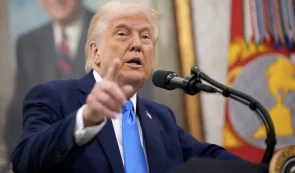
President Donald Trump said he is weighing “very powerful alternatives” to impose additional tariffs, even after the Supreme Court curtailed his use of a 1977 emergency powers statute to levy sweeping duties on trading partners.
The U.S. Supreme Court’s 6-3 decision striking down President Donald Trump’s emergency tariff regime under the International Emergency Economic Powers Act (IEEPA) reshapes the boundaries of executive trade authority - but it does not eliminate tariff tools altogether.

The U.S. Supreme Court delivered a major blow to President Donald Trump’s trade policy on February 20, 2026, ruling 6-3 that his global tariffs imposed under the International Emergency Economic Powers Act of 1977 were unlawful.

The U.S. Supreme Court is poised to address one of the most consequential trade policy disputes in years, with markets closely watching as justices resume issuing opinions following a four-week recess.

The U.S. economy lost momentum at the end of 2025, with real gross domestic product rising at an annualized rate of 1.4% in the fourth quarter, according to the advance estimate from the U.S. Bureau of Economic Analysis.

The Federal Reserve’s preferred inflation gauge accelerated at the end of 2025, as fresh data from the U.S. Bureau of Economic Analysis showed both headline and core prices rising at a faster monthly pace in December.

Negotiated wages across the euro area picked up pace at the end of 2025, reinforcing the European Central Bank’s cautious approach to monetary policy.


It offers developers, crypto enthusiasts, enterprise users, and analysts a unified way to query…

This trend has gained momentum in recent years as companies and even governments explore…

Crypto scams can come in many forms, from fraudulent investment schemes to phishing attacks…

The role of blockchain-based infrastructure in cross-border payments has undergone a dramatic shift in…