For one hour, Solana Mobile’s dApp Store featured a fake SKR claim app that asked Seeker owners for their recovery phrases, after someone gained unauthorized access to its publishing portal.

For one hour, Solana Mobile’s dApp Store featured a fake SKR claim app that asked Seeker owners for their recovery phrases, after someone gained unauthorized access to its publishing portal.
Metals.io’s xCu token sells copper by the kilogram with no minimum investment, but its own documents disagree on how much copper a holder must own to collect it.

Binance paid out billions after reopening withdrawals on November 1, but the size of the exit depends on who is counting, because the exchange and trackers measure different windows and wallets.

Aave blocked new loans against tBTC after Threshold paused Bitcoin redemptions, exposing the difference between owning a Bitcoin-backed token and being able to redeem it.

A bank can legally own a tokenized bond and still need a central bank’s, a settlement operator’s and a lender’s approval before it can turn that bond into cash.

Corporate blockchain adoption spans experiments, restricted deployments and routine operations, making headline percentages a poor guide to how much business activity has actually moved onto these systems.

Banks are expanding stablecoin services before demand reaches most customers, leaving a practical test for each launch: whether businesses can move money more easily and at a lower cost.
Zcash could redirect future grants funding into a locked reserve while keeping its grants program running, leaving a crucial question unresolved: who could eventually authorize spending that money?

Tokenized assets could reach a clearinghouse faster, but a margin call tests more than transfer speed: whether the asset counts, who controls it and when cash becomes available.

More than half of tokenized-stock trading happens outside US market hours, when the price on screen can differ more from what an order actually costs.

Traditional equities, indices, and commodities generated more daily trading volume than Bitcoin on Hyperliquid over late October, raising a pivotal question for crypto exchanges: how far can infrastructure scale beyond native digital assets?

The Federal Reserve held its benchmark rate at 3.75%–4.00% on October 28, pausing after September’s hike while inflation runs hot and futures traders price a December increase.


That role has become more useful as bridging and onchain lending have become routine.…
Solana is a public blockchain built to process transactions at a pace and cost…

Key takeaways Bluesky leads decentralized social on scale, without using a blockchain. Farcaster changed…
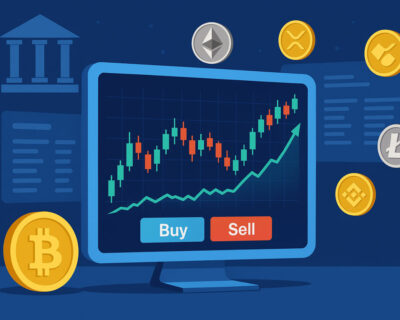
Crypto trading can look simple until a fast market, thin order book or leveraged…