BlackRock: Stablecoins Could Power AI Agent Payments
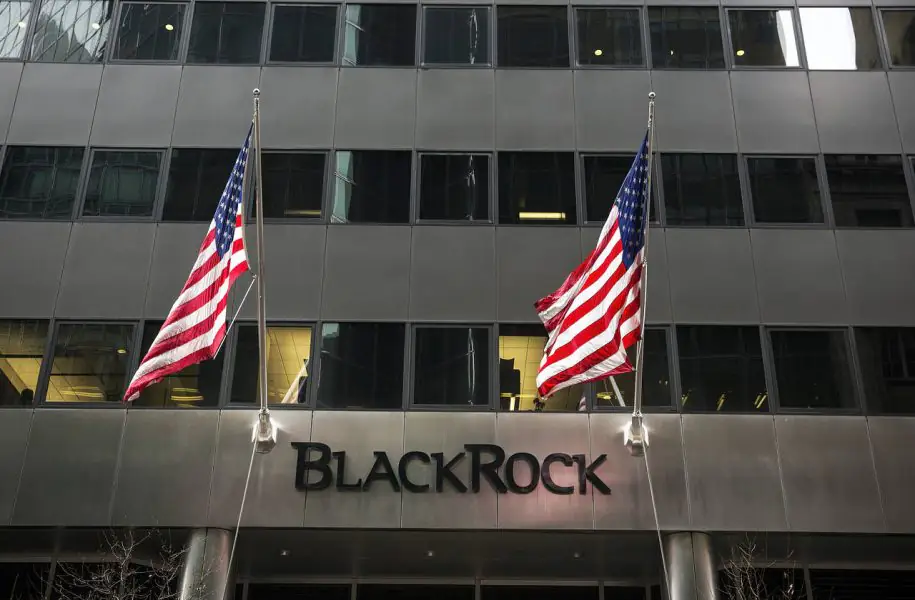
BlackRock’s latest digital-assets paper argues that AI agents could create new stablecoin demand by paying continuously for data, software and computing power without human checkout flows.
The 11-page Machine-Native Economy whitepaper was written by leaders from BlackRock’s digital-assets, iShares and product-innovation teams. It describes a possible financial architecture rather than announcing a stablecoin, payment service or investment fund.
Key Takeaways
- BlackRock published a research thesis, not a product.
- AI agents could use stablecoins for automated payments.
- Machine payments may cover compute, data and APIs.
- Identity and compliance would remain essential.
- Actual adoption still needs to be demonstrated.
1. Software becomes the customer
Most digital payments still assume that a person will select a product, enter payment details and approve a purchase. AI agents introduce a different type of customer: software that may need to buy small amounts of data, processing capacity or API access while completing a larger task.
Consider an agent asked to conduct an extended financial analysis. It could estimate the computing power required, compare cloud providers by price and performance, rent capacity for one job and stop paying when the work is complete.
The same model could apply to a research agent buying one database result or a software agent paying to use a specialized function. Instead of maintaining subscriptions with every potential provider, the agent purchases each resource when required.
Continuous consumption creates a payment problem. A process involving hundreds of small purchases needs prices, spending permissions and settlement instructions that software can understand without opening a conventional checkout page each time.
2. Stablecoins handle the small payments
BlackRock expects stablecoins to lead this transactional layer because their value usually tracks a currency such as the US dollar. An agent can therefore compare a quoted price with its approved budget without accounting for the price volatility of Bitcoin or Ether.
Stablecoins can also settle throughout the day and support payments small enough to match individual API calls or short periods of computing time. Protocols such as x402 can place the payment request inside the same online interaction used to access the underlying service.
Our guide to AI-native stablecoin payments explains how x402 and related protocols coordinate these transactions. BlackRock adds a different question: could the computing capacity purchased through those systems eventually become a tradable financial asset?
Different purchases will continue to use different payment methods. BlackRock expects cards and modified bank rails to remain important when agents transact with consumer-facing businesses. Their existing acceptance, fraud controls and dispute procedures remain valuable for larger purchases such as travel or physical goods.
3. Permission remains outside the blockchain
Settlement explains how an agent transfers money. Authorization determines whether it had permission to spend it.
A valid blockchain transaction proves that the correct cryptographic key approved a payment. The transaction alone cannot establish who owns the agent, whether its instructions were legitimate or whether the purchase stayed within an approved budget.
BlackRock uses the emerging term “know your agent,” or KYA, for controls connecting an AI agent with a verified person or company and a defined set of permissions. KYA is not yet a single, universally adopted compliance standard comparable with established know-your-customer requirements.
The paper expects identity, anti-money-laundering and authorization checks to remain largely offchain. A verified result could then be passed to the blockchain when the system determines whether a transaction is eligible.
A functioning agent-payment system would need to establish:
- Who owns or controls the agent
- Which services it may purchase
- Its limit for each transaction
- Its total budget over a defined period
- Who is responsible when a service fails
Stablecoins can automate settlement after those decisions are made. They cannot determine whether the underlying purchase was appropriate.
4. Compute becomes a tradable claim
Once agents can pay for computing power, the resource itself becomes the next question in BlackRock’s argument.
A cloud provider could sell the right to use a defined amount of capacity at a future date. A company expecting a large AI workload could buy that right in advance, securing access before demand or prices increase.
If those usage rights become sufficiently standardized, they could be represented digitally and transferred between holders. BlackRock suggests that compute contracts might eventually support several financial functions:
- Locking in future processing capacity
- Hedging against increases in compute prices
- Trading rights linked to specific hardware or regions
- Pledging compute claims as collateral
- Settling contracts through programmable networks
Compute is harder to standardize than money. One hour on a newer GPU can produce more work than an hour on an older model. Electricity costs, latency, hardware availability and local regulation also vary between regions.
Any functioning compute market would need contracts that define the hardware, location, performance and delivery terms precisely. BlackRock views those differences as design problems that financial markets may eventually address through region-specific contracts, futures and other hedging instruments.

5. The numbers show scale, not AI-agent adoption
BlackRock supports its argument with figures covering stablecoins and the broader computing market. The numbers establish that large settlement and infrastructure markets already exist. They do not show how much activity currently comes from autonomous agents.
- More than $300 billion
- BlackRock’s estimate of circulating stablecoin market capitalization in September 2026.
- More than $11 trillion
- Adjusted stablecoin transaction volume during 2025. This includes selected exchange, lending, DeFi, issuance and on-ramp activity—not only payments for products and services.
- Approximately $93 trillion
- Value transferred through the US ACH network during 2025, according to the figures cited in the paper.
- More than $5 trillion
- Cumulative AI infrastructure spending between 2025 and 2030 under Goldman Sachs research cited by BlackRock.
- Approximately $1.1 trillion
- Combined projected 2030 revenue for Amazon Web Services, Microsoft’s Intelligent Cloud segment and Google Cloud, based on analyst estimates compiled by Bloomberg.
The payment figures use different definitions. Stablecoin activity includes financial transfers that do not resemble ordinary consumer spending, while Visa, Mastercard and ACH publish figures based on their own network methodologies. The totals should therefore be used to understand scale rather than rank competing payment systems.
BlackRock also says adjusted stablecoin activity grew at an annualized rate of approximately 80% between 2020 and 2025, compared with roughly 8.5% for ACH. Stablecoins began from a much smaller base, so the faster percentage growth does not establish that they are overtaking the bank-transfer network.
Network use is not automatic token demand
Frequent stablecoin payments could increase demand for blockchain processing, blockspace and validator services. The effect on any native cryptocurrency would depend on the network’s fee model, staking design and use of sponsored transaction costs.
An application may pay gas on behalf of its AI agents, meaning the agents themselves would not need to hold the network token. The underlying fee would still have to be paid by another participant.
BlackRock cites Circle’s Arc as an alternative design in which USDC is intended to serve as the network’s gas asset. Under that model, payment activity could increase the utility of the stablecoin without creating a separate token requirement.
Reality check: the machine economy remains early
- Agent payments remain small. The paper describes an emerging market rather than established mass adoption.
- Stablecoin volume is not agent spending. Existing activity includes trading, lending and other financial transfers.
- A wallet signature is not proof of intent. Identity, ownership and spending permission require additional controls.
- Compute contracts remain theoretical. Standards for hardware quality, delivery and regional pricing still need to develop.
- Blockchain activity may not reach a token equally. Value capture depends on each network’s economic design.
BlackRock’s publication announces no stablecoin, machine-payment protocol, commercial partnership or fund holding compute contracts. It sets out the firm’s view of where AI and digital assets may intersect as autonomous software assumes a larger role in economic activity.
Stablecoin payments are only the entry point
BlackRock’s paper is most significant for treating AI operating costs as a possible future digital-asset market. Stablecoins provide the proposed payment method, while standardized claims on computing capacity represent the more ambitious idea.
Cloud revenue projections show that compute is becoming a large economic resource. They cannot prove that AI agents will buy it autonomously or that those purchases will settle onchain. Real agent spending—and the controls governing it, will determine whether BlackRock’s machine-native economy develops beyond a research thesis.
This article is provided for informational purposes only and does not constitute financial or investment advice. BlackRock’s paper discusses possible future developments and does not announce or recommend an investment product.



Kosta has reported on cryptocurrency markets and blockchain infrastructure since 2020, bringing over six years of hands-on experience in the crypto industry built through daily tracking of markets, trends, and emerging blockchain developments. Specializing in Bitcoin on-chain analysis, institutional ETF flows, and digital asset price action, his work at Coindoo has been cited by other news agencies and consistently covers market developments with a focus on data-driven reporting across Bitcoin, Ethereum, Solana, and XRP. Over the years, Kosta has contributed to multiple crypto media outlets in different regions, authoring over 6,000 articles across the sector. His reporting spans cryptocurrency markets and the broader fintech industry, tracking not only price action but also the technological and regulatory forces shaping the ecosystem. To support his analysis, Kosta actively leverages on-chain data and metrics from leading platforms such as Santiment, Glassnode, and CryptoQuant, enabling deeper, evidence-based market insights. He believes in the power of transparency and the data that underpins the blockchain ecosystem. His academic background in Marketing Management from Denmark further complements his analytical approach, adding a strong understanding of communication strategy and content positioning to his work.