Binance Research Highlights Crypto Market Response to Tariff Escalation
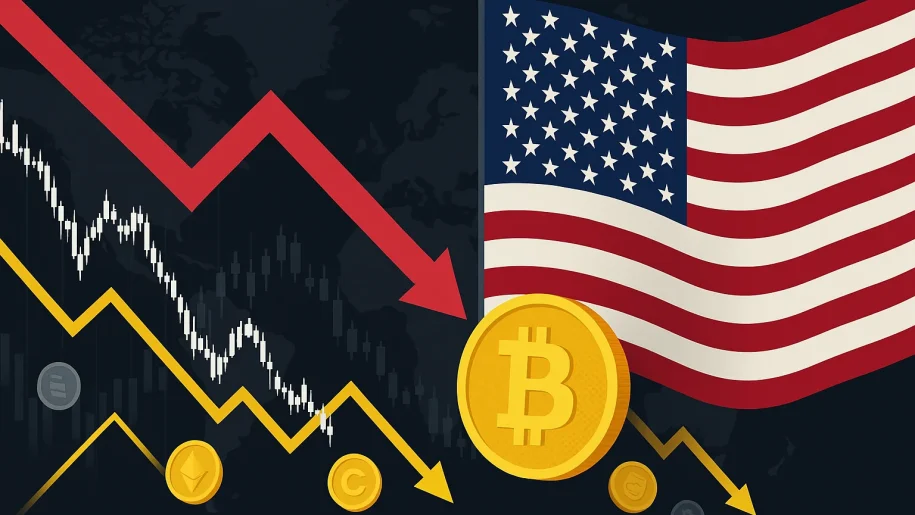
In early 2025, the United States initiated a significant shift in global trade dynamics by imposing sweeping tariffs on imports from numerous countries.
This move, aimed at restoring trade fairness and U.S. sovereignty, has led to a resurgence of protectionist policies reminiscent of the 1930s. The implications of these tariffs have been profound, not only on traditional financial markets but also on the cryptocurrency sector.
The New Era of Protectionism
Upon returning to office in January 2025, President Donald Trump announced a 10% blanket tariff on all imports to the United States, effective April 5. This baseline duty was supplemented with higher, targeted tariffs against specific trading partners:
- 125% on China
- 20% on the European Union
- 24% on Japan
- 46% on Vietnam
Canada and Mexico had already been subjected to 20% duties earlier in the year. These measures elevated the average U.S. import tax to approximately 18.8%, a stark increase from the 2.5% average in 2024. In retaliation, affected countries implemented their own tariffs on U.S. goods, escalating global trade tensions.
Treasury Market Flashes Warning Signs
Investors are now closely watching the U.S. bond market, where a steep dislocation in the yield curve is raising red flags. On April 9, the spread between 10-year and 2-year Treasury yields—and between 30-year and 2-year bonds—widened to levels last seen in 2022, signaling deep market unease.

Just a day earlier, the Treasury’s $58 billion 3-year note auction saw weak demand. However, strong interest at the $39 billion 10-year bond auction on April 9 offered some relief. The market is now bracing for the $22 billion 30-year auction, with macro uncertainty still looming.
Impact on the Cryptocurrency Market
The cryptocurrency market has experienced significant volatility in response to these trade policies.
Following the tariff announcements, the total crypto market capitalization declined by an estimated 25.9% from January highs, equating to a loss of approximately $1 trillion. This downturn reflects the market’s sensitivity to macroeconomic instability.

Bitcoin, often regarded as a digital safe-haven asset, demonstrated relative resilience amid the turmoil. Despite a 19.1% drop since January’s peak, Bitcoin outperformed many altcoins and traditional equities. Notably, long-term holders continued to accumulate Bitcoin, indicating confidence in its long-term value. This behavior suggests that Bitcoin may be reaffirming its role as a hedge against economic uncertainty.
Key Factors Influencing the Crypto Market
Binance Research has identified five critical variables that could influence cryptocurrency market trends in the coming months:
- Developments in the Trade War: The expansion or resolution of tariff disputes will significantly impact investor sentiment and capital flows.
- Core Inflation Data: Metrics such as the Consumer Price Index (CPI) and Personal Consumption Expenditures (PCE) will be closely monitored. Rising inflation could trigger stagflation concerns, while weaker data might alleviate policy pressures.
- Global Economic Slowdown: Indicators of economic deceleration, including reduced consumer confidence and declining business activity, could lead to risk-averse behavior among investors.
- Central Bank Policy Trends: The Federal Reserve’s stance—whether hawkish or dovish—will influence liquidity conditions and, consequently, the performance of risk assets like cryptocurrencies.
- Cryptocurrency Industry Policies: Regulatory developments, such as the approval of crypto-based financial products or legislative changes, could serve as catalysts for market movements.
Looking Ahead
The interplay between escalating trade tensions and the cryptocurrency market underscores the complex relationship between macroeconomic policies and digital assets. While short-term volatility is expected, the potential for Bitcoin to solidify its status as a safe-haven asset remains. Investors should remain vigilant, closely monitoring economic indicators and policy developments to navigate this evolving landscape effectively.
Source: Binance Research



Alex is Editor-in-Chief of Coindoo and co-founder of Millennial Media Group, with nearly a decade of experience covering financial markets - crypto first, then everything else. It started in 2016 with Bitcoin. Like most people at the time, he didn't fully understand it - so he kept digging. Blockchain, tokenomics, the projects, the cycles. That curiosity never stopped, and eventually pulled him into traditional markets too: equities, commodities, macro. Not because he left crypto behind, but because you can't properly understand one without the other. What drives him is straightforward: he wants to know why something is happening, not just that it's happening. Most market coverage stops at the headline - price up, price down, here's a chart. Alex finds that kind of reporting actively unhelpful. If you walk away from an article without understanding the mechanism behind the move, what did you actually learn? He holds a degree in Tourism from New Bulgarian University - not the most obvious path into financial markets, but markets have a way of pulling in people who are simply too curious to stay out. He has authored over 200 in-depth analyses and more than 10,000 articles across crypto and traditional finance. He still thinks every day in markets teaches him something new. That's probably why he hasn't stopped.