API3 Introduces One-Token, One-Vote Governance and Retires Its Original DAO
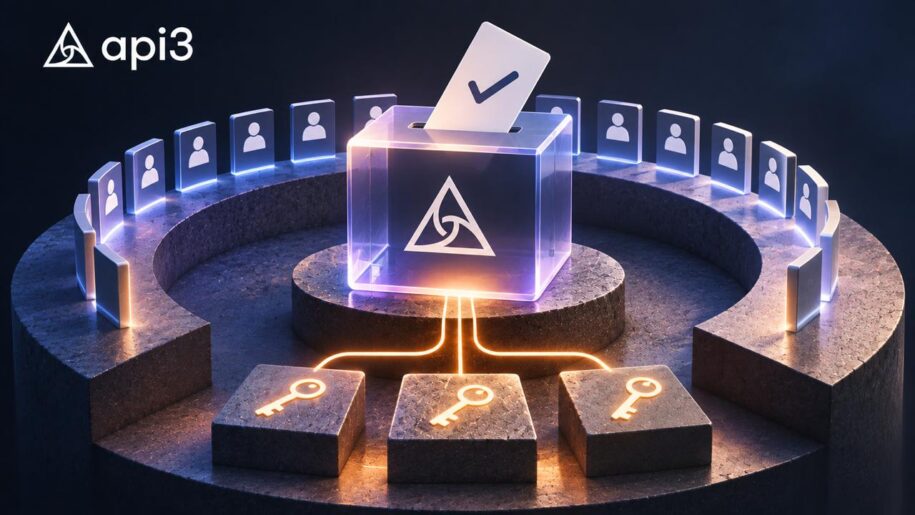

API3 has replaced the governance stack it built in 2021 with a simpler model on Snapshot, where every token is a vote whether staked or held, and a set of multisignature wallets executes what passes.
This is a sponsored article written by a third party. Coindoo does not endorse or verify its claims, and it should not be taken as financial advice. Read our full disclaimer.
API3 is overhauling how its DAO makes decisions, moving governance to Snapshot under a one-token-one-vote model and retiring the Aragon-based system it has used since 2021. The change, part of a broader proposal executed on 4th November, and is designed to make participation simpler and to remove a layer of risk from the protocol’s most sensitive contracts. On execution, the assets held by the old DAO’s contracts moved to Foundation-controlled multisigs,and the treasury’s own tokens do not vote.
Under the new model, each API3 token counts as one vote, whether it is still staked in the deprecated system or simply held in a wallet. From the first Snapshot proposal, everyone votes with what they hold. On Snapshot the quorum is 10,000,000 API3 in favor, the posting threshold to open a vote is 500,000 API3, and votes run for seven days. The DAO’s three multisignature wallets, each requiring three of five signers, execute what passes.
The protocol is not simplifying for its own sake. Its original governance ran on a large external framework with custom voting, staking and deployment code layered on top, last audited in 2022. Moving execution to multisignature wallets and ending the token’s mintability removes the path by which a hostile vote could ever reach the token contract, a class of attack that has cost other DAOs hundreds of millions. The old voting apps are locked so no new votes can pass through them.
On execution, the assets held by the old DAO’s contracts move to Foundation-controlled multisigs, and the treasury’s own tokens do not vote. The result is a governance process with fewer moving parts: a token that cannot be inflated, votes anyone can cast with what they hold, and a clear path from a passed proposal to its execution.
API3 considered and rejected more complex designs that would have turned the DAO into a smaller committee. The aim was to keep governance open to all token holders while closing the specific risks that come from votes controlling a mintable contract.
Simpler governance is part of the same repositioning that fixed the token’s supply and focused the protocol on data infrastructure for AI. The protocol’s argument is that clean, predictable governance is itself a feature for the businesses and partners building on top of it.
| “Governance should be easy to take part in and hard to abuse.”
said Emanuel Tesar, Tech Lead at API3. “One token, one vote, executed by multisigs, with a token with fixed supply.” |
ABOUT API3
API3 builds data infrastructure that delivers signed, real-world data directly from the providers that produce it. It is governed by its token holders under a one-token-one-vote model on Snapshot, with a fixed-supply token and execution handled by multisignature wallets. The project’s broader work and the marketplace itself can be explored at api3.org and airnodehub.api3.org
This is a sponsored article written by a third party. Coindoo does not endorse or verify its claims, and it should not be taken as financial advice. Read our full disclaimer.


Krasimir Rusev is a journalist and digital content creator with over 4 years of experience and more than 1,000 published pieces in the financial space. His work focuses on stock markets and commodities, closely tracking asset movements and the factors that drive them. He has a particular interest in gold and oil markets - not just their current movements, but their history, structure, and long-term trends. For him, understanding the context behind prices matters just as much as the prices themselves. A self-described Bitcoin maximalist, Krasimir has been following crypto markets long before he became a journalist. What started as a casual interest in Bitcoin gradually turned into a deep conviction - one that shaped how he thinks about money, value, and the broader financial system. That perspective quietly informs everything he writes. Beyond writing analysis and news, he actively creates content for social media including TikTok, Facebook, and Instagram, presenting market topics in a more accessible and visually engaging format. He believes financial information should reach a wide audience - not just those already following the markets. At Coindoo, he contributes to both editorial content and the development of the platform's digital presence. He works with tools like Photoshop, CapCut, and Canva, with a particular focus on visual storytelling - videos, infographics, and images that add an extra layer of value to news and analysis.