The U.S. Dollar Is Sliding at a Historic Pace – and Liquidity Is Starting to Move

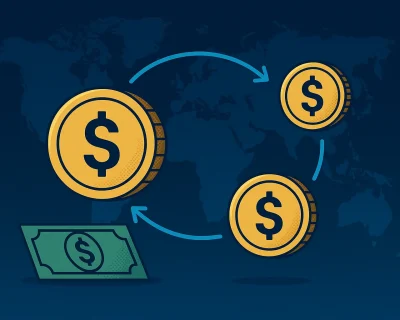
The U.S. dollar is undergoing one of its sharpest drawdowns in modern history.
The U.S. Dollar Index (DXY) is now down roughly 15.6% from its 2022 peak, falling to around 96.8, a move that places the current decline among the largest multi-year drops ever recorded.
Key takeaways:
- The dollar has fallen more than 15% from its 2022 highs, matching the scale of the 2017 decline.
- Similar dollar weakness in the past coincided with rising global liquidity.
- Historically, periods of sustained dollar declines have favored risk assets, including crypto.
The last time the dollar experienced a comparable drawdown was in 2017. That move did not happen in isolation. It preceded a broad surge in global liquidity and marked the beginning of one of the most aggressive risk-asset expansions in recent memory.
What Happened Last Time the Dollar Fell This Much
In 2017, a weakening dollar reduced financial pressure globally. Capital began flowing out of cash and into assets that benefited from easier monetary conditions. Equities rallied, emerging markets outperformed, commodities strengthened — and crypto entered a historic bull phase.
🚨 THE U.S. DOLLAR IS HAVING ITS BIGGEST DROP IN HISTORY!
The U.S. Dollar Index (DXY) is down -15.6% from its 2022 peak, falling to 96.8 today.
The last time the dollar fell this much was 2017.
That move came just before global liquidity surged and crypto entered a historic… pic.twitter.com/uOCn3SwSvu
— Coin Bureau (@coinbureau) January 26, 2026
Bitcoin, which was trading below $200 at the start of that cycle, eventually surged to nearly $20,000. While the magnitude of that move was driven by multiple factors, dollar weakness played a critical role by easing global liquidity constraints and increasing appetite for non-sovereign assets.
The current setup shows a striking structural similarity. Once again, the dollar is retreating after a prolonged period of strength, and once again, liquidity conditions are beginning to loosen.
Why Dollar Weakness Matters for Crypto
The dollar sits at the center of the global financial system. When it strengthens, financial conditions tighten worldwide. When it weakens, capital finds it easier to move into risk.
Crypto has historically exhibited one of the strongest inverse relationships with the dollar. A declining DXY tends to coincide with expanding liquidity, higher risk tolerance, and renewed interest in alternative stores of value. This does not mean prices move in a straight line, but the macro backdrop becomes more supportive.

What makes the current decline notable is its duration and scale. A 15% drawdown is not a short-term fluctuation — it represents a regime shift. These shifts often unfold slowly, but once established, they can influence asset prices for years rather than months.
Liquidity Is the Signal, Not the Price
It is important to separate cause from effect. Dollar weakness does not instantly trigger rallies. Instead, it changes the environment in which capital is allocated. Liquidity becomes more abundant, leverage constraints ease, and risk assets gain structural support.
That is why past dollar declines have mattered less for short-term trading and more for long-term positioning. In previous cycles, crypto did not peak at the moment the dollar rolled over — it accelerated afterward, as liquidity filtered through the system.
If the current dollar decline persists, it could mark the early stages of another liquidity-driven cycle. Not every asset will benefit equally, but historically, Bitcoin and crypto have been among the most sensitive to this shift.
The takeaway is not that history will repeat perfectly — but that when the dollar slips, liquidity rarely stays idle. It looks for risk.
The information provided in this article is for educational purposes only and does not constitute financial, investment, or trading advice. Coindoo.com does not endorse or recommend any specific investment strategy or cryptocurrency. Always conduct your own research and consult with a licensed financial advisor before making any investment decisions.



Kosta joined the team in 2021 and quickly established himself with his thirst for knowledge, incredible dedication, and analytical thinking. He not only covers a wide range of current topics, but also writes excellent reviews, PR articles, and educational materials. His articles are also quoted by other news agencies.