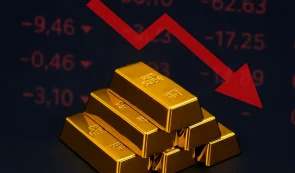
Silver Down 7%, Breaks Below $80 Support as Dollar Strength Triggers Fresh Sell-Off
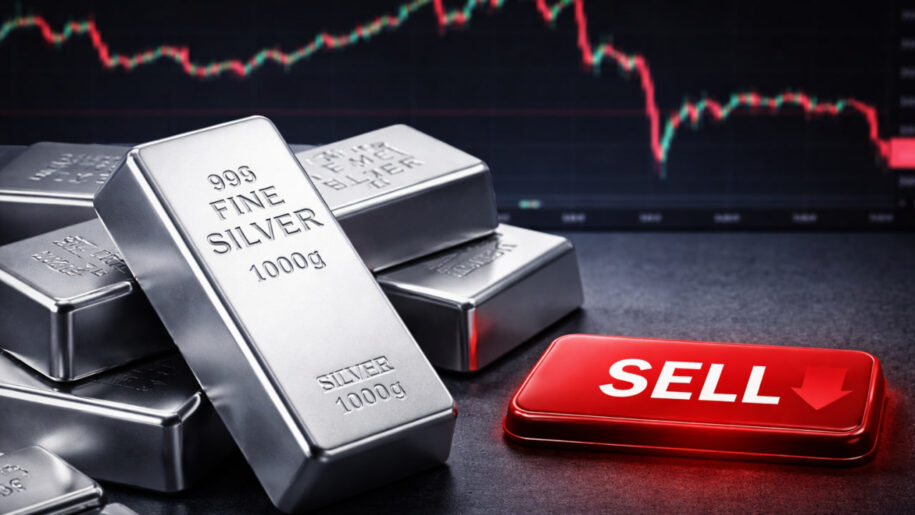
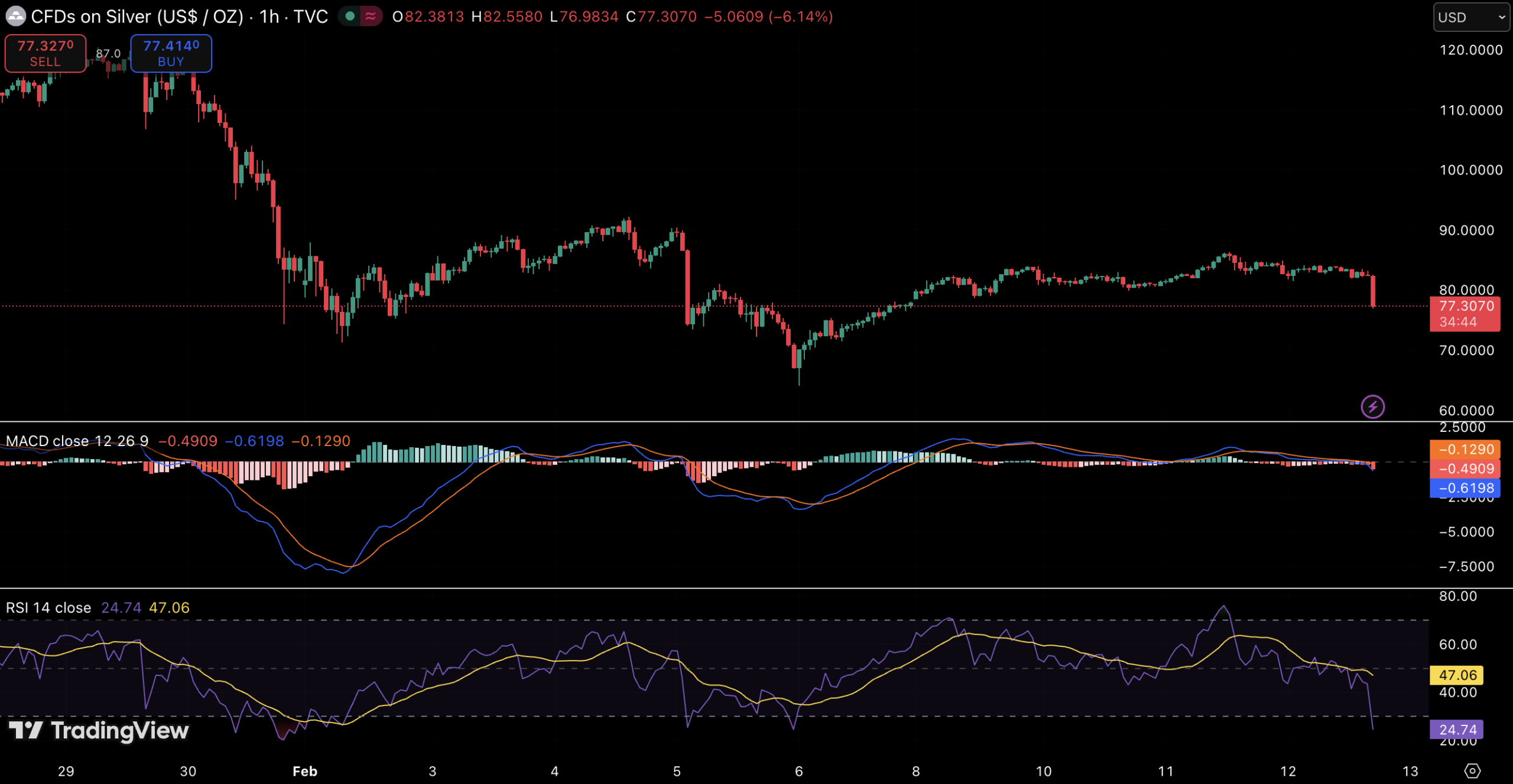
Silver has slipped back below the $80 per ounce level, extending its volatile February correction and reigniting debate over whether the metal’s explosive rally has run its course - or is simply resetting after a historic surge.
- Silver dropped below $80 as strong U.S. data and hawkish Fed expectations lifted the dollar.
- Higher CME margin requirements triggered forced selling.
- Thin liquidity ahead of Lunar New Year reduced dip-buying support.
After reaching an all-time high of $121.58 on January 29, the market experienced a violent reversal the following day, plunging toward the high-$70s in what many traders described as a “flash crash.” Prices later stabilized near $68 in early February before staging a brief recovery toward $84. That rebound has now faded, with silver trading around $77 and back under the psychologically important $80 threshold.
Strong U.S. Data Pressures Precious Metals
One of the main catalysts behind the renewed drop is stronger-than-expected U.S. economic data. The latest jobs report showed 130,000 new positions added in January – nearly double market expectations.
The surprise strength has sharply reduced bets on near-term rate cuts, lifting the U.S. dollar and Treasury yields. For non-yielding assets like silver, higher real rates and a stronger dollar typically act as headwinds, dampening speculative demand.
“Warsh Shock” Reshapes Rate Expectations
Markets are also adjusting to the nomination of Kevin Warsh as the next Federal Reserve Chair. Warsh is widely seen as more hawkish, with a potential focus on inflation control rather than monetary easing.
This shift in leadership expectations has strengthened the dollar further and cooled the so-called debasement trade that previously supported gold and silver during peak monetary easing narratives.

Margin Hikes Trigger Forced Liquidations
Another major driver of the sell-off has been structural rather than macro.
CME Group raised margin requirements for silver futures by roughly 36% in a short period, first from 11% to 15% and later to 18%. The move forced many leveraged traders to close positions to meet higher capital requirements.
That wave of forced liquidation amplified downside momentum, turning what might have been a controlled pullback into a cascade of selling pressure.
Liquidity Thins Ahead of Lunar New Year
With the Lunar New Year approaching, liquidity across major Asian markets has declined. Chinese participants – often active buyers during dips – have been unwinding positions ahead of the holiday.
The absence of strong buy-the-dip flows removed a key layer of support that had previously helped stabilize prices during sharp corrections.
A Mechanical Reset or Trend Reversal?
Despite the aggressive price swings, some analysts describe the current move as a mechanical reset rather than a collapse in fundamentals.
Silver’s broader macro drivers – including industrial demand, electrification trends, and persistent geopolitical uncertainty – remain intact. However, the metal’s rapid ascent above $120 in late January left positioning crowded and vulnerable to any shift in rate expectations or liquidity conditions.
For now, the $80 level has flipped from support to resistance. Whether silver can reclaim it in the coming sessions may determine if this correction stabilizes – or deepens toward earlier February lows.
After one of the most dramatic months in its history, silver’s next move will likely depend less on emotion and more on macro signals from Washington and liquidity flows from Asia.
The information provided in this article is for educational purposes only and does not constitute financial, investment, or trading advice. Coindoo.com does not endorse or recommend any specific investment strategy or cryptocurrency. Always conduct your own research and consult with a licensed financial advisor before making any investment decisions.



Kosta joined the team in 2021 and quickly established himself with his thirst for knowledge, incredible dedication, and analytical thinking. He not only covers a wide range of current topics, but also writes excellent reviews, PR articles, and educational materials. His articles are also quoted by other news agencies.