Russian Central Bank Reduces Rates Despite Inflation Risks
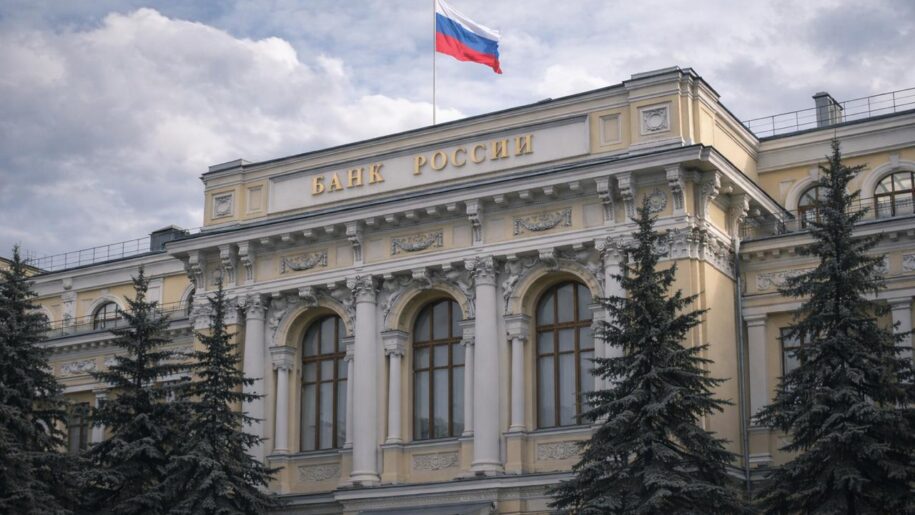
The Bank of Russia lowered its benchmark key interest rate by 50 basis points to 15.5% on February 13, 2026, extending its easing cycle with a sixth consecutive cut. The decision came as a surprise to most economists, who had expected policymakers to hold rates steady at 16% amid a recent inflation uptick.
Key Takeaways
- The Bank of Russia cut its key rate by 50 basis points to 15.5%, marking the sixth straight reduction.
- Policymakers characterized January’s inflation spike as largely driven by one-off fiscal and administered price adjustments.
- The central bank projects a 2026 average rate of 13.5%–14.5% and inflation easing to 4.5%–5.5%, with a return to the 4% target in 2027.
The move signals that authorities are prioritizing support for a slowing economy over short-term price pressures, while maintaining that inflation risks remain contained within their baseline projections.
Shift Toward Growth Support Amid Economic Cooling
The reduction reflects a recalibration in monetary policy as Russia’s economy shows signs of deceleration. After strong growth in previous years, output slowed markedly in 2025, with expansion estimated near 1% compared with nearly 5% in the prior period. Elevated borrowing costs, persistent labor shortages, sanctions-related trade constraints, and tighter fiscal conditions have weighed on investment and credit activity.
Russian central bank cuts key rate to 15.5%, signals more cuts to come https://t.co/WZmAfwsmi0 https://t.co/WZmAfwsmi0
— Reuters Business (@ReutersBiz) February 13, 2026
Governor Elvira Nabiullina acknowledged internal debate over whether to maintain rates or proceed with a cut, noting that pro-inflationary risks still outweigh disinflationary ones in the medium term. However, the central bank assessed that economic cooling has progressed sufficiently to allow measured easing without jeopardizing longer-term price stability.
Inflation Pressures Seen as Temporary
January’s acceleration in headline inflation was attributed primarily to one-off factors, including expanded VAT measures and adjustments to regulated utility tariffs. The central bank emphasized that underlying inflation indicators have remained comparatively stable, with seasonally adjusted price growth moderating toward the end of 2025.
While inflation expectations remain elevated, a key risk for policy credibility, the Bank of Russia signaled confidence that disinflation will resume once temporary fiscal effects fade. The baseline forecast anticipates annual inflation between 4.5% and 5.5% in 2026, with underlying measures converging closer to 4% in the second half of the year.
Forward Guidance and Policy Path
Looking ahead, the central bank projects an average key rate of 13.5% to 14.5% in 2026, implying potential additional easing of 100 to 200 basis points over the coming months. The policy trajectory remains data-dependent, with inflation dynamics and expectations serving as primary decision anchors.
The Bank of Russia also revised certain external assumptions, including a downward adjustment to its 2026 oil price outlook. Weaker terms of trade and continued sanctions constraints remain central considerations in shaping macroeconomic projections.
Market Reaction and Currency Impact
The ruble weakened following the announcement, with currency markets reacting to the softer-than-expected policy stance and forward guidance. The depreciation reflects investor sensitivity to interest rate differentials and external vulnerabilities in a sanctions-constrained environment.

Domestic bond and equity markets showed limited immediate volatility, though lower rates could ease corporate debt servicing costs and support credit demand if easing continues.
Balancing Growth and Inflation in a Wartime Economy
The decision underscores the policy trade-offs facing Russian authorities. Sustained high real interest rates have restrained borrowing and dampened investment, yet easing too aggressively risks reigniting inflation pressures or destabilizing the currency. With fiscal policy adjusting and geopolitical uncertainties persisting, monetary policy remains a primary stabilization tool.
Key risks include the potential persistence of inflation expectations, vulnerability of the ruble to external shocks, and volatility in global commodity markets. Sanctions-related constraints continue to shape trade flows and capital dynamics, limiting policy flexibility.
Outlook: Gradual Normalization Under Elevated Uncertainty
The rate cut reflects the central bank’s assessment that the disinflation process is sufficiently entrenched to permit cautious normalization. Real interest rates remain positive, signaling that policy conditions are still restrictive despite the easing cycle.
Future meetings will hinge on incoming inflation data, wage trends, and external developments. While the reduction provides incremental relief to households and businesses, the broader trajectory of Russia’s monetary policy will depend on balancing growth stabilization against medium-term price risks in a high-uncertainty environment.
The information provided in this article is for educational purposes only and does not constitute financial, investment, or trading advice. Coindoo.com does not endorse or recommend any specific investment strategy or cryptocurrency. Always conduct your own research and consult with a licensed financial advisor before making any investment decisions.



With over 6 years of experience in the world of financial markets and cryptocurrencies, Teodor Volkov provides in-depth analyses, up-to-date news, and strategic forecasts for investors and enthusiasts. His professionalism and sense of market trends make the information he shares reliable and valuable for everyone who wants to make informed decisions.