Political Risk Returns as Impeachment Plans Surface Ahead of 2026
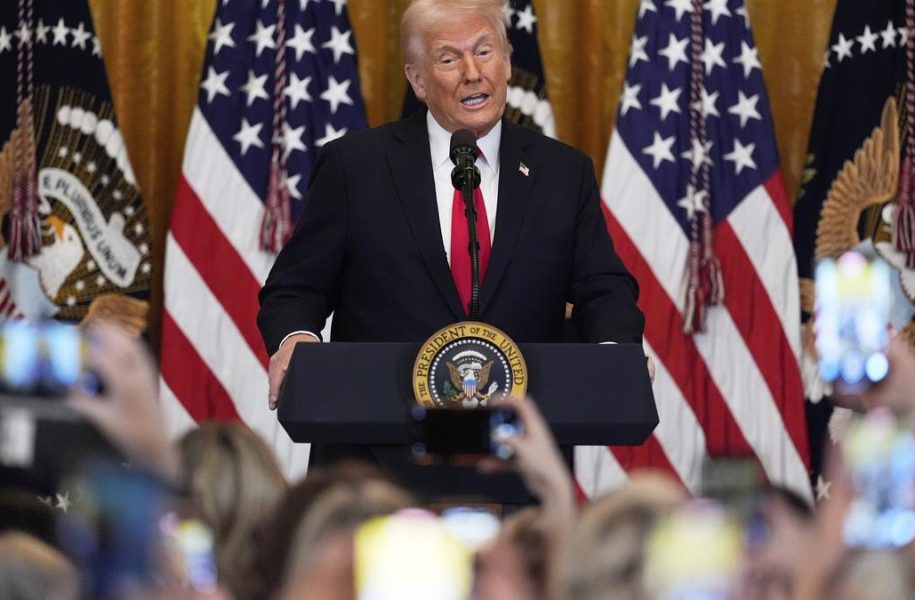
U.S. political risk moved back into focus after reports circulated that Democrats are planning to impeach and remove both Donald Trump and JD Vance if they regain control of Congress in the 2026 midterm elections.
Key takeaways
- Democrats are signaling potential impeachment efforts if they win the 2026 midterms
- Both Donald Trump and JD Vance are named in the scenario
- Prediction markets currently favor a Democratic win
- Political uncertainty could resurface as a market risk factor
The claim, shared widely on social media, highlights how deeply polarized the political landscape remains heading into the next electoral cycle.
The discussion comes as prediction markets increasingly price in a Democratic victory, raising questions about governance stability, legislative gridlock, and broader market implications.
According to data from Polymarket, Democrats currently hold an 81% implied probability of winning control of the House in 2026, compared with roughly 20% for Republicans. While prediction markets are not forecasts, they reflect aggregated sentiment based on real-money positioning.
💥BREAKING:
🇺🇸 Democrats plan to impeach and remove both Trump and Vance if they win the 2026 midterms.
According to Polymarket, Democrats currently have an 81% chance to win the midterms. pic.twitter.com/hhQEgmUJNW
— Crypto Rover (@cryptorover) January 31, 2026
The widening gap suggests growing confidence among traders that Democrats could regain legislative leverage, which would significantly alter the balance of power in Washington.
Impeachment talk raises governance uncertainty
Impeachment discussions – even when speculative – tend to amplify uncertainty around fiscal policy, regulatory direction, and executive authority. If Democrats were to secure a majority and pursue impeachment proceedings, it could trigger prolonged legal and political battles, diverting attention from economic policy at a time when markets are already sensitive to macro risk.

Historically, impeachment efforts have rarely resulted in removal, but they have frequently coincided with heightened volatility in both financial and political sentiment.
Why markets may care
While markets typically discount political noise, sustained uncertainty can influence investor behavior, particularly around:
- Budget negotiations and fiscal policy
- Regulatory enforcement and executive power
- Government shutdown risk and legislative paralysis
As seen in previous cycles, markets tend to react less to the outcome itself and more to the duration and intensity of political conflict.
What happens next
At this stage, the scenario remains conditional – dependent on election outcomes nearly two years away. However, the re-emergence of impeachment rhetoric signals that political risk could become a more prominent theme as the 2026 cycle approaches.
For now, the story is less about certainty and more about expectations. And as prediction markets increasingly influence narratives, political probabilities – not just polling – are becoming part of the broader risk landscape.
The information provided in this article is for educational purposes only and does not constitute financial, investment, or trading advice. Coindoo.com does not endorse or recommend any specific investment strategy or cryptocurrency. Always conduct your own research and consult with a licensed financial advisor before making any investment decisions.



Alexander Zdravkov is a person who always looks for the logic behind things. He has more than 3 years of experience in the crypto space, where he skillfully identifies new trends in the world of digital currencies. Whether providing in-depth analysis or daily reports on all topics, his deep understanding and enthusiasm for what he does make him a valuable member of the team.