Paramount Launches $108B Cash Offer for Warner Bros., Calls Netflix Proposal Inferior
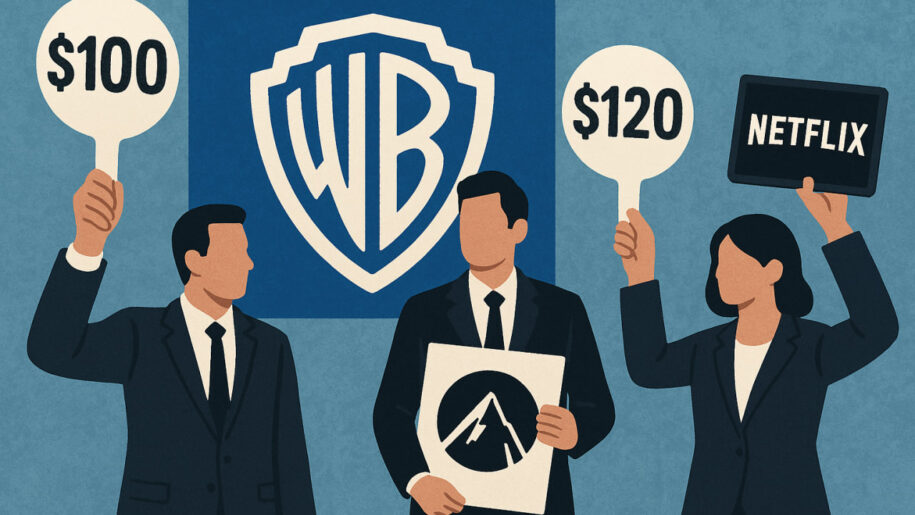
Hollywood entered a dramatic new chapter today as Paramount, now operating under Skydance Corporation, publicly launched an all-cash takeover offer for Warner Bros. Discovery (WBD).
The proposal, priced at $30 per share, values the entertainment company at roughly $108.4 billion and directly challenges the WBD board, which previously endorsed a competing transaction from Netflix.
- Paramount launched a $108.4 billion all-cash bid for Warner Bros. Discovery.
- The company says its offer is financially stronger and structurally safer than Netflix’s proposal.
- Paramount vows to expand theatrical output, sports coverage and creative investment.
- The bidding battle now shifts toward shareholders, who will decide which deal prevails.
Paramount’s decision to make its bid public came after nearly three months of private outreach that allegedly failed to progress. The company said it submitted six proposals across a twelve-week span, only to face limited engagement. According to Paramount CEO David Ellison, the lack of dialogue forced the offer to shift from boardroom conversations to a shareholder campaign.
Paramount Says Netflix Bid Undervalues WBD
Ellison framed the Netflix deal as financially uncertain and structurally unattractive. Whereas Paramount offers a straightforward cash payout, Netflix’s proposal depends on a combination of stock and cash tethered to future market performance. Paramount also argued that Netflix’s takeover would leave shareholders exposed to a drawn-out regulatory battle across multiple countries where Netflix already holds dominant streaming market share.
At the heart of the critique is valuation. Paramount claims its bid delivers around $18 billion more cash than the Netflix structure while avoiding the leftover exposure that investors would assume under the Netflix plan, particularly surrounding Warner Bros.’ leveraged Global Networks business. Ellison argued that investors should not be compelled to accept an undesirable asset stub simply to execute a transaction.
Paramount Claims Regulatory Advantage and Execution Clarity
The studio also emphasized regulatory feasibility. Paramount contends that merging with WBD strengthens industry competition in streaming, theatrical production and content creation. By contrast, it warned that a Netflix-led acquisition would consolidate nearly half of global subscription streaming customers under a single platform, potentially raising prices for audiences, squeezing talent compensation and weakening cinema profitability. Ellison pointed out Netflix’s lack of experience with large-scale acquisitions as an additional risk for shareholders.

A Vision for a Rebalanced Media Structure
Beyond criticizing Netflix’s deal mechanics, Paramount laid out a vision for the future of a combined studio empire. In this scenario, Warner Bros. and Paramount would continue operating as distinct creative powerhouses, producing more theatrical films rather than folding them into streaming pipelines. The company says it would present stronger competition to Netflix, Disney and Amazon while leveraging a sweeping portfolio of sports rights — ranging from the NFL and UFC to the Champions League, Olympics and NCAA events — across broadcast, digital and streaming platforms.
Commitment to Theaters and Content Expansion
One of Paramount’s most pointed selling points is its support for movie theaters. While streaming-led rivals have reduced their theatrical priorities, Paramount argues that cinemas remain essential for Hollywood’s cultural reach, earnings profile and talent ecosystem. The company pledged not only to preserve Warner Bros.’ theatrical output but to build upon it, presenting itself as a catalyst for filmmakers and exhibitors alike.
Technology, Synergies and Growth Capacity
Paramount also highlighted its technology alignment with Oracle — noting that engineering scale, data capability and platform efficiency could enhance its direct-to-consumer footprint. Meanwhile, cost efficiency is central to the financial argument. Paramount estimates more than $6 billion in synergy potential in addition to its existing transformation savings, signaling to investors that the merger could be executed with discipline and strong balance-sheet support.
Shareholders Now Hold the Final Say
With its offer formally taken to investors rather than gatekept at board level, Paramount hopes shareholder pressure will force Warner Bros.’ leadership to revisit its stance. Whether investors back Netflix’s streaming-centric model or Paramount’s cash-driven, theatrically supportive vision will determine which structure becomes Hollywood’s next dominant corporate model.
The information provided in this article is for educational purposes only and does not constitute financial, investment, or trading advice. Coindoo.com does not endorse or recommend any specific investment strategy or cryptocurrency. Always conduct your own research and consult with a licensed financial advisor before making any investment decisions.



Alex is an experienced financial journalist and cryptocurrency enthusiast. With over 8 years of experience covering the crypto, blockchain, and fintech industries, he is well-versed in the complex and ever-evolving world of digital assets. His insightful and thought-provoking articles provide readers with a clear picture of the latest developments and trends in the market. His approach allows him to break down complex ideas into accessible and in-depth content. Follow his publications to stay up to date with the most important trends and topics.