Markets Expect Rate Cut as Fed Faces Deep Internal Division
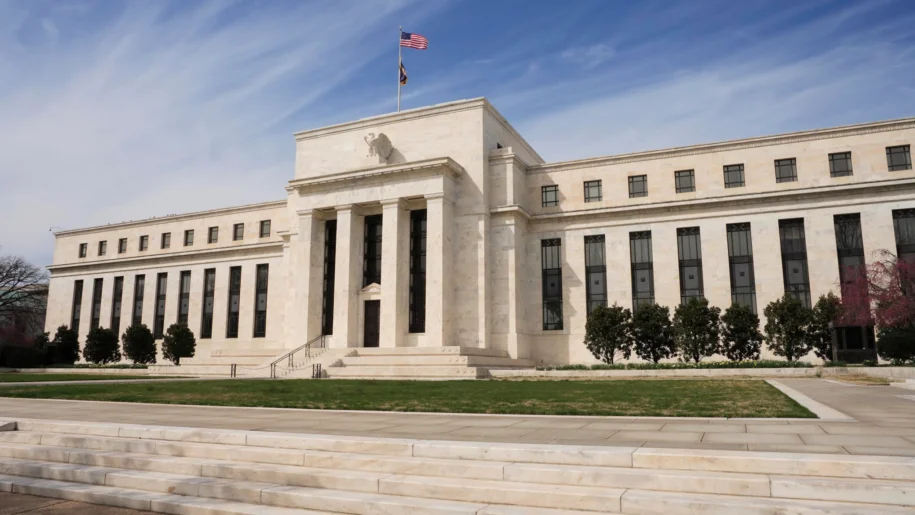
With the U.S. government shutdown interrupting access to key economic indicators, the Federal Reserve is preparing for its December policy decision without the full set of data it normally depends on.
- Fed will decide on rates with incomplete data due to the shutdown.
- Officials are sharply divided on a rate cut.
- Markets still expect a 25-bp cut, assuming Powell leads the decision.
The lack of updated information has made the upcoming meeting unusually difficult, and the disagreement among Fed officials over whether to reduce interest rates has become a major factor rather than a side detail.
The split inside the institution has been described as the most significant of Jerome Powell’s nearly eight-year tenure as Fed Chair. Reporting from Wall Street Journal journalist Nick Timiraos, who is widely regarded as a reliable indicator of internal Fed sentiment, confirms that policymakers are sharply divided on the question of lowering interest rates at the next meeting.
Markets Expect a Rate Cut Even as the Fed Remains Split
Despite the disagreement within the central bank, markets have already positioned themselves for a move toward lower borrowing costs. According to CME FedWatch, futures now imply a 71.5% probability that the Fed will cut rates by 25 basis points in December. Investors are pricing in a cut not because the voting members agree on it, but because Powell has historically shaped the final outcome when opinions are divided.
Research from Barclays supports that outlook. Their analysts expect the Fed to adopt a rate-cut decision even though the voting balance does not clearly support one. Based on recent statements from policymakers, they estimate that six voting members currently favor holding rates steady, while five support a cut. However, they add that open opposition to the Chair would be unlikely, and that Powell is expected to lead the committee toward easing.
Labor Weakness Strengthens the Case for Policy Easing
Economists who support reducing interest rates point to the recent deterioration in labor market conditions. Wells Fargo Chief Economist Tom Porcelli cited the unemployment rate rising to 4.4% in September, the highest level in almost four years, as evidence that current monetary tightening has started to weigh on employment. Porcelli argues that this shift justifies rate relief even without full data available.

Others take a different view and believe that the Fed should not move until more complete economic information becomes available. Timiraos has stated that the Fed is not inclined to cut rates “unless Powell forces it,” meaning that the December outcome will depend more on leadership than on unanimous interpretation of the data.
Market Implications Go Beyond Interest Rates
The potential rate cut is not only relevant to borrowers and lenders. Risk-asset markets, including cryptocurrencies, have been highly sensitive to expectations about monetary policy throughout the year. Barclays noted that an interest-rate reduction could act as a confidence trigger for Bitcoin, which has struggled during the recent tightening cycle. While a rate cut would not be designed with crypto in mind, a shift toward easier financial conditions would likely improve sentiment in digital-asset markets.
A Critical Meeting for the Fed
The December decision has become a test of consensus inside the central bank. Instead of a purely data-driven outcome, the meeting will highlight the balance between economic interpretation and institutional leadership. With incomplete data, a divided committee and high market expectations, the Fed’s final decision will have broader implications than usual — not only for U.S. monetary policy, but also for how much unity remains within the institution.
The information provided in this article is for educational purposes only and does not constitute financial, investment, or trading advice. Coindoo.com does not endorse or recommend any specific investment strategy or cryptocurrency. Always conduct your own research and consult with a licensed financial advisor before making any investment decisions.



Alex is an experienced financial journalist and cryptocurrency enthusiast. With over 8 years of experience covering the crypto, blockchain, and fintech industries, he is well-versed in the complex and ever-evolving world of digital assets. His insightful and thought-provoking articles provide readers with a clear picture of the latest developments and trends in the market. His approach allows him to break down complex ideas into accessible and in-depth content. Follow his publications to stay up to date with the most important trends and topics.