Marco Rubio Warns Europe of “Dangerous Delusion” While Reaffirming Alliance
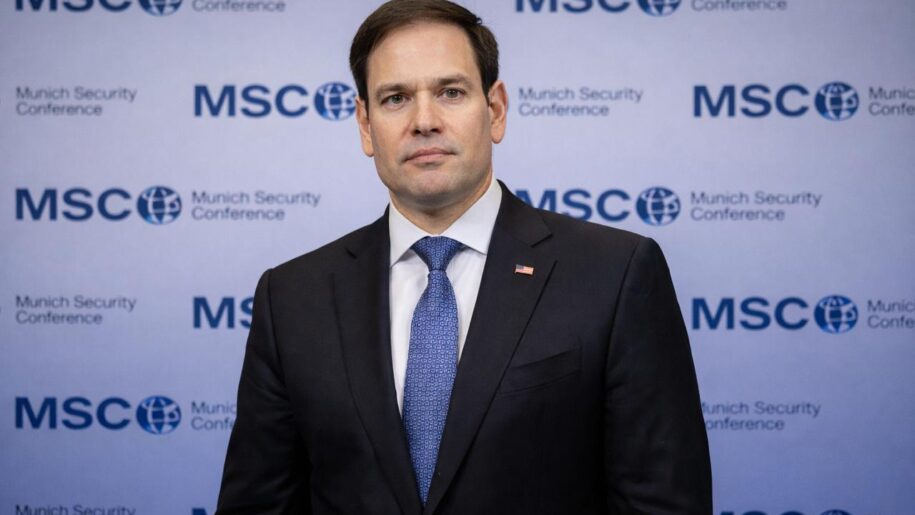
U.S. Secretary of State Marco Rubio delivered a dual message to European leaders at the Munich Security Conference on February 14, 2026: the transatlantic alliance remains essential, but Western nations must abandon what he described as a “dangerous delusion” born from post-Cold War optimism.
Key Takeaways
- Secretary of State Marco Rubio reaffirmed the U.S. commitment to the transatlantic alliance at the Munich Security Conference.
- He warned that post-Cold War “end of history” assumptions created strategic vulnerabilities in trade, migration, and energy policy.
- The speech combined reassurance of partnership with a call for Western reindustrialization, border security, and supply chain resilience.
Speaking in a formal address and later in an interview, Rubio emphasized that the United States and Europe remain deeply interconnected. At the same time, he warned that complacency about globalization, borders, and economic integration has contributed to structural vulnerabilities across the West.
Reaffirming the Transatlantic Bond
Rubio described the United States as historically and culturally intertwined with Europe, referencing the shared legacy of the 20th century’s world conflicts as evidence of deep mutual dependence. He stressed that Washington seeks a prosperous and stable Europe and characterized the alliance as enduring and strategically vital.
Secretary of State Marco Rubio sought to reassure Europe of the US commitment to the continent even as he criticized western leaders for what he called a “dangerous delusion” of open borders, free trade and punishing energy policies https://t.co/VzjP05VV3c
— Bloomberg (@business) February 14, 2026
The message aimed to counter speculation of weakening U.S. commitment, particularly amid broader debates about burden-sharing, defense spending, and trade relations.
The “Dangerous Delusion” of Post-Cold War Optimism
Alongside reassurance, Rubio criticized what he called a mistaken assumption that history had effectively “ended” after the Cold War, a reference to the widely discussed thesis that liberal democracy and open markets would inevitably expand worldwide.
He argued that this period of euphoria fostered unrealistic expectations that trade and global integration would replace national identity, borders, and geopolitical rivalry. According to Rubio, the belief in a borderless world and self-sustaining global order led Western governments to underinvest in domestic resilience.
Migration, Energy, and Industrial Capacity
The secretary highlighted concerns over unchecked migration, arguing that societal cohesion and political stability depend on controlled borders and sustainable demographic policies. He also criticized what he described as overly punitive energy strategies that, in his view, weakened industrial competitiveness.
Rubio further pointed to deindustrialization in parts of Europe and North America as evidence that overreliance on global trade, particularly supply chains connected to geopolitical rivals had reduced economic security.
Supply Chains and Strategic Autonomy
The speech emphasized the need to secure critical industries, including advanced technologies, artificial intelligence infrastructure, and key mineral resources. Rubio framed reindustrialization and supply chain resilience as prerequisites for maintaining Western influence in a multipolar environment.

This perspective aligns with broader policy trends in Washington favoring domestic manufacturing investment, strategic trade controls, and industrial policy initiatives.
European Reactions: Relief and Reservation
Reactions among European officials were mixed. Some participants viewed the tone as reassuring, noting Rubio’s emphasis on partnership and shared destiny. Others interpreted the remarks as reinforcing a growing divergence between U.S. and European strategic priorities, particularly regarding trade and climate policy.
The address echoed themes previously voiced by other U.S. officials advocating realism over idealism in foreign policy, though Rubio’s presentation was widely described as measured rather than confrontational.
Strategic Implications for the Alliance
The speech reflects a broader recalibration of Western policy debates. Questions surrounding border management, energy strategy, industrial capacity, and geopolitical competition have moved to the forefront of transatlantic discussions.
While reaffirming NATO and alliance commitments, Rubio framed the partnership as requiring modernization, grounded in reciprocity, economic resilience, and shared civilizational values.
Reassurance Coupled With Realignment
Rubio’s Munich address underscored a dual objective: reassure allies of continued U.S. engagement while urging a strategic shift away from what he described as post-Cold War complacency. The message signals continuity in alliance commitments but a sharper emphasis on sovereignty, resilience, and economic security.
As geopolitical competition intensifies and economic fragmentation deepens, the balance between partnership and strategic autonomy is likely to remain central to transatlantic dialogue.
The information provided in this article is for educational purposes only and does not constitute financial, investment, or trading advice. Coindoo.com does not endorse or recommend any specific investment strategy or cryptocurrency. Always conduct your own research and consult with a licensed financial advisor before making any investment decisions.



Alex is an experienced financial journalist and cryptocurrency enthusiast. With over 8 years of experience covering the crypto, blockchain, and fintech industries, he is well-versed in the complex and ever-evolving world of digital assets. His insightful and thought-provoking articles provide readers with a clear picture of the latest developments and trends in the market. His approach allows him to break down complex ideas into accessible and in-depth content. Follow his publications to stay up to date with the most important trends and topics.