Is the U.S. Economy Already in Recession? Moody’s Thinks So
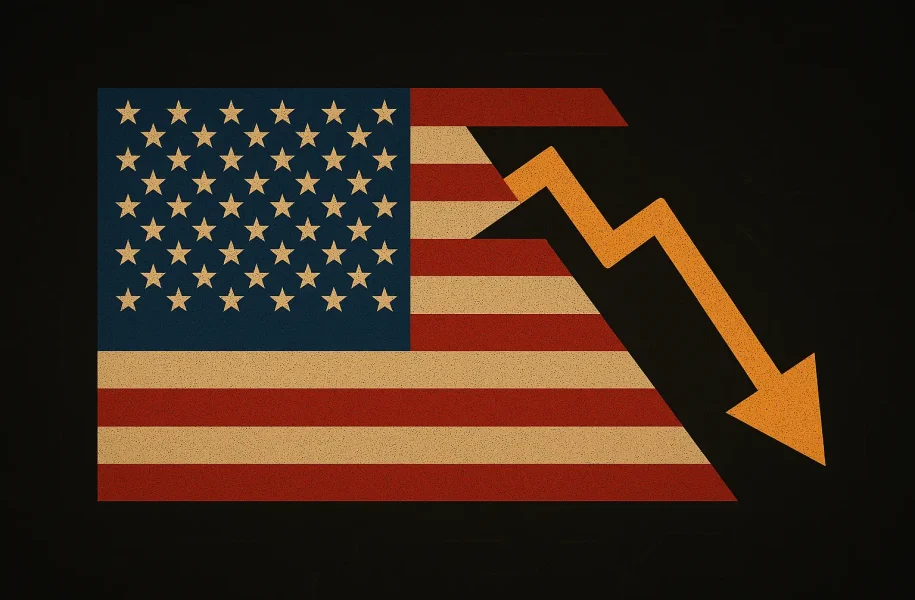
Concerns over the health of the U.S. economy are deepening as Moody’s Analytics chief economist Mark Zandi argues that the country may already be in recession.
His view is anchored in troubling labor market trends, where job creation has become dangerously concentrated in just two industries.
Job Growth Without Breadth
Since January, the U.S. economy has added roughly 600,000 jobs. Strip out gains in healthcare and hospitality, however, and overall employment growth has been flat. Zandi highlighted this imbalance in a recent X post, describing the situation as “disconcerting” because it shows how dependent the labor market has become on only a narrow slice of the economy.

The Bureau of Labor Statistics payroll survey reinforces that point. For six straight months, fewer than half of industries reported payroll expansion — just 48% in August. Historically, whenever that ratio dips below 50%, the economy is already in recession. The same pattern was visible in the early 2000s, during the 2008 financial crisis, and again in 2020 when the pandemic struck.
Broader Risks Beyond Employment
Zandi’s concerns extend past jobs data. He warned that nearly a third of the U.S. economy, measured by state-level output, is either already contracting or at significant risk. Regional weakness, he said, often precedes nationwide downturns.
Policy headwinds could make matters worse. While markets expect the Federal Reserve to cut interest rates later this year, Zandi suggested those moves may have little effect if tariffs and immigration restrictions continue to erode profits and labor supply. “Even aggressive Fed action may not be enough,” he cautioned.
The Recession Question
While official confirmation requires months of economic data, Zandi’s assessment adds to a growing chorus of analysts questioning whether the U.S. has already slipped into a downturn. If history is any guide, the breadth of payroll losses is a warning sign that should not be ignored.
This publication is sponsored. Coindoo does not endorse or assume responsibility for the content, accuracy, quality, advertising, products, or any other materials on this page. Readers are encouraged to conduct their own research before engaging in any cryptocurrency-related actions. Coindoo will not be liable, directly or indirectly, for any damages or losses resulting from the use of or reliance on any content, goods, or services mentioned. Always do your own research.



Alex is an experienced financial journalist and cryptocurrency enthusiast. With over 8 years of experience covering the crypto, blockchain, and fintech industries, he is well-versed in the complex and ever-evolving world of digital assets. His insightful and thought-provoking articles provide readers with a clear picture of the latest developments and trends in the market. His approach allows him to break down complex ideas into accessible and in-depth content. Follow his publications to stay up to date with the most important trends and topics.