How Bitcoin Mining Works: Full Breakdown From Hardware to Block Rewards
If you are new to crypto, bitcoin mining explained simply can still sound confusing. Are people digging in the ground? Is it like Minecraft? Not quite.
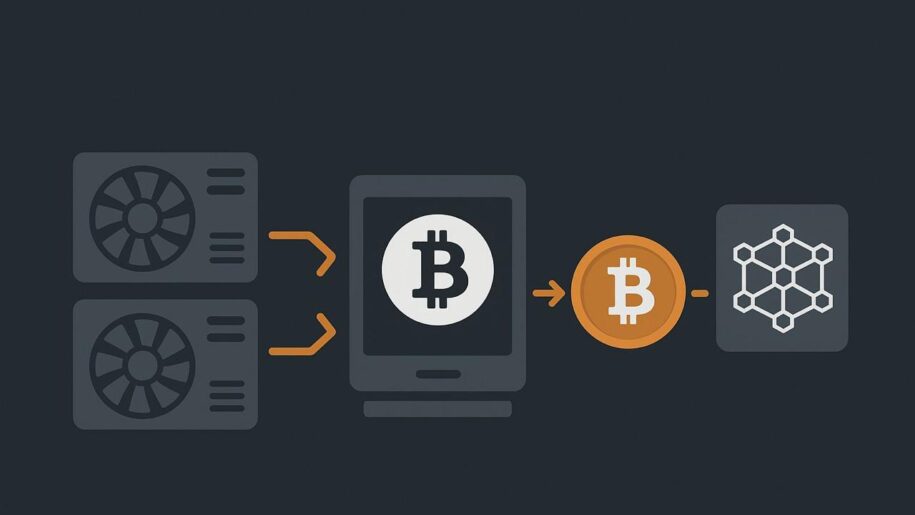
Here is the simple truth: Bitcoin mining is the engine that keeps the entire network running. It is the process that creates new bitcoins and processes every single transaction.
- Security: Mining makes Bitcoin impossible to hack.
- Creation: It is the only way new bitcoins enter the world.
- Decentralisation: It ensures no banks or governments control the money.
Miners are essentially auditors. They compete to solve complex digital puzzles. The winner gets to add the next page of transactions to Bitcoin’s history books and is paid in Bitcoin. This guide breaks down every step of that process.
What Is Bitcoin Mining?
So, what is bitcoin mining exactly? Imagine a huge global lottery that happens every 10 minutes.
Thousands of computers around the world are frantically buying lottery tickets (guessing numbers). They aren’t trying to win cash; they are trying to win the right to write the next page in Bitcoin’s public notebook.
For those asking how btc mining works for beginners: The first computer to guess the winning number gets to verify a stack of transactions and stamp them into the notebook. As a reward for their hard work and electricity, the network gives them brand new Bitcoin.
This process is a simple explanation of bitcoin proof-of-work: You have to prove you spent energy to participate, which keeps cheaters out.
Here is the simple truth: Bitcoin mining is the engine that keeps the entire network running. It is the process that creates new bitcoins and processes every single transaction. Some people don’t want to deal with hardware at all and prefer to get Bitcoin exposure through trading platforms instead — in that case, guides like the xtb referral code page can be useful when exploring brokerage bonuses and conditions.
Mini Glossary for Beginners
- Hash: A unique digital fingerprint of data.
- Block: A batch of confirmed transactions bundled together.
- Blockchain: A chain of blocks linked together (the public notebook).
- Miner: A specialised computer competing to solve the puzzle.
- Reward: The payment miners get (New BTC + Transaction Fees).
- Proof-of-Work: The mechanism of using energy to secure the network.
Step-by-Step: How Bitcoin Mining Actually Works
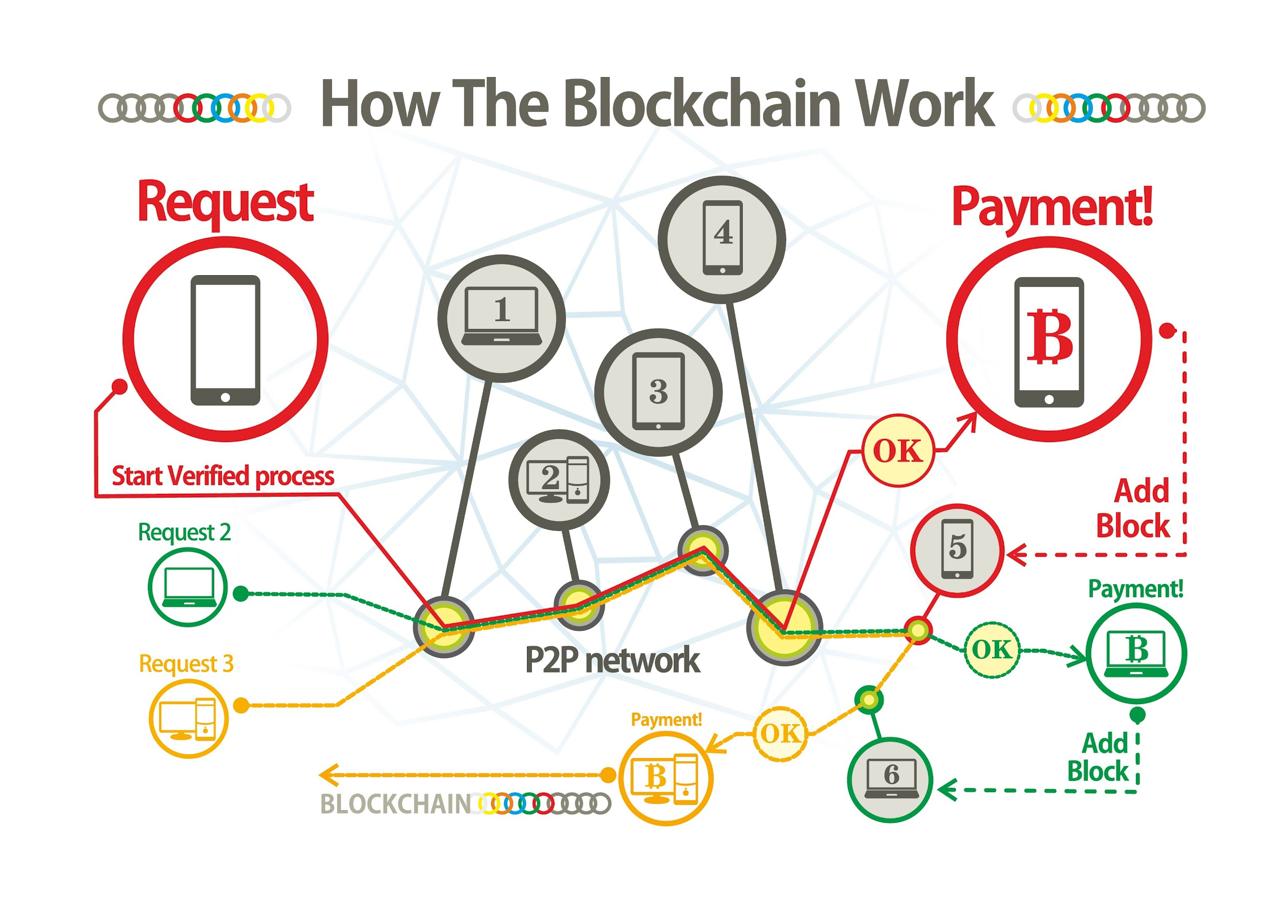
This is the core of the Bitcoin engine. Here is what happens behind the scenes every single time a block is mined.
Step 1 — A User Sends a Transaction
When you send Bitcoin to a friend, it doesn’t move instantly. You broadcast a message to the network saying, “I am moving 0.5 BTC to this address.” This transaction is placed in a digital waiting room called the Mempool. It sits there waiting to be picked up by a miner.
Step 2 — Miners Collect Transactions Into a Block
Miners are financially motivated. They look at the Mempool and pick the transactions that offer the highest fees. They gather these transactions and assemble them into a Candidate Block.
Step 3 — Miners Compete to Solve a Mathematical Puzzle
This is the “Mining” part, or the bitcoin mining puzzle explained. The miners take the data from the candidate block and run it through a cryptographic algorithm. The goal is to find a Hash (a long string of numbers and letters) that is lower than a specific target number set by the network.
- The Puzzle: How miners compete is by trying to guess a PIN code, but the PIN code is 64 digits long.
- The Speed: Modern miners try trillions of combinations per second.
- The Randomness: There is no shortcut. How blocks are mined relies on pure speed and luck.
Step 4 — The First Miner to Solve It Broadcasts the Block
Once a miner finds the winning hash, they shout to the network: “I found it!” Other miners immediately stop working on their own blocks and verify the winner’s solution. If the solution is valid and the transactions are honest, the new block is added to the Blockchain.
Step 5 — The Winning Miner Gets Paid
The winner receives the Block Reward. In 2025 (following the 2024 Halving), the payout structure is:
- Block Subsidy: 3.125 BTC (newly minted coins).
- Transaction Fees: The fees from all transactions in that block (variable, usually 0.1 to 1.0+ BTC).
Total Value: The miner walks away with roughly 3.2 to 4.5 BTC for ten minutes of work.
What Is a Hash?
To understand SHA-256 mining explained, you must understand hashing. A Hash is a digital fingerprint.
Bitcoin uses the SHA-256 algorithm. It is a “one-way” street. You can turn data into a hash, but you cannot turn a hash back into data.
The most important feature is the “Avalanche Effect.” If you change even one tiny letter in the input data, the resulting hash changes completely.
Example:
- Input: Bitcoin → Hash: b4056df6…
- Input: bitcoin (lowercase b) → Hash: cd5b1e49…
Miners are looking for a hash that starts with a specific number of zeros. Because they can’t predict the output, they have to keep changing a random number inside the block and re-hashing it until they get lucky.
Mining Hardware Explained
Source: Shutterstock
The tools for mining have evolved from simple household items to industrial powerhouses.
1. CPUs — The Early Days
In 2009 and 2010, you could mine Bitcoin on a standard laptop processor. The network was small, and the competition was low. Satoshi Nakamoto mined the first blocks using a CPU.
Status: Obsolete for Bitcoin.
2. GPUs — The Evolution
By 2011, miners realised that gaming graphics cards were 50–100 times faster at solving the math puzzles than CPUs. This started the first “mining farm” era.
Status: Obsolete for Bitcoin (but still used for some other coins or AI computing).
3. ASICs — The Industrial Era
Today, we use ASICs (Application-Specific Integrated Circuits).
An ASIC is a computer built for exactly one job: mining Bitcoin. It cannot browse the web, it cannot play video games, and it cannot open Excel. But it can guess trillions of hashes per second.
2025 Hardware Examples:
- Antminer S21: A legendary model for efficiency.
- Whatsminer M66: Known for durability and high hashrate.
- Efficiency: Modern machines operate at around 15–18 J/TH (Joules per Terahash), making them incredibly energy-efficient compared to old models.
Bitcoin Mining Difficulty
Bitcoin is programmed to be stable. This concept is bitcoin mining difficulty. The network wants blocks to be produced every 10 minutes on average.
But if more powerful machines join, they will find blocks faster. To fix this, we have mining difficulty adjustment for beginners:
- When: Happens every 2,016 blocks (roughly every 2 weeks).
- How: If blocks are found too fast, the puzzle gets harder. If blocks are found too slow, the puzzle gets easier.
Imagine a video game that watches how you play. If you keep beating the level in 30 seconds, the game automatically adds more enemies to slow you down.
What Is Hashrate?
Hashrate is the speed of the network. It measures how many guesses (hashes) miners are producing per second.
- Higher Hashrate = More secure network (harder to attack).
- Global Hashrate = The combined power of every miner on Earth.
If Bitcoin is a fortress, Hashrate is the thickness of the walls. In 2025, the walls are thicker than ever before, making Bitcoin the most secure computer network in history.
Mining Pools
In 2025, the chances of a single solo miner finding a block are one in trillions. You could run a machine for 10 years and never earn a penny.
To solve this, miners join Mining Pools.
- How it works: Thousands of miners connect their machines to a single server. They work together as one giant supercomputer.
- The Payout: When the pool wins a block, the reward (3.125 BTC) is split among everyone based on how much work they contributed.
- Result: Instead of waiting years for a lottery win, you get small, steady payments every day.
Top Pools in 2025: Foundry, AntPool, ViaBTC, F2Pool.
Block Rewards Explained in 2025
The incentive to mine comes from the Block Reward. This is composed of two parts:
1. The Block Subsidy: This is the amount of new Bitcoin minted. It gets cut in half every 4 years.
- 2009: 50 BTC
- 2012: 25 BTC
- 2016: 12.5 BTC
- 2020: 6.25 BTC
- 2024–2028: 3.125 BTC
2. Transaction Fees: Users pay fees to get their transactions processed faster. In 2025, as the network gets busier, fees make up a larger percentage of a miner’s income.
Total Daily Revenue: With ~144 blocks mined per day, the network generates roughly 450 BTC in subsidies plus fees daily. At $50,000 per BTC, that is a $22.5 Million daily industry.
Why Bitcoin Uses Energy
You often hear about Bitcoin’s energy usage. Here is the non-political explanation: Energy = Security.
By requiring real-world energy to mine blocks, Bitcoin makes it prohibitively expensive for bad actors to attack the network. To cheat Bitcoin, you would need to buy more electricity than a medium-sized country, which is financially impossible.
Where does the energy come from? In 2025, miners are increasingly mobile:
- Texas: Miners help balance the grid by shutting down during heatwaves.
- Iceland: Miners use 100% renewable geothermal and hydro energy.
- Landfills: Miners use methane gas that would otherwise pollute the atmosphere.
Why Mining Matters in 2025
Even 16 years after launch, mining is critical:
- It Secures the Network: It creates an unbreachable wall of digital energy around the ledger.
- It Enables Decentralisation: No central bank controls the flow of money; thousands of independent miners do.
- It Prevents Double-Spending: Miners verify that you haven’t spent the same Bitcoin twice.
- It Mints New Money: It is the only fair way to distribute new Bitcoins to the world.
Full Mining Cycle Summary
Let’s recap the whole process in 10 simple steps:
- User Sends: You send Bitcoin to a friend.
- Mempool: The transaction waits in the “waiting room.”
- Collection: A miner picks up your transaction.
- Assembly: The miner builds a candidate block.
- Hashing: The miner’s ASIC starts guessing trillions of numbers.
- Winner: One miner finds the winning hash.
- Broadcast: They shout “I found it!” to the network.
- Verify: Other miners check the work and agree it’s valid.
- Reward: The winner gets 3.125 BTC + fees.
- Repeat: The race starts over for the next block (every 10 minutes).
Conclusion
Bitcoin mining has evolved from a hobbyist experiment on laptops to a multi-billion-dollar industrial sector. Yet, the core concept remains beautifully simple.
It is a global competition to solve a math problem. This competition keeps the network honest, secures billions of dollars in value, and ensures that Bitcoin remains the most secure, decentralised money the world has ever seen.
Whether you are looking to buy an ASIC or just want to understand how the magic internet money works, remember: Miners are the guardians of the Bitcoin galaxy.
FAQ
- Can I mine Bitcoin on my PC in 2025?
No. It is technically possible, but you will earn $0.00 and damage your computer. You need an ASIC to compete.
- Is mining legal?
In most of the world (USA, Europe, UK, Canada, UAE), yes. It is banned in a few countries, like China and Bolivia.
- How many Bitcoins are left to mine?
There will only ever be 21 million Bitcoins. About 19.8 million have already been mined. The last Bitcoin will be mined around the year 2140.
- What happens if two miners find a block at the same time?
The network splits briefly. Eventually, the chain that finds the next block first becomes the longest chain, and the other one is discarded (called an “orphan block”).
- Does mining use too much electricity?
Mining uses a lot of energy, but it is one of the only industries that can use “stranded” energy (energy that cannot be transported to cities) and helps subsidise renewable energy projects.
This publication is sponsored and written by a third party. Coindoo does not endorse or assume responsibility for the content, accuracy, quality, advertising, products, or any other materials on this page. Readers are encouraged to conduct their own research before engaging in any cryptocurrency-related actions. Coindoo will not be liable, directly or indirectly, for any damages or losses resulting from the use of or reliance on any content, goods, or services mentioned. Always do your own researchs.



Alexander Zdravkov is a person who always looks for the logic behind things. He has more than 3 years of experience in the crypto space, where he skillfully identifies new trends in the world of digital currencies. Whether providing in-depth analysis or daily reports on all topics, his deep understanding and enthusiasm for what he does make him a valuable member of the team.